|
Category: Uncategorised
-

newsletter (June 2023 – Issue 21)
-
newsletter (Oct 2023 – Issue 22)

About the Hong Kong Laureate Forum
Welcome to the October 2023 issue of the newsletter of the Hong Kong Laureate Forum!
The inaugural Hong Kong Laureate Forum (the Forum), fully sponsored by the Lee Shau Kee Foundation, is around the corner! The Forum, with its theme “Meeting of Inspirational Minds”, will kick off on 13 November at the Hong Kong Science Park and will bring together over 20 Shaw Laureates, as well as other world-renowned scientists, along with around 200 young scientists from 30 countries and regions to participate in the week-long programmes. Our preparation work for the Forum is in full swing and we are finalising the details of the arrangements. The Forum will feature a wide range of programmes, including keynote speeches by Shaw Laureates, breakout sessions with Shaw Laureates and world-renowned scientists, poster presentation by young scientists, trending topic sessions, etc. The areas under discussion will mainly cover the three Shaw Prize disciplines, namely, Astronomy, Life Science and Medicine, and Mathematical Sciences. Shaw Laureates and distinguished scientists invited to the Forum will share their profound insights in their respective research areas through their speeches and panel discussions. To provide a glimpse of what is to come, here are some of the exciting topics we will be exploring: “The Tidal Disruption of Stars by Black Holes”, “Channelrhodopsins in transgene animals or plants: chances and challenge” and “Fourier transform as a triangular matrix”, etc. Several Forum speakers will also be invited to share and discuss on the impact of new technology on two important aspects, namely scientific research and higher education. This global trending topic will be deliberated through two inter-related sessions, viz, “Impact of New Technology on Scientific Development” and “AI and the Teaching of Science”.
In addition, we will invite Shaw Laureates to have dialogues with secondary students and visit secondary schools, with a view to enhance the understanding and interests of the young generation in Hong Kong in various disciplines in science and technology. Moreover, it would be an opportunity for Shaw Laureates to experience first-hand local secondary school life. We are also collaborating with our academic partners to lead young scientists to visit local universities so as to deepen their understanding of research development at these institutions. Furthermore, the Forum participants will visit InnoHK centres, HKSTP Experience Centre and Hong Kong Research & Development Centres, including Hong Kong Research Institute of Textiles and Apparel, Logistics and Supply Chain MultiTech R&D Centre, and Nano and Advanced Materials Institute, which will expose Forum participants to various ongoing research projects in Hong Kong. We will also co-organise a half-day programme named “Knowledge Transfer, from R&D to application” with Cyberport – Hong Kong’s Digital Technology Hub, which will allow Forum participants to learn about the development of digital technology in Hong Kong. To provide a taste on public science education, the official programmes will include visits to Hong Kong Science Museum and Hong Kong Space Museum, and they will attend science seminars to be organised by the HKLF in collaborations with the said museums, titled “Kaleidoscope of Protein Folding” and “Stars’ Journey in our Milky Way Galaxy” respectively. These two seminars will be open to the public and local secondary students. Apart from academic exchanges, there will also be cross-cultural events for Forum participants, these include a tour to the West Kowloon Cultural District and a special reception featuring local delicacies, offering opportunities for Forum participants to experience Hong Kong’s culture. For more information about the Forum’s programmes, sessions with live streaming and details of the seminars that will be open to the public, please stay tuned to our website and social media! To bring the Forum to a wide audience around the world, we will invite local media and representatives from media organisations, with or without local offices, from outside Hong Kong to join this major academic exchange event and to report on the ventures of some of the brightest minds in the scientific world.
Indeed, as a prominent event in Hong Kong’s academic community, the Forum has already attracted significant media attention. Both our Chairman, Professor Timothy Tong, and Board member, Professor Young have been interviewed by different media outlets to share their thoughts on their expectation of what the Forum would achieve. To find out more, please read the interviews below:
Furthermore, the valuable Insights and perspectives of the Forum from members of the Programme Steering Committee and one of the participating young scientists will be shared through various media channels. Stay tuned!
While actively preparing for the Forum, we strive to keep promoting scientific development in the community through different means. In July, we co-organised the “Scientists and Their Contributions Voxel Art Design Contest” with Index Game and The Sandbox, with the aim to promote understanding and interests of the young generation in Hong Kong in various disciplines in science and technology through an emerging channel. The competition, open for registration in early July, received enthusiastic responses with over 20 teams from various secondary school students participating. The teams attended the VoxEdit workshops and consultation sessions in September, where they learned to use the VoxEdit tool to create voxel characters. The competition results will be announced through our website and social media later this month and the winning voxel art will be 3D printed and exhibited during the Forum.
Besides, the annual InnoCarnival organised by the Innovation and Technology Commission is coming soon. InnoCarnival 2023 will be held from 28 October to 5 November at the Hong Kong Science Park. Same as previous years, the HKLF will be one of the participating organisations among over 35 exhibition and game booths. This year, we will once again collaborate with the Consulate General of France in Hong Kong and Macau to incorporate a virtual reality (VR) component at the HKLF’s booth to showcase the planets and to uncover the music and sounds of the cosmos, with the aim to offering visitors a unique and engaging perspective on the wonders of the universe. In addition to the VR experience, the HKLF booth will feature other interactive games as well. Please visit our booth and have a fun time wandering through space, blowing your mind with mathematicsal intrigues and winning exciting prizes! Visit InnoCarnival’s website for more details.
Evidence for a new Type of Memory with Implications for Understanding Consciousness and Perception
Abstract:
Consciousness is at the heart of our every experience but still poorly understood scientifically. New research offers insights into how weak and ambiguous stimuli can be consciously perceived through repetition and offers evidence for a new type of memory—a subliminal sensory buffer store (SSBS)—which has been predicted by one of the leading theories of consciousness. Experimental data also shows that visual masking, a widely used technique in psychology and neuroscience, does not erase or overwrite information as was previously thought but merely limits conscious access to it. These findings have a profound impact on consciousness studies and cognitive science in general.
1. Introduction
Consciousness is at the same time what we know best and a complete mystery. Every experience we ever had is the result of our own consciousness. Yet, despite our intimate familiarity with it, consciousness is difficult to define and poorly understood scientifically. We know more about distant galaxies and the deepest regions of the oceans than about the basis for our own experiences. A leading neuroscientist wagered in 1998 that the neural mechanisms of consciousness would be discovered within 25 years. He recently conceded his bet lost. While a complete understanding of consciousness remains elusive, tremendous progress has still been made in this field. As recently as 1996, the International Dictionary of Psychology’s entry on consciousness stated that “nothing worth reading has been written about it”. Now, there are countless books, journals, laboratories, and entire research departments dedicated to this field of enquiry. One fruitful avenue has been to study perception and explore the difference between consciously perceived stimuli and those that remain unconscious. A common way to control the visibility of stimuli is through masking.

Authors:
Mr Damian K F Pang, MSc
The Mutual Benefits of Cohabitation of Solar Panel System and Horticulture
The increasing occurrence of extreme weather events over the past few years has underscored the impact of climate change is having on our planet. As a developed city that has set itself a target of carbon neutrality by the year 2050, Hong Kong must do everything within its power to reduce its carbon emissions in order to contain the global temperature rise to below 1.5°C. Despite Hong Kong’s potential to expand the use of renewable energy, the scarcity of the territory’s land resources means that on top of fierce competition on the usage of every piece of land, owners are already maximising the utility of every square inch on their plot.
In order to improve the visual appeal of urban environments and mitigate urban heat island effects, building owners and property managers are finding ways to carry out greening, such as by transforming conventional roofs into green ones. At the same time, there are also people choosing to install solar photovoltaic systems on their rooftops so as to obtain extra electricity and earn income generated from the Feed-in Tariff (FiT). In addition, some property developers in Hong Kong are considering installing solar panels on unused farmland in a drive to optimise land use. It may seem counterintuitive to combine solar power systems with the cultivation of plants or crops as plants need water, sunlight and soil for growth, and covering them with solar photovoltaic systems goes against the fundamental requirements for their growth. However, with careful planning, these two approaches can be mutually beneficial as well as maximise the utility of our valuable space. This article will explore the advantages, challenges and precautions so required of combining solar photovoltaic systems with greening projects or crop cultivation on rooftops or farmland in Hong Kong.
Solar power in Hong Kong
To truly transition towards a low-carbon economy, it is crucial that Hong Kong increases the proportion of renewable energy in its total energy generation. Hong Kong’s Climate Action Plan 2050 sets out the long-term goal of achieving carbon net zero in its power generation by 2050, with the proportion of its energy coming from renewable sources rising from less than 1% today to 7.5-10% by 2035, and 15% by 2050. As part of this strategy, installing solar power systems on rooftops, hence, is becoming more prevalent. For example, the Action Plan states that new government buildings must dedicate 25% of their available rooftop area to the installation of renewable energy systems, which is significantly higher than the 10% previously stipulated. The Housing Authority similarly must install solar power systems on all new buildings in public housing estates, with a view to using these to generate at least 1.5% of the public electricity supply.
In truth, these targets are relatively low and far less ambitious than those set by other east Asian cities, which has led to criticism from environmental and climate change concerned groups. According to a study by The Hong Kong Polytechnic University, among the 309,000 buildings in Hong Kong, 233,000 are suitable for installing solar photovoltaic systems on their roof or rooftop, which would potentially be able to generate 4,674 GWh of solar energy every year — equivalent to 10.7% of Hong Kong’s energy needs. Hong Kong has had a FiT system in place since 2018, to encourage non-government organisations and private individuals to install renewable energy systems on their property. However, despite the fact that rooftop solar photovoltaic systems can provide an enormous source of renewable energy, the proportion of renewables in Hong Kong’s energy mix has barely risen in the past five years. In fact, the government even reduced the FiT in April 2022, leading to fears that it will discourage others from signing up as they would be unable to recoup the high set-up cost before the scheme’s end in 2033.
Authors:
Mr Kwok Hiu Chung, Senior Programme Officer, CarbonCare InnoLab
Mr Ken Tai, Project Manager, CarbonCare InnoLab
Ringdown: the music by oscillating black holes
(1) Introduction
If you pluck a violin string, the string vibrates, driving the air particles around the string to oscillate too, setting up sound waves that propagate in the air. That is why you will hear a note. However, the note will not last long. Through generating sound, the string loses its vibrational energy in the air. The vibrations of the violin string decay. So does the note.Interestingly, a similar phenomenon occurs in perturbed black holes. As two black holes collide, they will merge into one larger and distorted black hole and generate enormous gravitational waves. The distorted black hole is an example of perturbed black hole. These gravitational waves are the oscillations of space-time near the new black hole. Similar to the vibrations of a violin string, the oscillations of black holes do not last long, because black holes are a unique type of celestial object that possesses an event horizon, a single direction highway which once entered, there is no way out. The energy of the gravitational waves propagating around a black hole will likewise dissipate either down to the black-hole horizon by absorption or propagating far away until the waves are far enough for us to detect. Either way, the energy of gravitational waves localised around a black hole is dissipating, and so are the oscillations of the black hole. When the oscillations die down, the distorted black hole becomes a quiet and stationary black hole. The process of a perturbed black hole settling down into a stationary one is called the ringdown phase of a black hole because the process resembles the ringing of musical instruments, such as a bell. Just as a violin string can vibrate in different modes (such as the fundamental mode and overtones), there are also different modes (patterns) of black-hole oscillations. These modes are called the quasinormal modes of black hole, and the oscillation frequencies are called the quasinormal-mode frequencies.
The black-hole ringdown phase is not just of interest to theoretical physics research. It is an actual astrophysical phenomenon which we have detected since the first direct detection of gravitational waves by the Advanced Laser Interferometer Gravitational-Wave Observatory (aLIGO) detectors. The late stage of the first detected gravitational-wave signal, GW150914, clearly shows a ringdown signal emitted by the remnant of a black hole formed by the corresponding black-hole coalescence. Since then, astrophysicists have been studying the ringdown signal contained in the detected gravitational-wave signals extensively.
Author:
Mr Adrian Ka-Wai Chung
Postdoc research associate, Department of Physics, University of Illinois Urbana-Champaign
Member, Illinois Center for Advanced Studies of the Universe
Exploring the potential of long cell-free DNA in cancer liquid biopsy
Cancer is one of the leading causes of death. One in four people will suffer from cancer in their life time. Many cancers are asymptomatic in early stage. When patients are diagnosed with cancer, they are often in advanced stages, leading to a poorer survival. The key to conquer the disease is to detect cancer at its early stage. Traditionally, cancer diagnosis relies on invasive methods such as tissue biopsy, which can cause complications such as pain, infections and injuries to surrounding organs. As such, there has been an increasing interest in the development of non-invasive methods for cancer testing. This emerging field is called ‘liquid biopsy’.
Recently, cell-free DNA (cfDNA) analysis in bodily fluids has become the focus of liquid biopsy. For instance, in a recent study involving plasma DNA analysis of 20,000 asymptomatic individuals conducted by our team at The Chinese University of Hong Kong, it has been revealed that the circulating Epstein-Barr virus DNA can serve as biomarker for screening nasopharyngeal carcinoma, making a paradigm shift in the proportion of cancer patients identified at early stage when the cancer can be cured. The survival rate was improved 10 times in screened individuals than those in historical cohort, bringing hope to cancer diagnostics using liquid biopsy. Apart from cancer screening, cfDNA analysis can also guide cancer treatment decisions. This is demonstrated by the detection of epidermal growth factor receptor (EGFR) mutations in the plasma of non-small cell lung cancer patients and the subsequent choice of targeted therapy for treatment.
As cfDNA-based liquid biopsy has gradually been gaining popularity in cancer diagnostics, there has been ongoing research efforts in enhancing the understanding of the properties of cfDNA. One key area of research would be epigenetics, which involves chemical modifications without alterations of DNA sequence. Of note, DNA methylation is an important type of epigenetic modification. Recently, based on methylation analysis of plasma DNA, not only could we diagnose cancer, the location of cancer could also be determined. This approach was subsequently applied to screen multiple cancers in a large prospective cohort of 6689 participants and led to the world’s first commercial product of a multi-cancer early detection test called ‘Galleri’ in the market.
Author:
Dr Lois Choy, Department of Chemical Pathology, The Chinese University of Hong Kong


If you want to unsubscribe our newsletter,
please
reply this e-mail directly.如欲取消訂閱本論壇電子通訊,請直接回覆此電郵。

-
newsletter (Oct 2023 – Issue 22)
About the Hong Kong Laureate Forum
Welcome to the October 2023 issue of the newsletter of the Hong Kong Laureate Forum!
The inaugural Hong Kong Laureate Forum (the Forum), fully sponsored by the Lee Shau Kee Foundation, is around the corner! The Forum, with its theme “Meeting of Inspirational Minds”, will kick off on 13 November at the Hong Kong Science Park and will bring together over 20 Shaw Laureates, as well as other world-renowned scientists, along with around 200 young scientists from 30 countries and regions to participate in the week-long programmes. Our preparation work for the Forum is in full swing and we are finalising the details of the arrangements. The Forum will feature a wide range of programmes, including keynote speeches by Shaw Laureates, breakout sessions with Shaw Laureates and world-renowned scientists, poster presentation by young scientists, trending topic sessions, etc. The areas under discussion will mainly cover the three Shaw Prize disciplines, namely, Astronomy, Life Science and Medicine, and Mathematical Sciences. Shaw Laureates and distinguished scientists invited to the Forum will share their profound insights in their respective research areas through their speeches and panel discussions. To provide a glimpse of what is to come, here are some of the exciting topics we will be exploring: “The Tidal Disruption of Stars by Black Holes”, “Channelrhodopsins in transgene animals or plants: chances and challenge” and “Fourier transform as a triangular matrix”, etc. Several Forum speakers will also be invited to share and discuss on the impact of new technology on two important aspects, namely scientific research and higher education. This global trending topic will be deliberated through two inter-related sessions, viz, “Impact of New Technology on Scientific Development” and “AI and the Teaching of Science”.
In addition, we will invite Shaw Laureates to have dialogues with secondary students and visit secondary schools, with a view to enhance the understanding and interests of the young generation in Hong Kong in various disciplines in science and technology. Moreover, it would be an opportunity for Shaw Laureates to experience first-hand local secondary school life. We are also collaborating with our academic partners to lead young scientists to visit local universities so as to deepen their understanding of research development at these institutions. Furthermore, the Forum participants will visit InnoHK centres, HKSTP Experience Centre and Hong Kong Research & Development Centres, including Hong Kong Research Institute of Textiles and Apparel, Logistics and Supply Chain MultiTech R&D Centre, and Nano and Advanced Materials Institute, which will expose Forum participants to various ongoing research projects in Hong Kong. We will also co-organise a half-day programme named “Knowledge Transfer, from R&D to application” with Cyberport – Hong Kong’s Digital Technology Hub, which will allow Forum participants to learn about the development of digital technology in Hong Kong. To provide a taste on public science education, the official programmes will include visits to Hong Kong Science Museum and Hong Kong Space Museum, and they will attend science seminars to be organised by the HKLF in collaborations with the said museums, titled “Kaleidoscope of Protein Folding” and “Stars’ Journey in our Milky Way Galaxy” respectively. These two seminars will be open to the public and local secondary students. Apart from academic exchanges, there will also be cross-cultural events for Forum participants, these include a tour to the West Kowloon Cultural District and a special reception featuring local delicacies, offering opportunities for Forum participants to experience Hong Kong’s culture. For more information about the Forum’s programmes, sessions with live streaming and details of the seminars that will be open to the public, please stay tuned to our website and social media! To bring the Forum to a wide audience around the world, we will invite local media and representatives from media organisations, with or without local offices, from outside Hong Kong to join this major academic exchange event and to report on the ventures of some of the brightest minds in the scientific world.
Indeed, as a prominent event in Hong Kong’s academic community, the Forum has already attracted significant media attention. Both our Chairman, Professor Timothy Tong, and Board member, Professor Young have been interviewed by different media outlets to share their thoughts on their expectation of what the Forum would achieve. To find out more, please read the interviews below:
Furthermore, the valuable Insights and perspectives of the Forum from members of the Programme Steering Committee and one of the participating young scientists will be shared through various media channels. Stay tuned!
While actively preparing for the Forum, we strive to keep promoting scientific development in the community through different means. In July, we co-organised the “Scientists and Their Contributions Voxel Art Design Contest” with Index Game and The Sandbox, with the aim to promote understanding and interests of the young generation in Hong Kong in various disciplines in science and technology through an emerging channel. The competition, open for registration in early July, received enthusiastic responses with over 20 teams from various secondary school students participating. The teams attended the VoxEdit workshops and consultation sessions in September, where they learned to use the VoxEdit tool to create voxel characters. The competition results will be announced through our website and social media later this month and the winning voxel art will be 3D printed and exhibited during the Forum.
Besides, the annual InnoCarnival organised by the Innovation and Technology Commission is coming soon. InnoCarnival 2023 will be held from 28 October to 5 November at the Hong Kong Science Park. Same as previous years, the HKLF will be one of the participating organisations among over 35 exhibition and game booths. This year, we will once again collaborate with the Consulate General of France in Hong Kong and Macau to incorporate a virtual reality (VR) component at the HKLF’s booth to showcase the planets and to uncover the music and sounds of the cosmos, with the aim to offering visitors a unique and engaging perspective on the wonders of the universe. In addition to the VR experience, the HKLF booth will feature other interactive games as well. Please visit our booth and have a fun time wandering through space, blowing your mind with mathematicsal intrigues and winning exciting prizes! Visit InnoCarnival’s website for more details.
Evidence for a new Type of Memory with Implications for Understanding Consciousness and Perception
Abstract:
Consciousness is at the heart of our every experience but still poorly understood scientifically. New research offers insights into how weak and ambiguous stimuli can be consciously perceived through repetition and offers evidence for a new type of memory—a subliminal sensory buffer store (SSBS)—which has been predicted by one of the leading theories of consciousness. Experimental data also shows that visual masking, a widely used technique in psychology and neuroscience, does not erase or overwrite information as was previously thought but merely limits conscious access to it. These findings have a profound impact on consciousness studies and cognitive science in general.
1. Introduction
Consciousness is at the same time what we know best and a complete mystery. Every experience we ever had is the result of our own consciousness. Yet, despite our intimate familiarity with it, consciousness is difficult to define and poorly understood scientifically. We know more about distant galaxies and the deepest regions of the oceans than about the basis for our own experiences. A leading neuroscientist wagered in 1998 that the neural mechanisms of consciousness would be discovered within 25 years. He recently conceded his bet lost. While a complete understanding of consciousness remains elusive, tremendous progress has still been made in this field. As recently as 1996, the International Dictionary of Psychology’s entry on consciousness stated that “nothing worth reading has been written about it”. Now, there are countless books, journals, laboratories, and entire research departments dedicated to this field of enquiry. One fruitful avenue has been to study perception and explore the difference between consciously perceived stimuli and those that remain unconscious. A common way to control the visibility of stimuli is through masking.
Authors:
Mr Damian K F Pang, MSc
The Mutual Benefits of Cohabitation of Solar Panel System and Horticulture
The increasing occurrence of extreme weather events over the past few years has underscored the impact of climate change is having on our planet. As a developed city that has set itself a target of carbon neutrality by the year 2050, Hong Kong must do everything within its power to reduce its carbon emissions in order to contain the global temperature rise to below 1.5°C. Despite Hong Kong’s potential to expand the use of renewable energy, the scarcity of the territory’s land resources means that on top of fierce competition on the usage of every piece of land, owners are already maximising the utility of every square inch on their plot.
In order to improve the visual appeal of urban environments and mitigate urban heat island effects, building owners and property managers are finding ways to carry out greening, such as by transforming conventional roofs into green ones. At the same time, there are also people choosing to install solar photovoltaic systems on their rooftops so as to obtain extra electricity and earn income generated from the Feed-in Tariff (FiT). In addition, some property developers in Hong Kong are considering installing solar panels on unused farmland in a drive to optimise land use. It may seem counterintuitive to combine solar power systems with the cultivation of plants or crops as plants need water, sunlight and soil for growth, and covering them with solar photovoltaic systems goes against the fundamental requirements for their growth. However, with careful planning, these two approaches can be mutually beneficial as well as maximise the utility of our valuable space. This article will explore the advantages, challenges and precautions so required of combining solar photovoltaic systems with greening projects or crop cultivation on rooftops or farmland in Hong Kong.
Solar power in Hong Kong
To truly transition towards a low-carbon economy, it is crucial that Hong Kong increases the proportion of renewable energy in its total energy generation. Hong Kong’s Climate Action Plan 2050 sets out the long-term goal of achieving carbon net zero in its power generation by 2050, with the proportion of its energy coming from renewable sources rising from less than 1% today to 7.5-10% by 2035, and 15% by 2050. As part of this strategy, installing solar power systems on rooftops, hence, is becoming more prevalent. For example, the Action Plan states that new government buildings must dedicate 25% of their available rooftop area to the installation of renewable energy systems, which is significantly higher than the 10% previously stipulated. The Housing Authority similarly must install solar power systems on all new buildings in public housing estates, with a view to using these to generate at least 1.5% of the public electricity supply.
In truth, these targets are relatively low and far less ambitious than those set by other east Asian cities, which has led to criticism from environmental and climate change concerned groups. According to a study by The Hong Kong Polytechnic University, among the 309,000 buildings in Hong Kong, 233,000 are suitable for installing solar photovoltaic systems on their roof or rooftop, which would potentially be able to generate 4,674 GWh of solar energy every year — equivalent to 10.7% of Hong Kong’s energy needs. Hong Kong has had a FiT system in place since 2018, to encourage non-government organisations and private individuals to install renewable energy systems on their property. However, despite the fact that rooftop solar photovoltaic systems can provide an enormous source of renewable energy, the proportion of renewables in Hong Kong’s energy mix has barely risen in the past five years. In fact, the government even reduced the FiT in April 2022, leading to fears that it will discourage others from signing up as they would be unable to recoup the high set-up cost before the scheme’s end in 2033.
Authors:
Mr Kwok Hiu Chung, Senior Programme Officer, CarbonCare InnoLab
Mr Ken Tai, Project Manager, CarbonCare InnoLab
Ringdown: the music by oscillating black holes
(1) Introduction
If you pluck a violin string, the string vibrates, driving the air particles around the string to oscillate too, setting up sound waves that propagate in the air. That is why you will hear a note. However, the note will not last long. Through generating sound, the string loses its vibrational energy in the air. The vibrations of the violin string decay. So does the note.Interestingly, a similar phenomenon occurs in perturbed black holes. As two black holes collide, they will merge into one larger and distorted black hole and generate enormous gravitational waves. The distorted black hole is an example of perturbed black hole. These gravitational waves are the oscillations of space-time near the new black hole. Similar to the vibrations of a violin string, the oscillations of black holes do not last long, because black holes are a unique type of celestial object that possesses an event horizon, a single direction highway which once entered, there is no way out. The energy of the gravitational waves propagating around a black hole will likewise dissipate either down to the black-hole horizon by absorption or propagating far away until the waves are far enough for us to detect. Either way, the energy of gravitational waves localised around a black hole is dissipating, and so are the oscillations of the black hole. When the oscillations die down, the distorted black hole becomes a quiet and stationary black hole. The process of a perturbed black hole settling down into a stationary one is called the ringdown phase of a black hole because the process resembles the ringing of musical instruments, such as a bell. Just as a violin string can vibrate in different modes (such as the fundamental mode and overtones), there are also different modes (patterns) of black-hole oscillations. These modes are called the quasinormal modes of black hole, and the oscillation frequencies are called the quasinormal-mode frequencies.
The black-hole ringdown phase is not just of interest to theoretical physics research. It is an actual astrophysical phenomenon which we have detected since the first direct detection of gravitational waves by the Advanced Laser Interferometer Gravitational-Wave Observatory (aLIGO) detectors. The late stage of the first detected gravitational-wave signal, GW150914, clearly shows a ringdown signal emitted by the remnant of a black hole formed by the corresponding black-hole coalescence. Since then, astrophysicists have been studying the ringdown signal contained in the detected gravitational-wave signals extensively.
Author:
Mr Adrian Ka-Wai Chung
Postdoc research associate, Department of Physics, University of Illinois Urbana-Champaign
Member, Illinois Center for Advanced Studies of the Universe
Exploring the potential of long cell-free DNA in cancer liquid biopsy
Cancer is one of the leading causes of death. One in four people will suffer from cancer in their life time. Many cancers are asymptomatic in early stage. When patients are diagnosed with cancer, they are often in advanced stages, leading to a poorer survival. The key to conquer the disease is to detect cancer at its early stage. Traditionally, cancer diagnosis relies on invasive methods such as tissue biopsy, which can cause complications such as pain, infections and injuries to surrounding organs. As such, there has been an increasing interest in the development of non-invasive methods for cancer testing. This emerging field is called ‘liquid biopsy’.
Recently, cell-free DNA (cfDNA) analysis in bodily fluids has become the focus of liquid biopsy. For instance, in a recent study involving plasma DNA analysis of 20,000 asymptomatic individuals conducted by our team at The Chinese University of Hong Kong, it has been revealed that the circulating Epstein-Barr virus DNA can serve as biomarker for screening nasopharyngeal carcinoma, making a paradigm shift in the proportion of cancer patients identified at early stage when the cancer can be cured. The survival rate was improved 10 times in screened individuals than those in historical cohort, bringing hope to cancer diagnostics using liquid biopsy. Apart from cancer screening, cfDNA analysis can also guide cancer treatment decisions. This is demonstrated by the detection of epidermal growth factor receptor (EGFR) mutations in the plasma of non-small cell lung cancer patients and the subsequent choice of targeted therapy for treatment.
As cfDNA-based liquid biopsy has gradually been gaining popularity in cancer diagnostics, there has been ongoing research efforts in enhancing the understanding of the properties of cfDNA. One key area of research would be epigenetics, which involves chemical modifications without alterations of DNA sequence. Of note, DNA methylation is an important type of epigenetic modification. Recently, based on methylation analysis of plasma DNA, not only could we diagnose cancer, the location of cancer could also be determined. This approach was subsequently applied to screen multiple cancers in a large prospective cohort of 6689 participants and led to the world’s first commercial product of a multi-cancer early detection test called ‘Galleri’ in the market.
Author:
Dr Lois Choy, Department of Chemical Pathology, The Chinese University of Hong Kong
If you want to unsubscribe our newsletter,
please
reply this e-mail directly.如欲取消訂閱本論壇電子通訊,請直接回覆此電郵。
-
newsletter (Oct 2023 – Issue 22)
關於香港桂冠論壇
歡迎大家來到香港桂冠論壇2023年10月份通訊。
由李兆基基金全額贊助的首屆香港桂冠論壇(下稱「論壇」)即將舉行,並於11月13日在香港科學園開幕,主題為「匯聚頂尖思維.啟發科學成就」。屆時,超過20位邵逸夫獎得獎者、其他世界知名的科學家,及近200名來自30個國家及地區的青年科學家將會出席為期一周的活動。論壇活動的籌備工作現進行得如火如荼,細節安排將近完成,活動內容包括邵逸夫獎得獎者的專題演講、邵逸夫獎得獎者及世界知名科學家們的分科小組討論、青年科學家海報簡報、全球趨勢課題環節等,內容主要圍繞邵逸夫獎涵蓋的三大範疇,分別是天文學、生命科學與醫學、數學科學。當中,邵逸夫獎得獎者及應邀出席論壇的傑出科學家將於演講及小組討論中與青年科學家分享他們對其研究範疇的真知灼見,現在讓大家先睹我們將探討的部份精彩主題:The Tidal Disruption of Stars by Black Holes 、Channelrhodopsins in transgene animals or plants: chances and challenges、Fourier transform as a triangular matrix 等。我們亦會邀請幾位參與論壇的講者分享及討論新科技對科研發展及高等教育這兩個重要方面的影響,講者將通過兩個互相關聯的環節,即:Impact of New Technology on Scientific Development 和 AI and the Teaching of Science,就這個全球趨勢課題進行深入討論。
另一方面,我們將會帶邵逸夫獎得獎者與中學生對談,並參觀本地中學,以提升香港年輕一代對不同科學及科技領域的認識和興趣,這亦是讓邵逸夫獎得獎者親身了解本地中學生活的機會。我們亦與學術伙伴合作,帶青年科學家到本地大學參觀,加深他們對本地大學於科研方面的發展。而論壇參與者更可參觀InnoHK創新研究中心、香港科技園創科體驗館,及香港研發中心,包括港紡織及成衣研發中心有限公司、物流及供應鏈多元技術研發中心、納米及先進材料研發院等,讓他們了解更多香港當前的科研發展項目。此外,我們會與香港數碼科技中心—數碼港合辦「知識轉移 從研發到應用」半天計劃,讓參與者認識香港於數碼科技方面的發展。為讓論壇參與者體驗社區的科學教育,活動還包括參觀香港科學館及太空館,並安排他們參與出席桂冠論壇聯同兩館合作舉行的科學研討會,分別名為「蛋白質摺疊萬花筒」及「銀河系中的星體歷程」,這兩場研討會將會開放給公眾及本地中學生參與。除了學術交流,我們也安排了文化活動,包括參觀西九文化區,並會為論壇參與者預備香港地道美食,讓大家感受香港文化。有關更多論壇的活動、設有網上直播的活動及開放予公眾參與的活動詳情,請密切留意我們的網站及社交媒體!我們期望讓全球更多人認識論壇,因此我們將會邀請本地、駐港及非駐港的媒體機構代表,一同參與此大型學術交流盛會,並向大眾分享一眾頂尖科學家的科研探索之旅。
事實上,作為香港學術界的盛事,論壇已引起了不少媒體的廣泛關注。早前論壇委員會主席唐偉章教授及論壇委員會委員楊綱凱教授接受了不同媒體的訪問,分享他們對論壇的期望和看法。歡迎大家閱讀以下專訪以了解更多:
另外,論壇活動指導委員會顧問及其中一位參與論壇的青年科學家亦會透過不同的媒體,分享他們對論壇的個人見解。大家記得留意!
我們在積極籌備論壇的同時,也繼續以不同形式在社區推動科學發展。我們與Index Game和The Sandbox合辦「Scientists and Their Contributions 立體像素藝術設計比賽」,旨在透過新興的渠道,提升香港年輕一代對不同科學及科技領域的認識和興趣。比賽於7月初接受報名,期間反應熱烈,我們收到超過20隊來自不同中學的學生報名參與,而參賽隊伍已於9月參加了VoxEdit工作坊及諮詢環節,學習使用VoxEdit工具,製作立體像素角色。比賽結果將於本月下旬於我們的網站及社交媒體公佈,獲勝的作品將會以3D打印並於論壇期間展出。
另外,由創新科技署主辦一年一度的創新科技嘉年華快將舉行。創新科技嘉年華2023將於本月28日至11月5日在香港科學園舉行,嘉年華設有超過35個實體展覽和攤位,香港桂冠論壇亦一如以往,參與其中。今年桂冠論壇會再度與法國駐港澳總領事館合作,在展覽中以VR元素展示行星,發掘宇宙中的音樂和聲音,為大家帶來一個獨特且引人入勝的視角和聽覺體驗,讓大家了解宇宙的奧秘。除了VR的體驗,桂冠論壇將會展示其他互動遊戲,歡迎大家親臨我們的攤位,享受在太空漫步的樂趣,探索數學的奧妙,並贏取豐富獎品!更多有關創新科技嘉年華2023的資訊,可瀏覽相關網站。
新記憶種類之證據以及對理解意識和感知之影響
摘要
意識是體驗的核心。然而,在科學上,人們對意識的理解仍然十分貧乏。新研究結果揭示,重複展示某物件可讓人有意識地感知微弱、模糊的刺激。這項發現,為一種領先的意識理論所預測的新記憶類型 — 潛意識感官緩衝存儲(SSBS) — 提供了證據。實驗數據也顯示,視覺遮蔽(心理學和神經科學領域廣泛應用的一種技巧)並不如人們先前所認為的那樣,會刪除或覆蓋信息,而只是會限制人們有意識地獲取信息。這些發現對於意識研究和認知科學具有深遠影響。
1. 介紹
意識是我們最清楚知覺,但同時又感到莫明神秘的東西。我們的每一項體驗都是自我意識的結果。可是,雖然意識對我們來說是很貼切熟悉之物,但是卻對之難加定義,而科學上對意識的理解也很貧乏。意識是人類一己體驗的基礎。然而,我們對於遙遠星際及海洋最深處的瞭解,卻遠超於對意識的瞭解。一位著名的神經學科學家曾在 1998 年打賭,說人們將在25年内發現構成意識的神經機制。最近,他承認自己輸了。儘管人們對意識仍然缺乏全面的瞭解,但這個領域的研究還是取得了重大進展。1996 年,《國際心理學詞典》(International Dictionary of Psychology) 在意識這一詞條下寫到:“尚沒有值得一讀的論述”。但是,現在已有多不勝數的書籍、學報、實驗室和研究部門致力推進這方面的研究。其中一項富有成效的方法,便是從感知入手,探索有意識感知的刺激,以及仍然是無意識感知的刺激兩者之間的差異,而遮蔽刺激物是控制刺激物可見度的常見做法。

作者:
Mr Damian K F Pang, MSc
太陽能系統與種植互補優勢
隨著近年極端天氣越見頻繁,我們越來越感受到氣候變化所帶來的影響。香港作為已發展城市,訂下2050年達至碳中和的目標後,應該用盡辦法減碳,以控制全球氣溫升幅在攝氏1.5度以下。雖然香港具有發展可再生能源的潛力,但土地資源珍貴,土地使用者盡用每一寸土地作不同用途已經司空見慣,而且不同土地用途亦經常互相競爭。
為了美化環境及減緩熱島效應,很多建築物業主或物業管理人都會選擇進行綠化,把普通的天台改建成綠化天台;同時亦有不少人選擇在屋頂安裝太陽能光伏系統,取得額外電力供應,亦可賺取上網電價收入。此外,香港亦有物業發展商有意在閒置多年的農地上安裝太陽能板,表示希望地盡其用。把太陽能系統與種植植物或農作物結合看似有矛盾的地方,因為植物生長最基本需要水、陽光及土地,而太陽能光伏系統覆蓋在植物上方,正正違反了植物最基本的生長環境要求。但只要細心規劃,兩者其實可以互補優勢,更有效使用珍貴的空間。本文將探討香港在天台或農地將太陽能光伏系統與綠化或耕種農作物結合的好處、挑戰及需要注意的地方。
太陽能在香港的現況
要邁進低碳經濟,香港提升可再生能源在總發電量的比例實在刻不容緩。《香港氣候行動藍圖2050》(《藍圖》)提出2050年前達至淨零碳發電的長遠目標,可再生能源發電比例的目標是由目前的不多於1%,到2035年提升到7.5%至10%,而到2050年提升至15%。其中在建築物天台加建太陽能系統,是越來越普遍的做法。《藍圖》舉例指,新政府建築物須撥出25%的可用天台範圍用作安裝可再生能源系統,比起之前規定的10%提高了不少;房屋委員會亦需要為新落成的公共屋邨大廈安裝太陽能發電系統,以提供至少1.5%的公用電量為目標。
事實上,香港可再生能源發電比例的目標之低,遠遠落後於其他東亞城市,並一直都被關注環境及氣候變化的團體批評。但根據香港理工大學的一項研究顯示,全港30.9萬樓宇中,有23.3萬樓宇適合於頂部或天台安裝太陽能光伏系統,潛在的太陽能發電量可達每年46.74億度電,佔香港能源需求的10.7%。 事實上,香港在2018年起已實施上網電價計劃,吸引非政府機構及個人在其處所安裝可再生能源系統。儘管屋頂太陽能光伏系統提供不少再生能源發電,但從過去五年可再生能源在燃料組合中所佔的比例來看,每年的增幅仍然微乎其微。而政府更於2022年4月調低上網電價,由於安裝太陽能裝置的成本不菲,令有意參與計劃的個人或團體擔心未能在該計劃於2033年年底結束前收回成本。
作者:
郭曉忠(低碳想創坊高級項目主任)
戴宇澄(低碳想創坊項目經理)
鈴盪:黑洞振盪的音樂
(1) 引言
如果你撥動一條小提琴的琴弦,琴弦振動的同時,亦驅使它附近的空氣粒子振動,形成聲波在空氣中傳播,這就是為什麼你可以聽到琴音。不過,這樂音不會持久。在發出聲波的同時,琴弦會損失它振動的能量。所以,琴弦的振動會衰減,琴音亦然。有趣的是,受擾動的黑洞都有類似的現象。當兩個黑洞相撞後,它們會合併成一個更大但被扭曲了的黑洞,同時產生重力波。這個被扭曲了的黑洞就是受擾動的黑洞的一個例子。重力波其實就是新形成的黑洞周圍時空的振盪。跟小提琴琴弦相似的是,這些時空的振盪不會持久,因為黑洞是一種具有事件視界的天體。事件視界像是黑洞的一個只可以單向行車的高速公路。任何物件,一旦進入了事件視界,就無法離開。所以在黑洞附近傳播的重力波,要不就是耗散到黑洞的事件視界,要不就是傳播到離黑洞很遠的地方,遠至我們都可以探測到。無論如何,在黑洞附近的重力波總是在散失它的能量,黑洞的振盪亦然。當這些振盪減到很弱時,被扭曲了的黑洞就會變成一個很安靜的靜態黑洞。由於黑洞振盪的衰減過程類似於樂器(例如一個響鈴)發出的樂音的衰減,黑洞振盪的衰減亦都叫做「鈴盪」。就像一條琴弦都有不同的振盪模態(基音和泛音),黑洞振盪都有不同的振盪模態。這些振盪模態命名為黑洞的準簡正模(quasinormal modes),相關的振動頻率則稱為準簡正模頻率(quasinormal-mode frequency)。
黑洞鈴盪不單純是理論物理的一個研究課題,這是一個實在的天文物理現象,打從我們由先進激光干涉儀重力波觀測站(the Advanced Laser Interferometer Gravitational-Wave Observatory, aLIGO)第一次直接量度到重力波時,我們就已經觀察到黑洞鈴盪。首次直接探測到的重力波訊號(GW150914)的末段,就清楚顯出一個由相重力波波源所形成的新黑洞所發出的鈴盪訊號。自此,天體物理學家就廣泛地研究重力波訊號中的鈴盪訊號。
作者︰
鍾嘉唯先生
伊利諾大學厄巴納-香檳分校物理系博士後研究員
伊利諾高等宇宙研究所成員
長片段游離DNA: 癌症檢測新路向
癌症在人類眾多殺手中名列前茅,每四個人之中就有一個人會患上癌症。不少早期癌症都沒有任何徵狀。當病人感到不適而求醫時,往往已是癌症晚期,大大降低生存機會。因此,不少科學家都致力研發早期癌症診斷方法,希望能及早診斷出癌症並提供治療,以挽救更多生命。傳統上我們依靠入侵性方法,如活組織檢查作癌症診斷。然而,這些入侵性方法可能導致痛楚、感染或誤傷附近的器官,不少人因而卻步。有見及此,科學界正努力研發各種無創癌症檢測方法,讓癌症檢測變得更安全。這新興領域稱為「液體活檢」。
近年,游離DNA成為了液體活檢領域的中流砥柱。以癌症診斷為例,我們在中文大學的團隊早前進行了涉及二萬人的研究,透過分析血漿內的EB病毒DNA能做到鼻咽癌篩查,接受篩查的人士能在癌症早期就被發現,其存活率亦比沒接受篩查的人士高十倍,為癌症診斷帶來希望。 除了診斷外,游離DNA檢測亦能提供更多關於腫瘤的資訊,幫助醫生為病人制定合適的治療方案。以肺癌為例,現在醫生已能透過檢測血漿中EGFR 基因突變的情況來為病人選擇標靶治療方案。
隨著游離DNA檢測於癌症液體活檢領域逐漸普及,游離DNA特性方面的研究亦取得長足發展。表觀遺傳學涉及不影響DNA序列的化學轉變,是游離DNA特性研究的重要分支。其中,DNA甲基化方面的研究備受關注。血漿游離DNA甲基化分析除了能幫助診斷病人患有癌症外,還能協助確認腫瘤的位置。這種技術已在包括6689名參與者的大型前瞻性研究中證明能應用作多種癌症的篩查,相關的多種癌症早期測試(Galleri)亦已投入市場。
作者:
香港中文大學化學病理學系臨床講師蔡樂怡醫生

If you want to unsubscribe our newsletter,
please
reply this e-mail directly.如欲取消訂閱本論壇電子通訊,請直接回覆此電郵。
-
newsletter (Oct 2023 – Issue 22)
關於香港桂冠論壇
歡迎大家來到香港桂冠論壇2023年10月份通訊。
由李兆基基金全額贊助的首屆香港桂冠論壇(下稱「論壇」)即將舉行,並於11月13日在香港科學園開幕,主題為「匯聚頂尖思維.啟發科學成就」。屆時,超過20位邵逸夫獎得獎者、其他世界知名的科學家,及近200名來自30個國家及地區的青年科學家將會出席為期一周的活動。論壇活動的籌備工作現進行得如火如荼,細節安排將近完成,活動內容包括邵逸夫獎得獎者的專題演講、邵逸夫獎得獎者及世界知名科學家們的分科小組討論、青年科學家海報簡報、全球趨勢課題環節等,內容主要圍繞邵逸夫獎涵蓋的三大範疇,分別是天文學、生命科學與醫學、數學科學。當中,邵逸夫獎得獎者及應邀出席論壇的傑出科學家將於演講及小組討論中與青年科學家分享他們對其研究範疇的真知灼見,現在讓大家先睹我們將探討的部份精彩主題:The Tidal Disruption of Stars by Black Holes 、Channelrhodopsins in transgene animals or plants: chances and challenges、Fourier transform as a triangular matrix 等。我們亦會邀請幾位參與論壇的講者分享及討論新科技對科研發展及高等教育這兩個重要方面的影響,講者將通過兩個互相關聯的環節,即:Impact of New Technology on Scientific Development 和 AI and the Teaching of Science,就這個全球趨勢課題進行深入討論。
另一方面,我們將會帶邵逸夫獎得獎者與中學生對談,並參觀本地中學,以提升香港年輕一代對不同科學及科技領域的認識和興趣,這亦是讓邵逸夫獎得獎者親身了解本地中學生活的機會。我們亦與學術伙伴合作,帶青年科學家到本地大學參觀,加深他們對本地大學於科研方面的發展。而論壇參與者更可參觀InnoHK創新研究中心、香港科技園創科體驗館,及香港研發中心,包括港紡織及成衣研發中心有限公司、物流及供應鏈多元技術研發中心、納米及先進材料研發院等,讓他們了解更多香港當前的科研發展項目。此外,我們會與香港數碼科技中心—數碼港合辦「知識轉移 從研發到應用」半天計劃,讓參與者認識香港於數碼科技方面的發展。為讓論壇參與者體驗社區的科學教育,活動還包括參觀香港科學館及太空館,並安排他們參與出席桂冠論壇聯同兩館合作舉行的科學研討會,分別名為「蛋白質摺疊萬花筒」及「銀河系中的星體歷程」,這兩場研討會將會開放給公眾及本地中學生參與。除了學術交流,我們也安排了文化活動,包括參觀西九文化區,並會為論壇參與者預備香港地道美食,讓大家感受香港文化。有關更多論壇的活動、設有網上直播的活動及開放予公眾參與的活動詳情,請密切留意我們的網站及社交媒體!我們期望讓全球更多人認識論壇,因此我們將會邀請本地、駐港及非駐港的媒體機構代表,一同參與此大型學術交流盛會,並向大眾分享一眾頂尖科學家的科研探索之旅。
事實上,作為香港學術界的盛事,論壇已引起了不少媒體的廣泛關注。早前論壇委員會主席唐偉章教授及論壇委員會委員楊綱凱教授接受了不同媒體的訪問,分享他們對論壇的期望和看法。歡迎大家閱讀以下專訪以了解更多:
另外,論壇活動指導委員會顧問及其中一位參與論壇的青年科學家亦會透過不同的媒體,分享他們對論壇的個人見解。大家記得留意!
我們在積極籌備論壇的同時,也繼續以不同形式在社區推動科學發展。我們與Index Game和The Sandbox合辦「Scientists and Their Contributions 立體像素藝術設計比賽」,旨在透過新興的渠道,提升香港年輕一代對不同科學及科技領域的認識和興趣。比賽於7月初接受報名,期間反應熱烈,我們收到超過20隊來自不同中學的學生報名參與,而參賽隊伍已於9月參加了VoxEdit工作坊及諮詢環節,學習使用VoxEdit工具,製作立體像素角色。比賽結果將於本月下旬於我們的網站及社交媒體公佈,獲勝的作品將會以3D打印並於論壇期間展出。
另外,由創新科技署主辦一年一度的創新科技嘉年華快將舉行。創新科技嘉年華2023將於本月28日至11月5日在香港科學園舉行,嘉年華設有超過35個實體展覽和攤位,香港桂冠論壇亦一如以往,參與其中。今年桂冠論壇會再度與法國駐港澳總領事館合作,在展覽中以VR元素展示行星,發掘宇宙中的音樂和聲音,為大家帶來一個獨特且引人入勝的視角和聽覺體驗,讓大家了解宇宙的奧秘。除了VR的體驗,桂冠論壇將會展示其他互動遊戲,歡迎大家親臨我們的攤位,享受在太空漫步的樂趣,探索數學的奧妙,並贏取豐富獎品!更多有關創新科技嘉年華2023的資訊,可瀏覽相關網站。
新記憶種類之證據以及對理解意識和感知之影響
摘要
意識是體驗的核心。然而,在科學上,人們對意識的理解仍然十分貧乏。新研究結果揭示,重複展示某物件可讓人有意識地感知微弱、模糊的刺激。這項發現,為一種領先的意識理論所預測的新記憶類型 — 潛意識感官緩衝存儲(SSBS) — 提供了證據。實驗數據也顯示,視覺遮蔽(心理學和神經科學領域廣泛應用的一種技巧)並不如人們先前所認為的那樣,會刪除或覆蓋信息,而只是會限制人們有意識地獲取信息。這些發現對於意識研究和認知科學具有深遠影響。
1. 介紹
意識是我們最清楚知覺,但同時又感到莫明神秘的東西。我們的每一項體驗都是自我意識的結果。可是,雖然意識對我們來說是很貼切熟悉之物,但是卻對之難加定義,而科學上對意識的理解也很貧乏。意識是人類一己體驗的基礎。然而,我們對於遙遠星際及海洋最深處的瞭解,卻遠超於對意識的瞭解。一位著名的神經學科學家曾在 1998 年打賭,說人們將在25年内發現構成意識的神經機制。最近,他承認自己輸了。儘管人們對意識仍然缺乏全面的瞭解,但這個領域的研究還是取得了重大進展。1996 年,《國際心理學詞典》(International Dictionary of Psychology) 在意識這一詞條下寫到:“尚沒有值得一讀的論述”。但是,現在已有多不勝數的書籍、學報、實驗室和研究部門致力推進這方面的研究。其中一項富有成效的方法,便是從感知入手,探索有意識感知的刺激,以及仍然是無意識感知的刺激兩者之間的差異,而遮蔽刺激物是控制刺激物可見度的常見做法。
作者:
Mr Damian K F Pang, MSc
太陽能系統與種植互補優勢
隨著近年極端天氣越見頻繁,我們越來越感受到氣候變化所帶來的影響。香港作為已發展城市,訂下2050年達至碳中和的目標後,應該用盡辦法減碳,以控制全球氣溫升幅在攝氏1.5度以下。雖然香港具有發展可再生能源的潛力,但土地資源珍貴,土地使用者盡用每一寸土地作不同用途已經司空見慣,而且不同土地用途亦經常互相競爭。
為了美化環境及減緩熱島效應,很多建築物業主或物業管理人都會選擇進行綠化,把普通的天台改建成綠化天台;同時亦有不少人選擇在屋頂安裝太陽能光伏系統,取得額外電力供應,亦可賺取上網電價收入。此外,香港亦有物業發展商有意在閒置多年的農地上安裝太陽能板,表示希望地盡其用。把太陽能系統與種植植物或農作物結合看似有矛盾的地方,因為植物生長最基本需要水、陽光及土地,而太陽能光伏系統覆蓋在植物上方,正正違反了植物最基本的生長環境要求。但只要細心規劃,兩者其實可以互補優勢,更有效使用珍貴的空間。本文將探討香港在天台或農地將太陽能光伏系統與綠化或耕種農作物結合的好處、挑戰及需要注意的地方。
太陽能在香港的現況
要邁進低碳經濟,香港提升可再生能源在總發電量的比例實在刻不容緩。《香港氣候行動藍圖2050》(《藍圖》)提出2050年前達至淨零碳發電的長遠目標,可再生能源發電比例的目標是由目前的不多於1%,到2035年提升到7.5%至10%,而到2050年提升至15%。其中在建築物天台加建太陽能系統,是越來越普遍的做法。《藍圖》舉例指,新政府建築物須撥出25%的可用天台範圍用作安裝可再生能源系統,比起之前規定的10%提高了不少;房屋委員會亦需要為新落成的公共屋邨大廈安裝太陽能發電系統,以提供至少1.5%的公用電量為目標。
事實上,香港可再生能源發電比例的目標之低,遠遠落後於其他東亞城市,並一直都被關注環境及氣候變化的團體批評。但根據香港理工大學的一項研究顯示,全港30.9萬樓宇中,有23.3萬樓宇適合於頂部或天台安裝太陽能光伏系統,潛在的太陽能發電量可達每年46.74億度電,佔香港能源需求的10.7%。 事實上,香港在2018年起已實施上網電價計劃,吸引非政府機構及個人在其處所安裝可再生能源系統。儘管屋頂太陽能光伏系統提供不少再生能源發電,但從過去五年可再生能源在燃料組合中所佔的比例來看,每年的增幅仍然微乎其微。而政府更於2022年4月調低上網電價,由於安裝太陽能裝置的成本不菲,令有意參與計劃的個人或團體擔心未能在該計劃於2033年年底結束前收回成本。
作者:
郭曉忠(低碳想創坊高級項目主任)
戴宇澄(低碳想創坊項目經理)
鈴盪:黑洞振盪的音樂
(1) 引言
如果你撥動一條小提琴的琴弦,琴弦振動的同時,亦驅使它附近的空氣粒子振動,形成聲波在空氣中傳播,這就是為什麼你可以聽到琴音。不過,這樂音不會持久。在發出聲波的同時,琴弦會損失它振動的能量。所以,琴弦的振動會衰減,琴音亦然。有趣的是,受擾動的黑洞都有類似的現象。當兩個黑洞相撞後,它們會合併成一個更大但被扭曲了的黑洞,同時產生重力波。這個被扭曲了的黑洞就是受擾動的黑洞的一個例子。重力波其實就是新形成的黑洞周圍時空的振盪。跟小提琴琴弦相似的是,這些時空的振盪不會持久,因為黑洞是一種具有事件視界的天體。事件視界像是黑洞的一個只可以單向行車的高速公路。任何物件,一旦進入了事件視界,就無法離開。所以在黑洞附近傳播的重力波,要不就是耗散到黑洞的事件視界,要不就是傳播到離黑洞很遠的地方,遠至我們都可以探測到。無論如何,在黑洞附近的重力波總是在散失它的能量,黑洞的振盪亦然。當這些振盪減到很弱時,被扭曲了的黑洞就會變成一個很安靜的靜態黑洞。由於黑洞振盪的衰減過程類似於樂器(例如一個響鈴)發出的樂音的衰減,黑洞振盪的衰減亦都叫做「鈴盪」。就像一條琴弦都有不同的振盪模態(基音和泛音),黑洞振盪都有不同的振盪模態。這些振盪模態命名為黑洞的準簡正模(quasinormal modes),相關的振動頻率則稱為準簡正模頻率(quasinormal-mode frequency)。
黑洞鈴盪不單純是理論物理的一個研究課題,這是一個實在的天文物理現象,打從我們由先進激光干涉儀重力波觀測站(the Advanced Laser Interferometer Gravitational-Wave Observatory, aLIGO)第一次直接量度到重力波時,我們就已經觀察到黑洞鈴盪。首次直接探測到的重力波訊號(GW150914)的末段,就清楚顯出一個由相重力波波源所形成的新黑洞所發出的鈴盪訊號。自此,天體物理學家就廣泛地研究重力波訊號中的鈴盪訊號。
作者︰
鍾嘉唯先生
伊利諾大學厄巴納-香檳分校物理系博士後研究員
伊利諾高等宇宙研究所成員
長片段游離DNA: 癌症檢測新路向
癌症在人類眾多殺手中名列前茅,每四個人之中就有一個人會患上癌症。不少早期癌症都沒有任何徵狀。當病人感到不適而求醫時,往往已是癌症晚期,大大降低生存機會。因此,不少科學家都致力研發早期癌症診斷方法,希望能及早診斷出癌症並提供治療,以挽救更多生命。傳統上我們依靠入侵性方法,如活組織檢查作癌症診斷。然而,這些入侵性方法可能導致痛楚、感染或誤傷附近的器官,不少人因而卻步。有見及此,科學界正努力研發各種無創癌症檢測方法,讓癌症檢測變得更安全。這新興領域稱為「液體活檢」。
近年,游離DNA成為了液體活檢領域的中流砥柱。以癌症診斷為例,我們在中文大學的團隊早前進行了涉及二萬人的研究,透過分析血漿內的EB病毒DNA能做到鼻咽癌篩查,接受篩查的人士能在癌症早期就被發現,其存活率亦比沒接受篩查的人士高十倍,為癌症診斷帶來希望。 除了診斷外,游離DNA檢測亦能提供更多關於腫瘤的資訊,幫助醫生為病人制定合適的治療方案。以肺癌為例,現在醫生已能透過檢測血漿中EGFR 基因突變的情況來為病人選擇標靶治療方案。
隨著游離DNA檢測於癌症液體活檢領域逐漸普及,游離DNA特性方面的研究亦取得長足發展。表觀遺傳學涉及不影響DNA序列的化學轉變,是游離DNA特性研究的重要分支。其中,DNA甲基化方面的研究備受關注。血漿游離DNA甲基化分析除了能幫助診斷病人患有癌症外,還能協助確認腫瘤的位置。這種技術已在包括6689名參與者的大型前瞻性研究中證明能應用作多種癌症的篩查,相關的多種癌症早期測試(Galleri)亦已投入市場。
作者:
香港中文大學化學病理學系臨床講師蔡樂怡醫生
If you want to unsubscribe our newsletter,
please
reply this e-mail directly.如欲取消訂閱本論壇電子通訊,請直接回覆此電郵。
-
newsletter (Oct 2023 – Issue 22)
关于香港桂冠论坛
欢迎大家来到香港桂冠论坛2023年10月份通讯。
由李兆基基金全额赞助的首届香港桂冠论坛(下称「论坛」)即将举行,并于11月13日在香港科学园开幕,主题为「汇聚顶尖思维.启发科学成就」。届时,超过20位邵逸夫奖得奖者、其他世界知名的科学家,及近200名来自30个国家及地区的青年科学家将会出席为期一周的活动。论坛活动的筹备工作现进行得如火如荼,细节安排将近完成,活动内容包括邵逸夫奖得奖者的专题演讲、邵逸夫奖得奖者及世界知名科学家们的分科小组讨论、青年科学家海报简报、全球趋势课题环节等,内容主要围绕邵逸夫奖涵盖的三大范畴,分别是天文学、生命科学与医学、数学科学。当中,邵逸夫奖得奖者及应邀出席论坛的杰出科学家将于演讲及小组讨论中与青年科学家分享他们对其研究范畴的真知灼见,现在让大家先睹我们将探讨的部份精彩主题:The Tidal Disruption of Stars by Black Holes 、Channelrhodopsins in transgene animals or plants: chances and challenges、Fourier transform as a triangular matrix 等。我们亦会邀请几位参与论坛的讲者分享及讨论新科技对科研发展及高等教育这两个重要方面的影响,讲者将通过两个互相关联的环节,即:Impact of New Technology on Scientific Development 和 AI and the Teaching of Science,就这个全球趋势课题进行深入讨论。
另一方面,我们将会带邵逸夫奖得奖者与中学生对谈,并参观本地中学,以提升香港年轻一代对不同科学及科技领域的认识和兴趣,这亦是让邵逸夫奖得奖者亲身了解本地中学生活的机会。我们亦与学术伙伴合作,带青年科学家到本地大学参观,加深他们对本地大学于科研方面的发展。而论坛参与者更可参观InnoHK创新研究中心、香港科技园创科体验馆,及香港研发中心,包括港纺织及成衣研发中心有限公司、物流及供应链多元技术研发中心、纳米及先进材料研发院等,让他们了解更多香港当前的科研发展项目。此外,我们会与香港数码科技中心—数码港合办「知识转移 从研发到应用」半天计划,让参与者认识香港于数码科技方面的发展。为让论坛参与者体验社区的科学教育,活动还包括参观香港科学馆及太空馆,并安排他们参与出席桂冠论坛联同两馆合作举行的科学研讨会,分别名为「蛋白质折叠万花筒」及「银河系中的星体历程」,这两场研讨会将会开放给公众及本地中学生参与。除了学术交流,我们也安排了文化活动,包括参观西九文化区,并会为论坛参与者预备香港地道美食,让大家感受香港文化。有关更多论坛的活动、设有网上直播的活动及开放予公众参与的活动详情,请密切留意我们的网站及社交媒体!我们期望让全球更多人认识论坛,因此我们将会邀请本地、驻港及非驻港的媒体机构代表,一同参与此大型学术交流盛会,并向大众分享一众顶尖科学家的科研探索之旅。
事实上,作为香港学术界的盛事,论坛已引起了不少媒体的广泛关注。早前论坛委员会主席唐伟章教授及论坛委员会委员杨纲凯教授接受了不同媒体的访问,分享他们对论坛的期望和看法。欢迎大家阅读以下专访以了解更多:
另外,论坛活动指导委员会顾问及其中一位参与论坛的青年科学家亦会透过不同的媒体,分享他们对论坛的个人见解。大家记得留意!
我们在积极筹备论坛的同时,也继续以不同形式在社区推动科学发展。我们与Index Game和The Sandbox合办「Scientists and Their Contributions 立体像素艺术设计比赛」,旨在透过新兴的渠道,提升香港年轻一代对不同科学及科技领域的认识和兴趣。比赛于7月初接受报名,期间反应热烈,我们收到超过20队来自不同中学的学生报名参与,而参赛队伍已于9月参加了VoxEdit工作坊及咨询环节,学习使用VoxEdit工具,制作立体像素角色。比赛结果将于本月下旬于我们的网站及社交媒体公布,获胜的作品将会以3D打印并于论坛期间展出。
另外,由创新科技署主办一年一度的创新科技嘉年华快将举行。创新科技嘉年华2023将于本月28日至11月5日在香港科学园举行,嘉年华设有超过35个实体展览和摊位,香港桂冠论坛亦一如以往,参与其中。今年桂冠论坛会再度与法国驻港澳总领事馆合作,在展览中以VR元素展示行星,发掘宇宙中的音乐和声音,为大家带来一个独特且引人入胜的视角和听觉体验,让大家了解宇宙的奥秘。除了VR的体验,桂冠论坛将会展示其他互动游戏,欢迎大家亲临我们的摊位,享受在太空漫步的乐趣,探索数学的奥妙,并赢取丰富奖品!更多有关创新科技嘉年华2023的资讯,可浏览相关网站。
新记忆种类之证据以及对理解意识和感知之影响
摘要
意识是体验的核心。然而,在科学上,人们对意识的理解仍然十分贫乏。新研究结果揭示,重复展示某物件可让人有意识地感知微弱、模糊的刺激。这项发现,为一种领先的意识理论所预测的新记忆类型 — 潜意识感官缓冲存储(SSBS) — 提供了证据。实验数据也显示,视觉遮蔽(心理学和神经科学领域广泛应用的一种技巧)并不如人们先前所认为的那样,会删除或覆盖信息,而只是会限制人们有意识地获取信息。这些发现对于意识研究和认知科学具有深远影响。
1. 介绍
意识是我们最清楚知觉,但同时又感到莫明神秘的东西。我们的每一项体验都是自我意识的结果。可是,虽然意识对我们来说是很贴切熟悉之物,但是却对之难加定义,而科学上对意识的理解也很贫乏。意识是人类一己体验的基础。然而,我们对于遥远星际及海洋最深处的了解,却远超于对意识的了解。一位著名的神经学科学家曾在 1998 年打赌,说人们将在25年内发现构成意识的神经机制。最近,他承认自己输了。尽管人们对意识仍然缺乏全面的了解,但这个领域的研究还是取得了重大进展。1996 年,《国际心理学词典》(International Dictionary of Psychology) 在意识这一词条下写到:“尚没有值得一读的论述”。但是,现在已有多不胜数的书籍、学报、实验室和研究部门致力推进这方面的研究。其中一项富有成效的方法,便是从感知入手,探索有意识感知的刺激,以及仍然是无意识感知的刺激两者之间的差异,而遮蔽刺激物是控制刺激物可见度的常见做法。
作者:
Mr Damian K F Pang, MSc
太阳能系统与种植互补优势
随著近年极端天气越见频繁,我们越来越感受到气候变化所带来的影响。香港作为已发展城市,订下2050年达至碳中和的目标后,应该用尽办法减碳,以控制全球气温升幅在摄氏1.5度以下。虽然香港具有发展可再生能源的潜力,但土地资源珍贵,土地使用者尽用每一寸土地作不同用途已经司空见惯,而且不同土地用途亦经常互相竞争。
为了美化环境及减缓热岛效应,很多建筑物业主或物业管理人都会选择进行绿化,把普通的天台改建成绿化天台;同时亦有不少人选择在屋顶安装太阳能光伏系统,取得额外电力供应,亦可赚取上网电价收入。此外,香港亦有物业发展商有意在闲置多年的农地上安装太阳能板,表示希望地尽其用。把太阳能系统与种植植物或农作物结合看似有矛盾的地方,因为植物生长最基本需要水、阳光及土地,而太阳能光伏系统覆盖在植物上方,正正违反了植物最基本的生长环境要求。但只要细心规划,两者其实可以互补优势,更有效使用珍贵的空间。本文将探讨香港在天台或农地将太阳能光伏系统与绿化或耕种农作物结合的好处、挑战及需要注意的地方。
太阳能在香港的现况
要迈进低碳经济,香港提升可再生能源在总发电量的比例实在刻不容缓。《香港气候行动蓝图2050》(《蓝图》)提出2050年前达至净零碳发电的长远目标,可再生能源发电比例的目标是由目前的不多于1%,到2035年提升到7.5%至10%,而到2050年提升至15%。其中在建筑物天台加建太阳能系统,是越来越普遍的做法。《蓝图》举例指,新政府建筑物须拨出25%的可用天台范围用作安装可再生能源系统,比起之前规定的10%提高了不少;房屋委员会亦需要为新落成的公共屋邨大厦安装太阳能发电系统,以提供至少1.5%的公用电量为目标。
事实上,香港可再生能源发电比例的目标之低,远远落后于其他东亚城市,并一直都被关注环境及气候变化的团体批评。但根据香港理工大学的一项研究显示,全港30.9万楼宇中,有23.3万楼宇适合于顶部或天台安装太阳能光伏系统,潜在的太阳能发电量可达每年46.74亿度电,占香港能源需求的10.7%。 事实上,香港在2018年起已实施上网电价计划,吸引非政府机构及个人在其处所安装可再生能源系统。尽管屋顶太阳能光伏系统提供不少再生能源发电,但从过去五年可再生能源在燃料组合中所占的比例来看,每年的增幅仍然微乎其微。而政府更于2022年4月调低上网电价,由于安装太阳能装置的成本不菲,令有意参与计划的个人或团体担心未能在该计划于2033年年底结束前收回成本。
作者:
郭晓忠(低碳想创坊高级项目主任)
戴宇澄(低碳想创坊项目经理)
铃荡:黑洞振荡的音乐
(1) 引言
如果你拨动一条小提琴的琴弦,琴弦振动的同时,亦驱使它附近的空气粒子振动,形成声波在空气中传播,这就是为什么你可以听到琴音。不过,这乐音不会持久。在发出声波的同时,琴弦会损失它振动的能量。所以,琴弦的振动会衰减,琴音亦然。有趣的是,受扰动的黑洞都有类似的现象。当两个黑洞相撞后,它们会合并成一个更大但被扭曲了的黑洞,同时产生重力波。这个被扭曲了的黑洞就是受扰动的黑洞的一个例子。重力波其实就是新形成的黑洞周围时空的振荡。跟小提琴琴弦相似的是,这些时空的振荡不会持久,因为黑洞是一种具有事件视界的天体。事件视界像是黑洞的一个只可以单向行车的高速公路。任何物件,一旦进入了事件视界,就无法离开。所以在黑洞附近传播的重力波,要不就是耗散到黑洞的事件视界,要不就是传播到离黑洞很远的地方,远至我们都可以探测到。无论如何,在黑洞附近的重力波总是在散失它的能量,黑洞的振荡亦然。当这些振荡减到很弱时,被扭曲了的黑洞就会变成一个很安静的静态黑洞。由于黑洞振荡的衰减过程类似于乐器(例如一个响铃)发出的乐音的衰减,黑洞振荡的衰减亦都叫做「铃荡」。就像一条琴弦都有不同的振荡模态(基音和泛音),黑洞振荡都有不同的振荡模态。这些振荡模态命名为黑洞的准简正模(quasinormal modes),相关的振动频率则称为准简正模频率(quasinormal-mode frequency)。
黑洞铃荡不单纯是理论物理的一个研究课题,这是一个实在的天文物理现象,打从我们由先进激光干涉仪重力波观测站(the Advanced Laser Interferometer Gravitational-Wave Observatory, aLIGO)第一次直接量度到重力波时,我们就已经观察到黑洞铃荡。首次直接探测到的重力波讯号(GW150914)的末段,就清楚显出一个由相重力波波源所形成的新黑洞所发出的铃荡讯号。自此,天体物理学家就广泛地研究重力波讯号中的铃荡讯号。
作者︰
钟嘉唯先生
伊利诺大学厄巴纳-香槟分校物理系博士后研究员
伊利诺高等宇宙研究所成员
长片段游离DNA: 癌症检测新路向
癌症在人类众多杀手中名列前茅,每四个人之中就有一个人会患上癌症。不少早期癌症都没有任何征状。当病人感到不适而求医时,往往已是癌症晚期,大大降低生存机会。因此,不少科学家都致力研发早期癌症诊断方法,希望能及早诊断出癌症并提供治疗,以挽救更多生命。传统上我们依靠入侵性方法,如活组织检查作癌症诊断。然而,这些入侵性方法可能导致痛楚、感染或误伤附近的器官,不少人因而却步。有见及此,科学界正努力研发各种无创癌症检测方法,让癌症检测变得更安全。这新兴领域称为「液体活检」。
近年,游离DNA成为了液体活检领域的中流砥柱。以癌症诊断为例,我们在中文大学的团队早前进行了涉及二万人的研究,透过分析血浆内的EB病毒DNA能做到鼻咽癌筛查,接受筛查的人士能在癌症早期就被发现,其存活率亦比没接受筛查的人士高十倍,为癌症诊断带来希望。 除了诊断外,游离DNA检测亦能提供更多关于肿瘤的资讯,帮助医生为病人制定合适的治疗方案。以肺癌为例,现在医生已能透过检测血浆中EGFR 基因突变的情况来为病人选择标靶治疗方案。
随著游离DNA检测于癌症液体活检领域逐渐普及,游离DNA特性方面的研究亦取得长足发展。表观遗传学涉及不影响DNA序列的化学转变,是游离DNA特性研究的重要分支。其中,DNA甲基化方面的研究备受关注。血浆游离DNA甲基化分析除了能帮助诊断病人患有癌症外,还能协助确认肿瘤的位置。这种技术已在包括6689名参与者的大型前瞻性研究中证明能应用作多种癌症的筛查,相关的多种癌症早期测试(Galleri)亦已投入市场。
作者:
香港中文大学化学病理学系临床讲师蔡乐怡医生
If you want to unsubscribe our newsletter,
please
reply this e-mail directly.如欲取消订阅本论坛电子通讯,请直接回复此电邮。
-
newsletter (Dec 2023 – Issue 23)

About the Hong Kong Laureate Forum
Welcome to the December 2023 issue of the
newsletter of the Hong Kong Laureate Forum!Organised by the Council of the Hong Kong
Laureate Forum (“the HKLF”), and fully sponsored
by the Lee Shau Kee Foundation, the inaugural
Hong Kong Laureate Forum (“the Forum”) took
place successfully under the theme “Meeting of
Inspirational Minds” from 13 to 18 November at
the Hong Kong Science Park. The week-long Forum
was a notable event, featuring three captivating
plenary sessions, six insightful breakout
sessions, two in-depth exchanges on global
trends, two science seminars and over 20 diverse
visits and cultural activities. One significant
highlight was the four sessions of dialogues
with Shaw Laureates at secondary schools
simultaneously held in Hong Kong Island,
Kowloon, New Territories East and West, which
was first of its kind being organised in Hong
Kong! Some Forum programmes were live-streamed
and everyone is welcome to revisit the content
here.
Moreover, during the Forum, the HKLF organised a
“Hong Kong Laureate Forum – Media Visit” for
non-local media attendees, offering them an
opportunity to delve into the content of the
Forum and the scientific advancements in Hong
Kong, thus making this international scientific
event known to audience in Hong Kong and beyond.
For more information about the media visit,
please read the next article.The Forum attracted over 2,400 participants,
successfully bringing together 23 Shaw Laureates
who have made outstanding contributions in the
disciplines of Astronomy, Life Science and
Medicine, and Mathematical Sciences, almost 200
young scientists and Forum Ambassadors from
around 30 different countries and regions, more
than 200 guests from various sectors and
institutions and local scientists, plus over
1,500 secondary school students with passion
about science as well as members of the public.
This prestigious event helped to foster
connections between participants, thereby
building up cross-generational, cross-cultural
and cross-disciplinary collaborations and
unlocking endless possibilities in science! The
highlights of the Forum have been uploaded onto
the photo
gallery and video
gallery of our website as well as our YouTube channel, so do
check them out!The Forum covered a wide range of diverse topics,
allowing participants to explore and discuss
issues ranging from Astronomy’s gravitational
waves, black holes, space telescopes,
Mathematical Sciences’ moduli spaces, geometry,
fractals, to Life Science and Medicine’s genome,
cells, optogenetics etc. The Forum also featured
poster and flash presentations led by over 40
young scientists, who benefited from the
opportunities to present their current research
projects to the Shaw Laureates and received
valuable feedback.Throughout the Forum, feedback from participants
has been overwhelmingly positive. Many
participants consider the Forum a bridge to
connect scientists of the current and next
generations. They applauded the overall
arrangement and expressed their desire to
participate in the next Forum, which we are
truly encouraged. One of the Shaw Laureates
commented that it is rare and remarkable to have
scientists from different disciplines coming
together, as international conferences tend to
assemble people from related specialty. Another
Shaw Laureate believed that one of the ideas of
the Forum, which gathers past laureates, young
scientists, and students, is to bring
cutting-edge science and technology to a wider
audience. He reckoned exposing them to bright
ideas and applications that engender human life
and experiences is a very critical and important
initiative. Some young scientists expressed that
through their participation in the Forum, they
were inspired by the Shaw Laureates from various
disciplines and different parts of the world.
They found the Shaw Laureates’ insights and
advice on the research journey highly valuable.
In addition, several young scientists expressed
their deeper determination to pursue what they
are passionate about and to continue their
scientific research journey.The Forum would not have been a success without
the continued support from various sectors of
the society. The HKLF would like to take this
opportunity to express gratitude to the
following units:Principal Sponsor
Lee Shau Kee
FoundationMajor Partner
The Shaw PrizeOfficial Travel Sponsor
Cathay
PacificOther Sponsor
InvestHK MTR Corporation Nameson Group West Kowloon Cultural District Xiaomi Corporation Local Academic
PartnerCity University of Hong Kong Hong Kong Baptist University Hong Kong Metropolitan University Lingnan University The Chinese University of Hong Kong The Education University of Hong
KongThe Hong Kong Polytechnic University The Hong Kong University of Science
and TechnologyThe University of Hong Kong Collaborating
OrganisationConsulate General of France in Hong
KongCroucher Foundation Cyberport Ho Koon Nature Education Cum
Astronomical Centre (Sponsored by
Sik Sik Yuen)Hong Kong Applied Science and
Technology Research InstituteHong Kong Association of the Heads
of Secondary SchoolsHong Kong Astronomical Society Hong Kong Observatory Hong Kong Science & Technology Parks
CorporationHong Kong Science Museum Hong Kong Society for Industrial and
Applied MathematicsHong Kong Space Museum Information Services Department Logistics and Supply Chain MultiTech
R&D CentreNano and Advanced Materials
InstituteNeounion Esc Organization The Hang Seng University of Hong
KongThe Hong Kong Academy for Gifted
EducationThe Hong Kong Academy of Sciences The Hong Kong Association for
Computer EducationThe Hong Kong Federation of Youth
GroupsThe Hong Kong Research Institute of
Textiles and ApparelThe Women’s Foundation University Grants Committee Looking ahead, in the near term, the HKLF will
continue the preparation work for “Exploring New
Horizons 2024”. The event themed “Exploring New
Horizons” would have been held for the third
consecutive year in 2024. From January to March
2024, the HKLF will arrange laboratory visits
and dialogue sessions for senior secondary
students in collaborations with local scientists
and research teams in Hong Kong. As in the past,
the aim of the event is to enhance the interest
of secondary students in scientific research by
creating opportunities for them to learn more
about the working environment of scientists, the
operation of laboratories, the difficulties
encountered by scientists in the process of
research and the latest research projects in
Hong Kong through hands-on experience and
enquiries.Lastly, as we are fast approaching 2024, the HKLF
wishes everyone a prosperous and healthy new
year!
Hong Kong Laureate Forum – Media Visit
The HKLF held a media visit from 13 to 17
November and arranged the invited non-local
media representatives to attend programmes of
the inaugural Hong Kong Laureate Forum,
including plenary sessions, poster presentations
by young scientists, breakout sessions, trending
topic sessions and dialogues with Shaw Laureates
at secondary schools, etc. These programmes
enabled media representatives to delve into the
content of the Forum and immerse in the
atmosphere of scientific exchanges. In addition
to attending the Forum programmes, they also
visited top-notch research facilities in Hong
Kong, such as InnoHK research clusters, where
they could engage with the research teams and
thus gain in-depth knowledge of the latest
research projects in Hong Kong. Besides, they
visited famous landmarks in Hong Kong to
engender a deeper appreciation of this city.More than 20 invited media representatives came
from Mainland China, including Beijing,
Shanghai, Shenzhen, etc., as well as India,
Kenya, Poland, South Korea, Thailand, the UK and
Turkey. Many media representatives expressed
their delight in attending the Forum programmes
and engaging in deep conversations with Shaw
Laureates, which facilitated a more thorough
understanding of the current scientific research
developments. Some media representatives also
stated that the dialogues between Shaw Laureates
and secondary students were very meaningful.
They believed that the Forum created
opportunities for students to interact with
award-winning scientists and to learn about
their research projects as well as the
challenges they faced. This experience would
help the students to plan for their scientific
research journey.The HKLF would like to express our gratitude to
each unit for their support and hospitality,
which made the media visit a success. In
addition, the HKLF would also like to thank the
research teams and organisation representatives
in sharing details of various research projects
and facilities. They include:- Centre for Chinese Herbal Medicine Drug
Development – Dr Lin Chengyuan and his
research team - Centre for Eye and Vision Research – Dr
Peter Pang and his research team - Centre for Novostics – Dr Peiyong Jiang
and his research team - Centre for Translational Stem Cell
Biology – Prof Pengtao Liu and his
research team - Cyberport
- HKSTP Experience Centre
- Hong Kong Centre for
Cerebro-Cardiovascular Health
Engineering – Prof Kannie
Chan and her research team - Hong Kong Centre for Construction
Robotics – Dr Liang Haobo and his
research team - Hong Kong Palace Museum
- The Henderson
The HKLF hopes that this media visit would
engender non-local representatives to spread the
news about the Forum to the four corners of the
world, which enables people in different regions
to learn about this cross-generational,
cross-cultural and cross-disciplinary
international scientific exchange event.
When the Stars Align: There’s Something Weird
Going On in the Centre of Our Milky Way
Sometimes, as a scientist, and if you are very
lucky, you come across something so crazy in
your research that you have to step back and
think what on earth is going on? This article
addresses this crazy story in terms of how it
actually happened – this is sometimes how real
science emerges.Occasionally, we are fortunate to put out press
releases about various scientific discoveries of
my team that we consider sufficiently worthy to
merit such a thing. These can elicit interviews,
quotes and positive publicity for our activities
and sometimes they go viral. This was the case
with a press release back in July 2023 that went
viral and led to a popular science magazine
article, a 10-minute YouTube video on our
research from a major science influencer that
has garnered 100K views and a further
professional American Astronomical Society (AAS)
YouTube interview that has had more views than
nearly all other videos of its kind that arise
from the major AAS refereed journal articles
such as ours. These are all indicative of the
impact and importance of this “weird science
result” as will be clear below.
Authors:
Prof Quentin Parker, Director of Laboratory for
Space Research and Professor of Faculty of
Science, The University of Hong Kong
Ms Shuyu Tan, Research Assistant, Laboratory for
Space Research, The University of Hong Kong
Fingerprints: The Key to Our Individuality
Introduction
Before we delve into the complexities of blood
tests and DNA analyses to identify who we are,
society has already made a simple yet
straightforward method that we always see in
movies and when we are crossing the border: our
fingerprints which are also known as “friction
ridge skin”. Just like our faces, fingerprints
are key to our individuality and identity. But
have you ever wondered why each of us has unique
fingerprints? The answer lies deep in the
interaction between our genes, especially those
that control limb development, and the
environment. This results in the formation of
unique dermatoglyphic patterns which can be
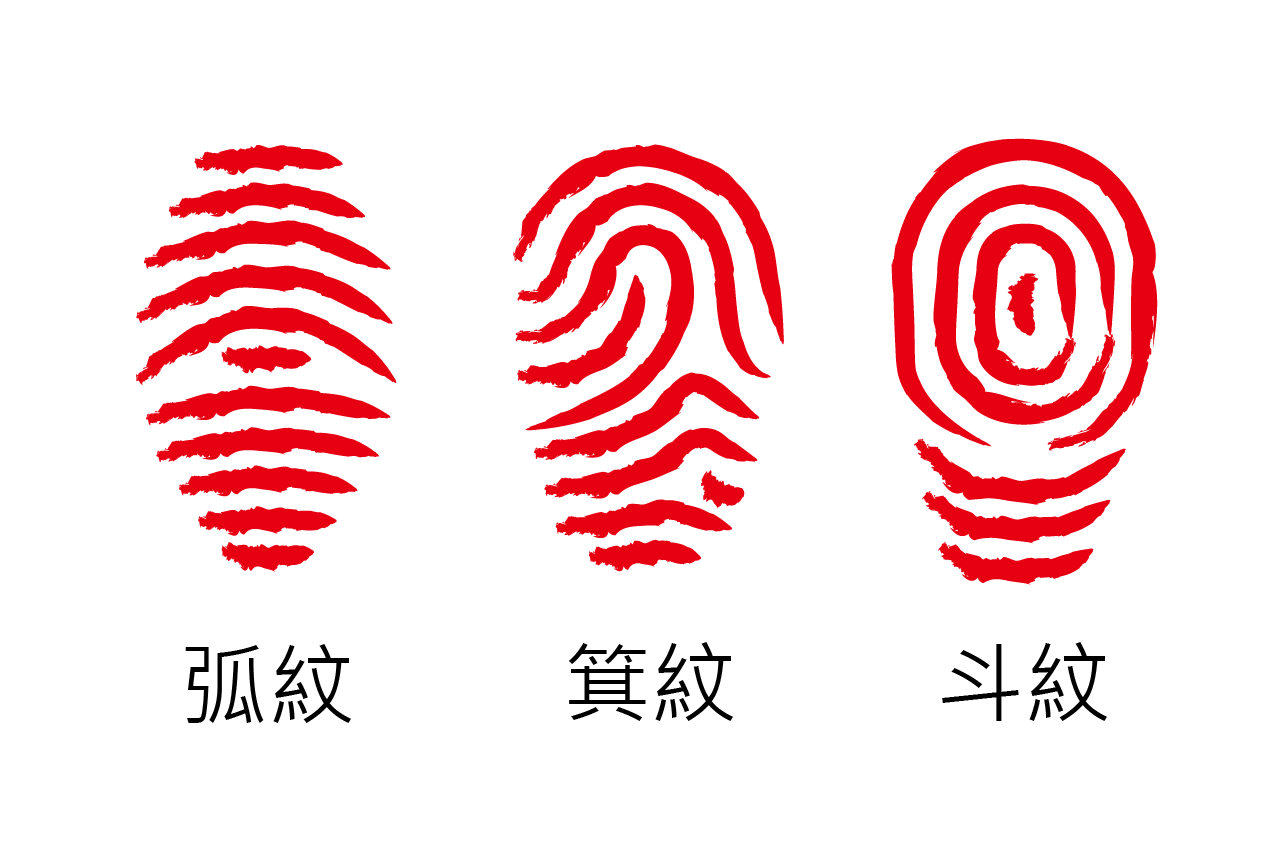
classified into three categories: arch, loop,
and whorl.
Fig 1: The three
categories of fingerprint: arch, loop and whorlFingerprint Formation
There are multiple theories supporting
fingerprint development but dermatologists
believe the folding hypothesis is the most
promising one. Skin tissue consists of three
tightly connected vertical layers: epidermis,
basal layer and dermis. The different rates of
cellular growth in the top epidermis and the
bottom dermis create a tension across the
fast-growing basal layer, resulting in the
folding of the basal layer at individual sites
to relieve the stress. Cell proliferation
continues at those sites while the folds combine
and merge into clusters to form linear ridges in
a rather random fashion, creating the unique
pattern of wrinkles in our fingerprints.
Author: Charlton Sullivan, Student Editor,
Science Focus, The Hong Kong University of
Science and Technology
Design: Charley Lam, Graphic Designer,
Science Focus, The Hong Kong University of
Science and Technology
Translation: Daniel Lau, Managing Editor,
Science Focus, The Hong Kong University of
Science and Technology
Demystifying Wordle: A Crash Course in
Information Theory
The game Wordle took the world by storm last
year – you might have seen your friends posting
green and yellow boxes on social media, claiming
that they have solved this daily word puzzle in
three guesses, or that dreaded “X/6,” which
means that they didn’t manage to crack it. When
one considers what first word to guess, it might
be tempting to randomly put a five-letter word
at the beginning, but this can actually be
reduced to a scientific question. It is not hard
to see that some words would be a better first
guess than others; for example, the word “FUZZY”
would be far less ideal than “RAISE”, since the
letters in the former occur far less often than
the letters in the latter. What, then, is one’s
best shot at cracking the puzzle?What Is Wordle?
We are assuming readers know how Wordle
functions. For those who do not, here is a quick
crash course.Wordle’s database is made of 2,315 five-letter
words picked by the creator of the game as
solutions, and a pool of approximately 13,000
five-letter words that are valid guesses (which
include the 2,315 words above, and many more
words that are not commonly used). Each day, one
word from the database is selected to be the
answer to the puzzle. If your guess has a letter
that is in the word and in the same position,
the letter box shown will be green; if the guess
has a letter that is in the word but not in the
correct position, the letter box shown will be
yellow; otherwise the box is gray.
Author: Sonia Choy, Student Editor,
Science Focus, The Hong Kong University of
Science and Technology
Design: Ligeia Fu, Graphic Designer,
Science Focus, The Hong Kong University of
Science and Technology
If you want to unsubscribe our newsletter,
please
reply this e-mail directly.如欲取消訂閱本論壇電子通訊,請直接回覆此電郵。
- Centre for Chinese Herbal Medicine Drug
-
newsletter (Dec 2023 – Issue 23)
關於香港桂冠論壇
歡迎大家來到香港桂冠論壇2023年12月份通訊。
由香港桂冠論壇委員會主辦,李兆基基金全額贊助,以「匯聚頂尖思維 啟發科學成就」(Meeting of Inspirational Minds)為主題的首屆香港桂冠論壇(下稱 「論壇」),已於11月13至18日假香港科學園圓滿舉行。為期一周的論壇盛況空前,一共涵蓋三場精彩的專題演講、六場互相交流精闢見解的分科小組討論、兩場深度剖析全球趨勢話題的交流討論、兩場專題科學研討會,還有超過20場多元化的參觀和文化活動,其中包括四場在港島、九龍、新界東、新界西區同步進行的邵逸夫獎得獎者與中學生對話,為香港開創先河的活動!部份論壇活動更設有網上直播,歡迎大家按此重溫相關內容。此外,論壇委員會於論壇舉行期間,特意為出席論壇的非本地媒體舉辦了一個「香港桂冠論壇傳媒導賞團」,讓他們更了解論壇內容及香港的科研發展,把這場大型科學盛事推向全球!有關傳媒導賞團,請參閱下一篇文章以了解更多。
論壇吸引超過2,400名參加者,成功匯聚來自世界各地在天文學、生命科學與醫學、數學科學三大領域中具傑出貢獻的23位邵逸夫獎得獎者、全球來自近30個不同國家及地區近200名青年科學家及論壇大使、超過200位來自不同界別及機構的嘉賓和本地科學家,及超過1500位熱衷科學的中學生和公眾人士等。這次盛會讓彼此互相交流連結,從而建立跨世代、跨文化、跨領域的聯繫,啟發科學無限可能!論壇的精華相片及影片已上載至我們的圖片庫、影片庫及YouTube頻道,大家切勿錯過!
論壇活動涵蓋廣泛且多元的主題,參加者得以深入探討由天文學的重力波、黑洞、天文望遠鏡,數學科學的模空間、幾何學、分形,以至生命科學與醫學的基因、細胞、光遺傳學等各個領域的課題。論壇還設有由超過40位青年科學家主持的海報簡報和研究簡報環節,讓他們親自向邵逸夫獎得獎者講解其研究項目,並獲授予寶貴意見,令青年科學家們獲益良多。
從論壇舉辦期間以至結束,不少參加者對論壇給予正面評價,認為論壇是一個連接當代科學家與青年科學家的橋樑,對整體安排予以讚賞,並期望有機會參與下一屆桂冠論壇,實在令我們感到非常鼓舞。有邵逸夫獎得獎者表示,在國際會議上遇上的一般只會是自己科研領域的人士,但真正讓幾個科學領域的人聚首一堂,是非常罕見且難得的。另外,有邵逸夫獎得獎者認為,論壇匯聚多屆得獎者與青年科學家、學生們,其中一個概念是把前沿的科學和技術帶給大家,讓大家能了解當中的思維和應用,以改善人類的生活和體驗,是一個非常關鍵且重要的舉措。而青年科學家均表示透過參與論壇,從來自世界各地、從事不同領域的邵逸夫獎得獎者身上獲得啟發,認為他們分享於科研路上的心得和建議,甚具參考價值,更有不只一位青年科學家表示,對於追求熱衷之事將不會止步,並繼續其科研之路。
論壇得以成功舉辦,實有賴社會各界一直以來鼎力支持,論壇委員會在此衷心鳴謝以下單位:
主要贊助機構
李兆基基金主要合作伙伴
邵逸夫獎指定旅遊贊助
國泰航空其他贊助
投資推廣署 香港鐵路有限公司 南旋集團 西九文化區 小米集團 本地學術伙伴
香港城市大學 香港浸會大學 香港都會大學 嶺南大學 香港中文大學 香港教育大學 香港理工大學 香港科技大學 香港大學 合作機構
法國駐港澳總領事館 裘槎基金會 數碼港 嗇色園主辦可觀自然教育中心暨天文館 香港應用科技研究院 香港中學校長會 香港天文學會 香港天文台 香港科技園 香港科學館 香港工業與應用數學學會 香港太空館 政府新聞處 物流及供應鏈多元技術研發中心 納米及先進材料研發院 儒蓮教科文機構 香港恒生大學 香港資優教育學苑 香港科學院 香港電腦教育學會 香港青年協會 香港紡織及成衣研發中心 婦女基金會 大學教育資助委員會 論壇結束後,論壇委員會繼續「探索新視野2024」的籌備工作。桂冠論壇已連續第三年舉辦「探索新視野」,並會於來年1月至3月聯同香港本地科學家/研究團隊,為香港高年級中學生安排參觀其實驗室以及進行對談會。一如以往,活動旨在讓學生透過親身體驗和提問,了解科學家們的工作環境、實驗室的運作、科學家們研究過程中遇到的困難,及香港最新的科研項目等,藉此提升中學生對科研的興趣。
最後,桂冠論壇預祝大家新年進步,身體健康!
香港桂冠論壇傳媒導賞團
香港桂冠論壇委員會於11月13至17日舉辦了傳媒導賞團,安排應邀的非本地傳媒機構代表出席首屆香港桂冠論壇的活動,包括專題演講、青年科學家海報簡報、分科小組討論、全球趨勢話題討論、邵逸夫獎得獎者與中學生對話等活動,讓傳媒友好了解論壇內容,親身體驗科研交流的氛圍。除了出席論壇活動,他們亦參觀了香港頂尖科研設施,例如InnoHK創新研發中心,與科研團隊對話,深入了解香港最新科研項目。此外,他們還參觀了香港著名地標,加深他們對香港的認識。
超過20位受邀傳媒分別來自中國來地,包括北京、上海、深圳等,亦有來自印度、肯亞、波蘭、南韓、泰國、英國、土耳其。不少媒體機構代表對於出席論壇活動及與邵逸夫獎得獎者深度對談表示高興,讓他們深入了解現今科研發展。部份媒體機構代表更表示,舉辦邵逸夫獎得獎者與中學生對話富有意義,認為論壇創造機會,使中學生能與獲獎科學家對話,了解他們的研究項目、當中遇到的挑戰等,有助他們規劃投身科研。
桂冠論壇感謝各個單位的支持及款待,令傳媒導賞團得以順利舉行,同時感謝科研團隊及機構代表詳細介紹各個研究項目及設施,當中包括:
- 中藥創新研發中心 – 林成源博士及其研究團隊
- 眼視覺研究中心 – 彭志剛博士及其研究團隊
- 創新診斷科技中心 – 江培勇博士及其研究團隊
- 幹細胞轉化研究中心 – 劉澎濤教授及其研究團隊
- 數碼港
- 香港科技園公司創科體驗館
- 香港心腦血管健康工程研究中心 – 陳葦恩教授及其研究團隊
- 香港智慧建造研發中心 – 梁浩博博士及其研究團隊
- 香港故宮文化博物館
- The Henderson
論壇委員會期望是次導賞團能讓傳媒友好把論壇的資訊帶到世界各地,讓各個地方的民眾能認識這個跨世代、跨文化、跨領域的國際性科學交流盛會。
星體連珠:銀河系中心令人驚訝的發現
有些時候,科學家如果幸運的話,會在研究裏遇上一些奇異的事情,使得他必須退後一步,思考到底出現了什麼問題?本文正是要從事實的角度,來探討這個奇異的故事 — 有時候,真正的科學就是這樣產生的。
有時,我們會以新聞稿形式,發佈我們圑隊認為值得介紹的科學發現。以此吸引各界的採訪、引用,有時甚至會被瘋傳,此為我們的研究工作了正面宣傳。正如,2023年7月的一篇新聞稿被廣傳後,有人因此在科學雜誌上發表了一篇大受歡迎的文章,也有一位在科學界裏很有份量的人士製作了一段長達 10 分鐘的 Youtube 視頻,介紹我們的研究,其觀看次數高達 10 萬次;美國天文學會 (AAS) 亦就該項研究製作了一段更為專業的 Youtube 採訪,其觀看次數更高於幾乎所有其他經美國天文學會的同行評審的主要學術文章的同類視頻。凡此種種,都顯示了這個「奇怪的科學結果」的重要性。對此,下文將作更清楚的講述。
作者:
香港大學太空實驗室總監及物理系教授 柏坤霆教授
香港大學太空實驗室研究助理 譚舒宇小姐
指紋:判別個人身分的特徵
簡介
在使用血液測試和DNA分析這些複雜方法之前,我們早已有一套簡單直接的方法來辨別身分,那就是我們經常在電影中看到或是通關會用到的指紋分析。指紋又稱為「皮嵴」(friction ridge skin),像我們的容貌一樣,它是我們獨一無二的特徵。可是你有想過為甚麼每個人的指紋都不同嗎?答案在於基因(尤其是控制四肢發育的基因)和環境間的相互作用,它們創造出能被分成三個類別的獨特皮紋圖樣(dermatoglyphic patterns):弧紋(arch)、箕紋(loop)和斗紋(whorl)。
圖一:指紋的三個類別:弧紋、箕紋和斗紋
指紋的形成
科學界對指紋形成有著不同理論,但皮膚學家傾向相信摺疊假說 [1]。皮膚組織由緊密連接的三層垂直結構組成,分別是表皮、基底層和真皮。頂層的表皮和底層的真皮細胞生長速度的差別在快速生長的基底層構成張力,使其在不同位置摺疊以釋放張力。細胞繼續在摺疊的地方增生的同時,不同拱起的摺疊會頗為隨機地集結成群,形成一條條皮嵴,產生指紋中獨特的皺褶圖案。
作者:蘇柏安 香港科技大學《科言》學生編輯
設計︰林曉薏 香港科技大學《科言》學生設計師
翻譯:劉劭行 香港科技大學《科言》總編輯
Wordle大揭秘:資訊理論101
上年網上遊戲Wordle的風潮席捲全球,大家的社交媒體好一陣子都被綠色、黃色和灰色的方格佔據。你可能見過朋友誇耀自己只猜了三次就已解開當天謎題,也有時會沮喪地抱怨當天只能以「X/6」飲恨作結,未能揭開當天謎底。當我們思考應用甚麼單字開始遊戲時,我們也許會很隨性地把一個五個字母長的任意單字填進空格,但其實這其實是一個科學問題。我們不難意識到有些單字比別的好,對我們稍後的猜測更為有利,譬如選擇「FUZZY」遠比「RAISE」不智,因為前者包括的字母遠比後者冷門。那麼,哪個單字才是能幫我們贏出遊戲的最佳選擇呢?
甚麼是Wordle?
我們假設讀者知道Wordle的運作方式,但如果你不知道的話,以下是懶人包。
Wordle的數據庫包含2,315個由開發者挑選,五個字母長作為答案的單字,也有大概13,000個被系統視為存在的有效單字(裡面除了2,315個作為答案的單字外,還包括許多不常用的單字)。每天程式都會從數據庫抽取一個單字作為當天遊戲的答案。如果你猜的單字包含答案裡有的字母,而該字母位於正確的位置上,該方格將會變為綠色;如字母正確,但位置錯誤,該方格將變為黃色;如答案並沒有包含該字母,方格則會變為灰色。
作者︰蔡蒨珩 香港科技大學《科言》學生編輯
設計︰付一乙 香港科技大學《科言》學生設計師
If you want to unsubscribe our newsletter,
please
reply this e-mail directly.如欲取消訂閱本論壇電子通訊,請直接回覆此電郵。


