|
Category: Uncategorised
-

newsletter (Jan 2023 – Issue 19)
-
newsletter (Jan 2023 – Issue 19)

关于香港桂冠论坛
欢迎大家来到香港桂冠论坛2023年1月份通讯。
新年快乐!新的一年香港桂冠论坛恭祝大家兔年大吉,「兔」气扬眉!每逢节日假期,特别是圣诞节和新年,很多人会和家人享受圣诞大餐、吃团年饭、或是外出到主题乐园游玩。桂冠论坛乘著节日的喜庆,制作了一系列名为「Science
@ Festive
Feast」的短片和大家分享喜悦。短片会带大家一同拆解圣诞蛋糕、爆谷、棉花糖、分子料理、团年必备的汤丸等美食背后一些和科学有关的原理和知识,请立即到我们的网站和YouTube频道收看!首届桂冠论坛新一轮前奏活动系列的首两个活动「科学界女强人 –
激发下一代力量」和「智者‧智讲2.0」先后在去年7月和11月顺利举行。除了活动的精华外,活动期间抽空接受我们访问的部分科学家的分享片段亦已经完成制作并上传至我们的网站和YouTube频道,欢迎大家重温活动精华以及发掘各位科学家们的分享和寄语。而前奏活动系列的第三个活动「探索新视野2023」已经定于今年2至3月期间举行。桂冠论坛十分感谢香港本地各大学的科学家/研究团队开放他们的实验室和科研设施,让我们可举办十多场的参观和分享会。活动邀请香港高年级中学生参与,我们相信这个活动将为对科学有兴趣的高中生提供宝贵机会,让他们了解实验室的环境,与科学家直接交流,了解更多科学家的工作、成长之路和科研过程中的高低起跌。透过活动,我们亦希望能够提高高中生对科学的兴趣以及对他们日后的科研发展有所帮助。「探索新视野2023」亦是「香港桂冠论坛中学生科学探索者奖励计划2022/2023」可获取积分的最后一个活动。在结算后,获得指定积分的参与学生将会受邀出席在3月份举行的「伴你启航」,届时亦会举行颁奖典礼。同学们记得留意我们的通知!
另外,有关周遭动植物的网上活动「周围都系科学 –
第二回合」已经于12月21日顺利举行,得奖名单也于12月30日公布。联合国《生物多样性公约》执行秘书Elizabeth
Mrema曾经说过︰「生物多样性是关于维持人类最终依赖的生命网络。」事实上,在地球上,每一个生命都互相影响,相互倚赖。透过有趣的游戏,让大众认识更多与我们呼吸同口空气,住在同一土地上的「邻居」。桂冠论坛在此感谢各位活动参加者的支持。更多有关论坛最新的消息和活动资讯,记得留意我们的网站、社交媒体和下一期通讯!
预测那「不可知」
预测流感病毒的演化
我们经常听到有人问:基因突变不是随机的吗?如果是随机的,病毒演化可以预测吗?事实上,病毒演化不同于基因突变。突变是指病毒在复制过程中出现的随机性错误,它没有特定的方向。而病毒演化则是由病毒突变、宿主免疫反应、以及环境共同构成的一个复杂过程。因此,虽然病毒基因的突变难以捉摸,我们却可透过模型追踪宿主中优势突变的动态来预测病毒的短期演化。正如尽管我们不知道风从哪里来,但我们可通过观察受风影响的物体来捉摸风的方向和力量。同理,宿主的免疫反应和环境增大病毒基因改变的压力,其中一些关键的突变会体现出人体免疫反应的选择趋势和病毒的传播情况。因此,透过研究病毒与其宿主共同刻画出的历史数据,我们便能够了解病毒的演化特征。
铺垫了病毒演化预测的基本原理,建立病毒演化的模型仍是一份艰巨的工作,这需要收集大量的数据将病毒基因组和全球各地病毒流行的状况串联起来进行分析。比如,要捕捉H3N2病毒(季节性流感的其中一种主要亚型)演化的模式,我们要收集20
年间的基因数据以及十多个国家疾控中心(CDC)发表的流感监测数据,并从中学习。对新冠病毒,我们需要研究分析上百万个病毒基因组。在演化生物学中,根据物种基因组之间的相互距离对物种进行聚类而建立的系统发育树是一种经典的分析工具,它能清晰的展示毒株之间的祖源关系以及病毒的演化历程。通过对系统发育树的分支优势(Luksza
及 Lassig,2014)或分支进程(Neher 等人 2014、Huddleston
等人,2020)进行建模,研究人员提出了几种方法来预测病毒未来演化的趋势。然而,我们采取了另一个角度来进行有关病毒演化的预测,不是如系统发育树般把整个基因序列当作基本分析的单位,而是把核苷酸位点上的演化动态视为模型要捕捉的主要目标。这种方法源于观察,即关键突变往往分阶段发生,部分有利的突变在疫情爆发高峰前几年已经出现,其余的则在随后几年和高峰季节期间发生(Wang、Lou
等人,2021)。在宿主个体内,数十亿计的病毒被复制,产生有利、有害和中性的突变。在宿主免疫的高度压力下,携带有利突变的病毒能避开如抗体识别的免疫机制,并大量复制。那些携带重要突变的病毒更有机会传播给其他宿主,其后产生的突变(亦称为「尾随」或「辅助」突变)常常具有维持病毒的功能或稳定其蛋白质结构的功能,促进主流变种病毒的形成。因此,在主流毒株形成以先,病毒已经在残基置换下开始进行竞争和选择。这表示,建立基于核苷酸位点的演化模型可能会让我们更早找到影响演化历程的重要突变。我们提出了几个新的定量来量化这个过程,其中包括突变的有效期,它描述新变异在人群免疫反应下保持优势的时间;以及突变爆发的门阀值,它描述突变体的适应性到达何种程度时该病毒会引发新一波的大量人群感染。基于这些以及其他信息,我们开发了一套预测模型beth-1,找出能够代表未来病毒群组的最佳毒株,以作为制作疫苗的抗原蓝本(Lou
等人,2022)。该模型所预测的疫苗株(如按设计生产),预计可使现有疫苗对 H3N2
的保护效力升高绝对11.2%(95% CI:3.5-18.8)。我们亦正为
SARS-CoV-2 病毒的演化开发预测演算法,目前数据显示,该模型能够在
Omicron 变种病毒在人群中成为主流病毒的 6-12 个月前,找到关键突变。

作者︰
香港中文大学公共卫生及基层医疗学院王海天教授
使用宇宙标准计时器测量宇宙
自人类于地球诞生,我们一直尝试了解我们所在的宇宙。经过了数千载的观察和思考,我们已经发展了一套宇宙学标准模型,可让我们更好地描述宇宙热大爆炸以来的演化。然而,随著科技进步和精确测量技术的发展,更多结果显示观测和理论之间存在著矛盾,其中哈勃常数疑难,便是现代宇宙学中的一个迫在眉睫、亟待解决的问题。
解决问题,必先了解问题。为化解上述宇宙学危机,科学家提出了多种方法,包括修正基础物理学和观测上的系统偏差。另一边厢,我们也为测量宇宙提出了一个名为「宇宙标准计时器」的新方法。采用此方法来研究宇宙动力学系统的演化,可让我们了解宇宙在不同时期的状态。掌握更多宇宙演化的信息,将助我们更好地理解宇宙学模型。
宇宙的演化
现代宇宙学始自于将引力描述为时空几何广义相对论。1917年,阿尔伯特·爱因斯坦(Albert
Einstein)以广义相对论为基础,建立了他的宇宙学模型,并据此描述了一个静态的宇宙。然而在宇宙扰动之下,这个静态宇宙学模型是不稳定的。在二十世纪二十年代,亚历山大·弗里德曼(Alexander
Friedmann)提出了广义相对论的宇宙学解,认为视乎物质密度和时空曲率,宇宙既可能是膨胀的,也可能是收缩的。与此同时,乔治·勒梅特(Georges
Lemaître)独立提出了相对论化的宇宙学方程,并指出可能是一个原初原子的爆炸引致宇宙诞生。直到1929年,宇宙演化的问题才首次获得解答。埃德温·哈勃(Edwin
Hubble)发现遥远星系的光谱发生红移,这意味著这些星系正在远离我们,而且远离的速度与它们和地球的距离成正比,这就是著名的哈勃定律(见图1)。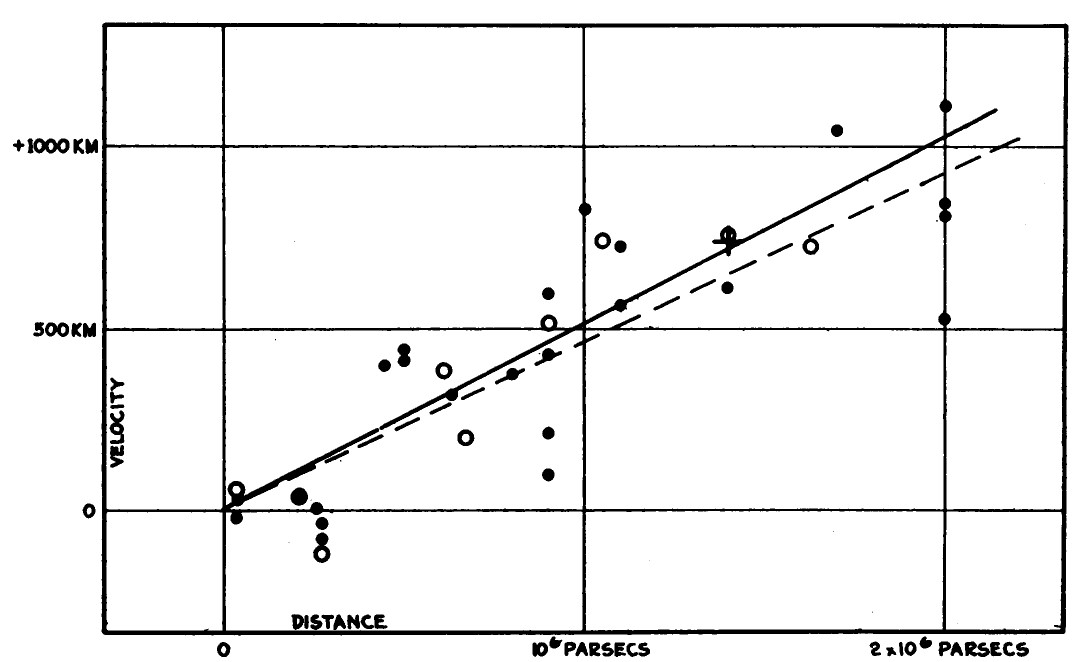
图1: 银河外星云的速度与距离关系
所以,哈勃的观测证明了我们的宇宙正在膨胀。为了描述宇宙的膨胀速度,量化宇宙膨胀,我们把星系速度与距离关系的斜率定义为哈勃参数或称之为哈勃常数。
作者︰
香港科技大学物理系博士后选人丁干航先生
科学与科技在香港气候行动的角色
城市在各方面的重要性无容置疑。目前全球居住在城市的人口有 45
亿,超过全球总人口一半;城市占据全球超过三份之二的经济活动及生产,制造的温室气体排放量占全球温室气体排放量的四分之三。随著城市发展,城市的人口数目将会进一步增长,预计到2050年全球城市人口将多达70亿。我们的科学认知已经非常清楚地表明,城市既是气候变化的首要元凶,也是以创新的方法减缓、适应及应变气候变化影响,从而达至可持续发展的重要来源。政府间气候变化专门委员会(Intergovernmental
Panel on Climate
Change,IPCC)第六次评估(AR6)发表了三份工作组报告,内容包涵最新对气候变化的科学理解及全球气候变化影响、减缓、适应和脆弱度的研究。「城市政策制定者摘要」(Summary
for Urban
Policymakers,SUP)在去年11月第⼆⼗七届联合国气候变化⼤会(《联合国气候变化框架》第⼆⼗七次缔约⽅⼤会,即COP
27)期间发表报告,综合IPCC这三份报告作出对城市面对气候变化的启示。本文将简单点出当中的重点,并提出科学与科技在香港减缓及适应气候变化的角色。
气候变化对城市的影响

图1:1958至2018年间全球表面空气温度(global surface
air
temperature)的趋势,其中城市录得显著的温度升幅。图片来源:「城市政策制定者摘要」(Summary
for Urban Policymakers,SUP)。SUP的报告开宗明义指出,气候危机正在发生。人类活动所引致的气候变化,透过越来越极端的天气,影响地球上每个角落及不同的生态系统。气候变化对城市的影响特别严重。如图一所示,不少城市的温度在过去60年都录得显著的升幅,例如首尔有1.5°C升幅,伊朗德黑兰及印度加尔各答的升幅甚至达到2.33°C及2.6°C。在这期间,香港的平均气温上升了0.41°C。我们不能少看这0.41°C,香港天文台就指出气温上升,令海水变暖和膨胀,导致海平面上升、雨量亦增加,极端天气变得更频繁。有气候科学家预测,2050年海平面将上升0.5米,大大提高水浸的危机;高温也令海洋的水温上升,引发红潮,令大量海洋生物在海床缺氧下死亡。全球暖化亦有利蚊子生存和繁殖,使更多人蒙受患病风险。
IPCC
就指出,城市本身和城市化的过程会加剧气候变化对城市及其周边地区的影响,热岛效应就是其中一个例子。
作者︰
低碳想创坊高级项目主任郭晓忠先生
2022年联合国《生物多样性公约》缔约方大会 — 相当于自然界的《巴黎协定》?
经过两周的谈判磋商,联合国《生物多样性公约》缔约方大会第十五次会议(COP15)在2022年12月19日于加拿大蒙特利尔圆满结束。
随著各国代表签定《昆明—蒙特利尔全球生物多样性框架》,COP15被视为是一个成功的会议。此框架的重点包括承诺在2030年前保护全球30%的陆地、水域和海洋资源(简称30
x
30承诺),及在2030年前投放2000亿美元于生物多样性相关的项目。有关COP15的更多详细资料,可参阅联合国气候变化公约框架的网站。联合国《生物多样性公约》执行秘书伊莉莎白.姆雷玛(Elizabeth
Mrema)引用具历史意义的2015年巴黎协定,形容是次会议为「生物多样性的巴黎时刻」[1]。而该协定被视为是解决气候变化问题的分水岭。然而,很多专家对在使用农药和防止物种濒临灭绝等方面缺乏更强而有力的措施表示遗憾。
究竟是次会议通过的框架会否成为标志性协定,以阻止我们的生态系统恶化及生物多样性丧失,仍是未知之数。说到底,能切实执行才是成功的关键。各国对执行《巴黎协定》的力度就是例证,目前只有少数国家能按照该协定的承诺减少碳排放,而已发展国家向发展中国家的洁净能源项目提供的资金援助也不足。因此,我们都要拭目以待。


If you want to unsubscribe our newsletter,
please
reply this e-mail directly.如欲取消訂閱本論壇電子通訊,請直接回覆此電郵。

-
newsletter (Jan 2023 – Issue 19)
關於香港桂冠論壇
歡迎大家來到香港桂冠論壇2023年1月份通訊。
新年快樂!新的一年香港桂冠論壇恭祝大家兔年大吉,「兔」氣揚眉!
每逢節日假期,特別是聖誕節和新年,很多人會和家人享受聖誕大餐、吃團年飯、或是外出到主題樂園遊玩。桂冠論壇乘著節日的喜慶,製作了一系列名為「Science
@ Festive
Feast」的短片和大家分享喜悅。短片會帶大家一同拆解聖誕蛋糕、爆谷、棉花糖、分子料理、團年必備的湯丸等美食背後一些和科學有關的原理和知識,請立即到我們的網站和YouTube頻道收看!首屆桂冠論壇新一輪前奏活動系列的首兩個活動「科學界女強人 –
激發下一代力量」和「智者‧智講2.0」先後在去年7月和11月順利舉行。除了活動的精華外,活動期間抽空接受我們訪問的部分科學家的分享片段亦已經完成製作並上傳至我們的網站和YouTube頻道,歡迎大家重溫活動精華以及發掘各位科學家們的分享和寄語。而前奏活動系列的第三個活動「探索新視野2023」已經定於今年2至3月期間舉行。桂冠論壇十分感謝香港本地各大學的科學家/研究團隊開放他們的實驗室和科研設施,讓我們可舉辦十多場的參觀和分享會。活動邀請香港高年級中學生參與,我們相信這個活動將為對科學有興趣的高中生提供寶貴機會,讓他們了解實驗室的環境,與科學家直接交流,了解更多科學家的工作、成長之路和科研過程中的高低起跌。透過活動,我們亦希望能夠提高高中生對科學的興趣以及對他們日後的科研發展有所幫助。「探索新視野2023」亦是「香港桂冠論壇中學生科學探索者獎勵計劃2022/2023」可獲取積分的最後一個活動。在結算後,獲得指定積分的參與學生將會受邀出席在3月份舉行的「伴你啟航」,屆時亦會舉行頒獎典禮。同學們記得留意我們的通知!
另外,有關周遭動植物的網上活動「周圍都係科學 –
第二回合」已經於12月21日順利舉行,得獎名單也於12月30日公佈。聯合國《生物多樣性公約》執行秘書Elizabeth
Mrema曾經說過︰「生物多樣性是關於維持人類最終依賴的生命網絡。」事實上,在地球上,每一個生命都互相影響,相互倚賴。透過有趣的遊戲,讓大眾認識更多與我們呼吸同口空氣,住在同一土地上的「鄰居」。桂冠論壇在此感謝各位活動參加者的支持。更多有關論壇最新的消息和活動資訊,記得留意我們的網站、社交媒體和下一期通訊!
預測那「不可知」
預測流感病毒的演化
我們經常聽到有人問:基因突變不是隨機的嗎?如果是隨機的,病毒演化可以預測嗎?事實上,病毒演化不同於基因突變。突變是指病毒在複製過程中出現的隨機性錯誤,它沒有特定的方向。而病毒演化則是由病毒突變、宿主免疫反應、以及環境共同構成的一個複雜過程。因此,雖然病毒基因的突變難以捉摸,我們卻可透過模型追蹤宿主中優勢突變的動態來預測病毒的短期演化。正如儘管我們不知道風從哪裡來,但我們可通過觀察受風影響的物體來捉摸風的方向和力量。同理,宿主的免疫反應和環境增大病毒基因改變的壓力,其中一些關鍵的突變會體現出人體免疫反應的選擇趨勢和病毒的傳播情況。因此,透過研究病毒與其宿主共同刻畫出的歷史數據,我們便能夠了解病毒的演化特徵。
鋪墊了病毒演化預測的基本原理,建立病毒演化的模型仍是一份艱巨的工作,這需要收集大量的數據將病毒基因組和全球各地病毒流行的狀況串聯起來進行分析。比如,要捕捉H3N2病毒(季節性流感的其中一種主要亞型)演化的模式,我們要收集20
年間的基因數據以及十多個國家疾控中心(CDC)發表的流感監測數據,並從中學習。對新冠病毒,我們需要研究分析上百萬個病毒基因組。在演化生物學中,根據物種基因組之間的相互距離對物種進行聚類而建立的系統發育樹是一種經典的分析工具,它能清晰的展示毒株之間的祖源關係以及病毒的演化歷程。通過對系統發育樹的分支優勢(Luksza
及 Lassig,2014)或分支進程(Neher 等人 2014、Huddleston
等人,2020)進行建模,研究人員提出了幾種方法來預測病毒未來演化的趨勢。然而,我們採取了另一個角度來進行有關病毒演化的預測,不是如系統發育樹般把整個基因序列當作基本分析的單位,而是把核苷酸位點上的演化動態視為模型要捕捉的主要目標。這種方法源於觀察,即關鍵突變往往分階段發生,部分有利的突變在疫情爆發高峰前幾年已經出現,其餘的則在隨後幾年和高峰季節期間發生(Wang、Lou
等人,2021)。在宿主個體內,數十億計的病毒被複製,產生有利、有害和中性的突變。在宿主免疫的高度壓力下,携帶有利突變的病毒能避開如抗體識別的免疫機制,並大量複製。那些携帶重要突變的病毒更有機會傳播給其他宿主,其後產生的突變(亦稱為「尾隨」或「輔助」突變)常常具有維持病毒的功能或穩定其蛋白質結構的功能,促進主流變種病毒的形成。因此,在主流毒株形成以先,病毒已經在殘基置換下開始進行競爭和選擇。這表示,建立基於核苷酸位點的演化模型可能會讓我們更早找到影響演化歷程的重要突變。我們提出了幾個新的定量來量化這個過程,其中包括突變的有效期,它描述新變異在人群免疫反應下保持優勢的時間;以及突變爆發的門閥值,它描述突變體的適應性到達何種程度時該病毒會引發新一波的大量人群感染。基於這些以及其他信息,我們開發了一套預測模型beth-1,找出能夠代表未來病毒群組的最佳毒株,以作為製作疫苗的抗原藍本(Lou
等人,2022)。該模型所預測的疫苗株(如按設計生產),預計可使現有疫苗對 H3N2
的保護效力升高絕對11.2%(95% CI:3.5-18.8)。我們亦正為
SARS-CoV-2 病毒的演化開發預測演算法,目前數據顯示,該模型能夠在
Omicron 變種病毒在人群中成為主流病毒的 6-12 個月前,找到關鍵突變。
作者︰
香港中文大學公共衛生及基層醫療學院王海天教授
使用宇宙標準計時器測量宇宙
自人類於地球誕生,我們一直嘗試了解我們所在的宇宙。經過了數千載的觀察和思考,我們已經發展了一套宇宙學標準模型,可讓我們更好地描述宇宙熱大爆炸以來的演化。然而,隨著科技進步和精確測量技術的發展,更多結果顯示觀測和理論之間存在著矛盾,其中哈勃常數疑難,便是現代宇宙學中的一個迫在眉睫、亟待解決的問題。
解決問題,必先了解問題。為化解上述宇宙學危機,科學家提出了多種方法,包括修正基礎物理學和觀測上的系統偏差。另一邊廂,我們也為測量宇宙提出了一個名為「宇宙標準計時器」的新方法。採用此方法來研究宇宙動力學系統的演化,可讓我們了解宇宙在不同時期的狀態。掌握更多宇宙演化的信息,將助我們更好地理解宇宙學模型。
宇宙的演化
現代宇宙學始自於將引力描述為時空幾何廣義相對論。1917年,阿爾伯特·愛因斯坦(Albert
Einstein)以廣義相對論為基礎,建立了他的宇宙學模型,並據此描述了一個靜態的宇宙。然而在宇宙擾動之下,這個靜態宇宙學模型是不穩定的。在二十世紀二十年代,亞歷山大·弗裡德曼(Alexander
Friedmann)提出了廣義相對論的宇宙學解,認為視乎物質密度和時空曲率,宇宙既可能是膨脹的,也可能是收縮的。與此同時,喬治·勒梅特(Georges
Lemaître)獨立提出了相對論化的宇宙學方程,並指出可能是一個原初原子的爆炸引致宇宙誕生。直到1929年,宇宙演化的問題才首次獲得解答。埃德溫·哈勃(Edwin
Hubble)發現遙遠星系的光譜發生紅移,這意味著這些星系正在遠離我們,而且遠離的速度與它們和地球的距離成正比,這就是著名的哈勃定律(見圖1)。
圖1: 銀河外星雲的速度與距離關係
所以,哈勃的觀測證明了我們的宇宙正在膨脹。為了描述宇宙的膨脹速度,量化宇宙膨脹,我們把星系速度與距離關係的斜率定義為哈勃參數或稱之為哈勃常數。
作者︰
香港科技大學物理系博士後選人丁乾航先生
科學與科技在香港氣候行動的角色
城市在各方面的重要性無容置疑。目前全球居住在城市的人口有 45
億,超過全球總人口一半;城市佔據全球超過三份之二的經濟活動及生產,製造的溫室氣體排放量佔全球溫室氣體排放量的四分之三。隨著城市發展,城市的人口數目將會進一步增長,預計到2050年全球城市人口將多達70億。我們的科學認知已經非常清楚地表明,城市既是氣候變化的首要元兇,也是以創新的方法減緩、適應及應變氣候變化影響,從而達至可持續發展的重要來源。政府間氣候變化專門委員會(Intergovernmental
Panel on Climate
Change,IPCC)第六次評估(AR6)發表了三份工作組報告,內容包涵最新對氣候變化的科學理解及全球氣候變化影響、減緩、適應和脆弱度的研究。「城市政策制定者摘要」(Summary
for Urban
Policymakers,SUP)在去年11月第⼆⼗七屆聯合國氣候變化⼤會(《聯合國氣候變化框架》第⼆⼗七次締約⽅⼤會,即COP
27)期間發表報告,綜合IPCC這三份報告作出對城市面對氣候變化的啟示。本文將簡單點出當中的重點,並提出科學與科技在香港減緩及適應氣候變化的角色。
氣候變化對城市的影響
圖1:1958至2018年間全球表面空氣溫度(global surface
air
temperature)的趨勢,其中城市錄得顯著的溫度升幅。圖片來源:「城市政策制定者摘要」(Summary
for Urban Policymakers,SUP)。SUP的報告開宗明義指出,氣候危機正在發生。人類活動所引致的氣候變化,透過越來越極端的天氣,影響地球上每個角落及不同的生態系統。氣候變化對城市的影響特別嚴重。如圖一所示,不少城市的溫度在過去60年都錄得顯著的升幅,例如首爾有1.5°C升幅,伊朗德黑蘭及印度加爾各答的升幅甚至達到2.33°C及2.6°C。在這期間,香港的平均氣溫上升了0.41°C。我們不能少看這0.41°C,香港天文台就指出氣溫上升,令海水變暖和膨脹,導致海平面上升、雨量亦增加,極端天氣變得更頻繁。有氣候科學家預測,2050年海平面將上升0.5米,大大提高水浸的危機;高溫也令海洋的水溫上升,引發紅潮,令大量海洋生物在海床缺氧下死亡。全球暖化亦有利蚊子生存和繁殖,使更多人蒙受患病風險。
IPCC
就指出,城市本身和城市化的過程會加劇氣候變化對城市及其周邊地區的影響,熱島效應就是其中一個例子。
作者︰
低碳想創坊高級項目主任郭曉忠先生
2022年聯合國《生物多樣性公約》締約方大會 — 相當於自然界的《巴黎協定》?
經過兩周的談判磋商,聯合國《生物多樣性公約》締約方大會第十五次會議(COP15)在2022年12月19日於加拿大蒙特利爾圓滿結束。
隨著各國代表簽定《昆明—蒙特利爾全球生物多樣性框架》,COP15被視為是一個成功的會議。此框架的重點包括承諾在2030年前保護全球30%的陸地、水域和海洋資源(簡稱30
x
30承諾),及在2030年前投放2000億美元於生物多樣性相關的項目。有關COP15的更多詳細資料,可參閱聯合國氣候變化公約框架的網站。聯合國《生物多樣性公約》執行秘書伊莉莎白.姆雷瑪(Elizabeth
Mrema)引用具歷史意義的2015年巴黎協定,形容是次會議為「生物多樣性的巴黎時刻」[1]。而該協定被視為是解決氣候變化問題的分水嶺。然而,很多專家對在使用農藥和防止物種瀕臨滅絕等方面缺乏更強而有力的措施表示遺憾。
究竟是次會議通過的框架會否成為標誌性協定,以阻止我們的生態系統惡化及生物多樣性喪失,仍是未知之數。說到底,能切實執行才是成功的關鍵。各國對執行《巴黎協定》的力度就是例證,目前只有少數國家能按照該協定的承諾減少碳排放,而已發展國家向發展中國家的潔淨能源項目提供的資金援助也不足。因此,我們都要拭目以待。
If you want to unsubscribe our newsletter,
please
reply this e-mail directly.如欲取消訂閱本論壇電子通訊,請直接回覆此電郵。
-
newsletter (Mar 2023 – Issue 20)

About the Hong Kong Laureate Forum
Welcome to the March 2023 issue of the
newsletter of the Hong Kong Laureate
Forum!With a view to creating opportunities for
more students to step outside the
classroom and enter the world of science,
the HKLF organised the third chapter of
our new series of the “Prelude to the
Inaugural Hong Kong Laureate Forum”,
“Exploring New Horizons 2023”. The
12-session programme, which comprised of
laboratory visits and dialogues, was
arranged in collaboration, once again, with
local scientists / research teams in Hong
Kong for Hong Kong senior secondary
students during February to March 2023. Over
300 participants took part in the
event. Participating students and teachers
were thrilled to be able to visit
laboratories, be exposed to advanced
equipment, observe scientists at work and
exchange ideas with them, as well as learn
about the latest development of
scientific research in Hong Kong. The HKLF
is grateful to the students and
teachers for their participation. Also, our
heartfelt gratitude to the local
scientists / research teams for their
continuous support to the HKLF. They
include: Prof Chu Ming-chung, Choh-Ming Li
Professor of Physics, Dr Patrick Tang,
Assistant Professor of Department of
Anatomical and Cellular Pathology, Prof Chow
Hei Man, Assistant Professor of School of
Life Sciences, all of The Chinese
University of Hong Kong, Dr Carmen Wong,
Associate Professor of Department of
Pathology of The University of Hong Kong,
Prof Tom Cheung, Associate Professor of
Division of Life Science of The Hong Kong
University of Science and Technology, Dr
Sean Hon, Assistant Professor of Department
of Mathematics of Hong Kong Baptist
University, Dr Eric Sze, Associate Professor
of School of Science and Technology
of Hong Kong Metropolitan University, as
well as the University of Hong Kong –
Pasteur Research Pole and Centre for
Immunology and Infection.The “Geared Up Muster cum The HKLF Science
Explorer Award Scheme 2022/23
Presentation Ceremony” was successfully held
on 25 March. On the event day, Mrs Do
Pang Wai Yee, Secretary General of the HKLF,
encouraged awardees to continue their
ardent pursuit of science and work hard to
realise their dream. We are very
honoured that the Programme Steering
Committee Advisor of the HKLF, Prof Chu
Ming-chung, Choh-Ming Li Professor of
Physics of The Chinese University of Hong
Kong, took time out from his busy schedule
to attend the event. He shared his stories
in the journey exploring science and
encouraged
students to keep the passion for what they
are interested in. All
participating students benefited greatly
from his words of wisdom on
finding one’s path. The participating
Secondary
6 students also shared their own interests
in science and how they overcame
difficulties in their study. Prof Chu and Mr
Lin Chun Pong, Chairman of Hong Kong
Association of the Heads of Secondary
Schools, presented award certificates to
commend students who actively participated
in the scheme and earned specified
points. 43 and 37 students were given gold
and silver award certificates
respectively in recognition of their
participation. Once again, congratulations
to
all the awardees! We truly hope that they
can continue to equip themselves and
embark on their scientific research journey.With a successful conclusion of the “Prelude
to the Inaugural Hong Kong Laureate
Forum”, the Inaugural Hong Kong Laureate
Forum is beckoning! The following Shaw
Laureates who have attended prelude events
will also come to Hong Kong to join
this world-class academic exchange
event:
– Prof Jean-Michel Bismut, Shaw Laureate in
Mathematical Sciences 2021
– Prof Roger D Blandford, Shaw Laureate in
Astronomy 2020
– Prof Gero Miesenböck, Shaw Laureate in
Life Science and Medicine 2020
– Prof Simon D M White, Shaw Laureate in
Astronomy 2017
– Prof Steven A Balbus, Shaw Laureate in
Astronomy 2013
– Prof Franz-Ulrich Hartl, Shaw Laureate in
Life Science and Medicine 2012
More Shaw Laureates will attend the Forum to
interact with about 200 young
scientists from around the world and share
their views, insights and aspirations
in various scientific fields. Please stay
tuned for the latest information!In tandem with the pacy preparation of the
Forum, we continue to explore
opportunities for the young generation to
interact with scientists. The HKLF will
collaborate with The Hong Kong Academy for
Gifted Education (HKAGE) for the first
time and invite the Programme Steering
Committee Advisor of HKLF, Prof Chu
Ming-chung, Choh-Ming Li Professor of
Physics of The Chinese University of Hong
Kong, to attend the final presentation
session of the Astronomy Course (Level IV):
Cosmos – An Investigative Study (Phase 3)
conducted by the HKAGE, which will be
held on 15 April, as a guest. He
will provide advice, on the research
findings presented by the gifted students
participating in the course, so as to
inspire and encourage them. We will continue
to cooperate with the HKAGE to arrange
more science-related activities to provide
more opportunities to members for
exploration and exchange of ideas.In addition, the online campaign “Science is
Everywhere – Round 3” on getting to
know the solar system was completed on 16
March and the result was announced on 27
March. Blaise Pascal once said, “When I
consider the short duration of my life,
swallowed up in the eternity before and
after, the little space which I fill, and
even can see, engulfed in the infinite
immensity of spaces of which I am ignorant,
and which know me not, I am frightened.” The
universe is vast, with many galaxies
similar to the Milky Way in which the solar
system is embedded, and Earth, is only
one of the planets orbiting the Sun. Through
this interesting game, the public can
learn more about their own galaxy and
further understand the planets in the solar
system. This is the last round of “Science
is Everywhere” and the HKLF would like
to thank all participants for their support.Stay tuned to our website, social media and
the next newsletter for the latest
information about the Forum and other
events!
Population-Aware Sequential Flight Path
Optimisation for Low-Noise and Low-Fuel
Consumption Departure Trajectory
With the increase in air traffic over the
past decades, the reduction of aircraft
noise is one of the major challenges facing
stakeholders. Flight operating
conditions that decrease noise may possibly
increase the fuel consumption of
aircraft, which is an important factor in
airline cost management. In this paper,
we propose a methodology to support flight
path planning with the aim of
optimising both perceived noise and fuel
consumption. We decompose an aircraft
flight trajectory into surface and altitude
paths to model relevant air
transportation constraints. The shortest
path for the surface projection is found
using Dubins path method and an improved A*
algorithm, which considers guide
points according to the flight destination,
runway angles, spatial separation of
aircraft near the airport, population
distribution, and steering motion. The
altitude path is optimised for low-perceived
noise and low-fuel consumption, which
is determined by solving the longitudinal
governing equations of motion of flight
using the distance computed from this
surface path. A modified nondominated
sorting genetic algorithm II for discrete
optimisation is developed to obtain
Pareto fronts of the optimum altitude paths
with reduced computational effort. The
methodology is demonstrated by simulating
flights departing from Hong Kong
International Airport to two compulsory air-
traffic-service reporting points. The
results are then compared with Quick Access
Recorder data and Standard Instrument
Departure (SID) tracks. Although certain
factors in air transportation that affect
departure path planning, such as weather
patterns and air traffic mix, are not
considered in this method, the resulting
surface path exhibits a close similarity
with SID tracks. The resulting Pareto fronts
of the altitude path exhibit
reductions in fuel consumption and perceived
noise levels. The trade-offs between
fuel consumption and perceived noise levels
are also discussed based on the
relevant flight physics for the different
routes.
I. IntroductionThe rapid growth of air traffic and the
increased aircraft noise as a consequence
has led to adverse effects on residents
living near airports, including sleep
disturbance and stress-related health
effects. This issue can be addressed either
through aircraft design or air traffic
management, among other approaches. For
aircraft design, new airframes and engines
can be designed to reduce the source
noise of an aircraft. Since the 1980s,
further noise reduction by changing the
aircraft design has been very difficult to
achieve without affecting operating
costs. For air traffic management, the
flight routes can be altered to reduce
perceived noise, e.g., by increasing the
climb rate after take-off. This approach
is more “practical”, but does not address
the issue of reducing source noise and
may potentially increase fuel consumption.
The perceived noise and fuel
consumption are dependent on changes in
engine power settings and distance between
the aircraft and the observer in a complex
manner. Fuel consumption is an
important factor directly related to airline
revenues and is also proportional to
air pollution and greenhouse gas emissions.
Hence, it must be considered
simultaneously with the perceived noise when
optimising operating conditions
during flight.In practice, the departure paths around
airports are guided by Standard Instrument
Departure (SID) procedures. SID is the coded
flight procedure from the point where
the departure route begins to the first
fix/facility/waypoint of the en-route
phase, which varies across airports. The
civil aviation authorities of each
country design and publish SID in accordance
with the design criteria specified in
ICAO Doc. 8168, taking into account factors
including, but not limited to, runway
angles, terrain, obstacle avoidance,
aircraft performance, airspace management,
and environmental concerns. According to the
Civil Aviation Department (CAD) in
Hong Kong, the design procedure starts with
a preliminary discussion with
stakeholders, including the operators/pilots
and air traffic controllers. The
flyability of the preliminary tracks under
different weather and loading scenarios
is then tested in flight simulations and
subsequently validated by actual flight
tests before publication. Computational
optimisation research to refine the
process of departure path design with
quantitative standards has been conducted by
Zachary et al., Prats et al., Torres et al.,
Ho- Huu et al., Filippone et al., and
Thomas and Hansman. These studies proposed
multi-objective or multilevel departure
path planning methodologies considering both
fuel consumption and perceived noise
level. However, to the best of our
knowledge, these studies do not take into
account the combined effect of guide points
according to flight destinations
(i.e., the compulsory Air Traffic Service
[ATS] reporting points considered in
this study), obstacle restrictions provided
by the Aeronautical Information
Publication (AIP), and population and
topological information. Some of them do not
compare their results against existing SID
tracks or flight data either. To
address these gaps, this paper presents a
departure path planning methodology for
low-noise and low-fuel consumption that
simultaneously considers all of the above
factors.

Authors:
Prof Rhea P. Liem, Assistant Professor,
Department of Mechanical and Aerospace
Engineering, The Hong Kong University of
Science and Technology
Dr Dajung Kim, Postdoctoral Researcher, The
Hong Kong University of Science and
Technology
Associate Editor:
I Hwang
Blood-Based miRNA Tests: A Promising Tool
for the Early Detection of Multiple
Types of Cancer
Cancer is a major global health problem.
According to the World Health
Organisation (WHO), there was an estimated
19.3 million new cancer cases and 10
million cancer-related deaths worldwide in
2020, representing an increase of 28%
in the global cancer burden since 2010 (WHO,
2020).One of the main challenges in cancer
treatment is late diagnosis and its
consequential negative impact on patient
outcomes. According to the American
Cancer Society, the 5-year survival rate for
breast cancer is 90% when detected at
an early stage, compared to 15% when
detected at a late stage (American Cancer
Society, n.d.).Blood-based tests and other new screening
methods have the potential to improve
early detection of cancer, which could have
a significant impact on patient
outcomes. For example, a study published in
the journal Science Translational
Medicine in 2018 finds that a blood test
that detects eight common cancer types
with high accuracy has the potential to
discover cancer at an early stage, up to
four years before symptoms appear (Cohen et
al., 2018).
Cancer biomarkers and their role in
early detection
Cancer biomarkers, which is found to provide
a way to identify cancer before
symptoms appear (Smith, 2020), play a
critical role in early cancer detection. The
identification of these biomarkers has been
made possible through advancements in
genomics, transcriptomics, and proteomics.
Cancer biomarkers can be found in
various body fluids such as blood, urine or
saliva, and their analysis can provide
important information about the presence and
stage of cancer.
Author:
Dr Clement Lim, Head of Medical Affairs
(Early Detection), MiRXES
Haber Process: More Than Just Nitrogen and
Ammonia
Have you ever doubted how the agricultural
supply manages to feed the
exponentially growing world population? One
of the keys is to provide nitrogen, an
essential nutrient for good yields, through
the use of nitrogenous fertilizers.
The question then becomes: Where does all
that nitrogen come from?
Haber Process
The answer is the Haber process – it should
ring a bell to some of you, especially
those taking chemistry classes. To recap
briefly, it was discovered by the German
chemist Fritz Haber, who was later awarded
the Nobel Prize in Chemistry in 1918.
Unlike its suboptimal predecessors, the
Haber process was more energy-efficient
and scalable in converting nitrogen into
ammonia, which could be further processed
into nitrogenous fertilizers like ammonium
nitrate (NH4NO3)
and urea ((NH2)2CO).N2(g) +
3H2(g) ⇌
2NH3(g)Such an improvement can be attributed to the
Le Chatelier’s principle (footnote
1), where chemists maximize yields by
casting some magic on chemical equilibrium
and kinetics – in industrial practice, the
Haber process operates at both high
temperature (around 450 ℃) and high pressure
(around 200 atm) [2]. The above is
only a general picture of the process, if
not a tip of the iceberg (most probably
you have seen it in textbooks!). Let’s dig
deeper into the steps behind the short
equation.
Author:
Lambert Leung, Student Editor, Science
Focus, The Hong Kong University of Science
and Technology
Green Comet
Comet C/2022 E3 (ZTF), 30 Jan 2023
Discovered by the Zwicky Transient Facility
in March 2022, this long period comet
reached its closest position to Earth on 1
February, and will only pay its next
visit to Earth after another 50,000 years.
The green coma and tail were visible
from Earth observing with a telescope. *The
green colour comes from the fact that
it contains diatomic carbon (C2) which is
bright in green wavelengths of light.*Source: National Geographic
Acknowledgement: Fishie Chung, The Chinese
University of Hong Kong
If you want to unsubscribe our newsletter,
please
reply this e-mail directly.如欲取消訂閱本論壇電子通訊,請直接回覆此電郵。
-
newsletter (Mar 2023 – Issue 20)
關於香港桂冠論壇
歡迎大家來到香港桂冠論壇2023年3月份通訊。
為了讓更多學生走出課室,走進科學世界,桂冠論壇於本年2至3月期間舉辦首屆香港桂冠論壇新一輪前奏活動系列的第三個主題活動「探索新視野2023」,再度聯同香港本地科學家/研究團隊,為香港高年級中學生安排一連12場的實驗室參觀及分享會,而活動吸引超過300人參與。參與的學生及同行老師很高興能夠透過活動,參觀實驗室,體驗先進設備,觀摩科學家的工作實況,與科學家直接交流,及了解香港最新科研發展。桂冠論壇感謝各位學生及老師踴躍參與,亦再次感謝一眾本地科學家/研究團隊的支持,包括:香港中文大學卓敏物理學教授朱明中教授、病理解剖及細胞學系助理教授鄧銘權博士及生命科學學院助理教授周熙文教授、香港大學病理學系黃澤蕾博士、香港科技大學生命科學部副教授張曉東教授、香港浸會大學數學系助理教授韓汝星博士、香港都會大學科技學院副教授史東甫博士、香港大學
– 巴斯德研究中心及免疫與感染研究中心。而「伴你啟航暨香港桂冠論壇中學生科學探索者獎勵計劃2022/23頒獎典禮」已於3月25日完滿舉行。活動當天,香港桂冠論壇秘書長杜彭慧儀女士鼓勵學生持續對科學的熱誠及為自己的理想發奮。我們十分高興邀請到論壇活動指導委員會成員香港中文大學卓敏物理學教授朱明中教授百忙中抽空出席是次活動,分享他於探索科學中遇到的趣事,並鼓勵學生對有興趣之事保持熱誠,而他對尋找個人路向的寄語令一眾學生獲益良多。參與獎勵計劃的中六生也互相分享了對科學範疇的興趣及如何克服所遇的困難。朱明中教授亦與香港中學校長會主席連鎮邦先生頒授證書,表揚參與獎勵計劃並獲指定積分的學生,當中有43名學生獲金獎證書,37名學生獲銀獎證書。我們再次恭喜得獎學生,希望他們能夠繼續裝備自己,踏上科研之旅!
所有前奏活動已圓滿結束,意味着首屆桂冠論壇即將來臨!過往曾出席前奏活動的邵逸夫獎得獎者,也會到訪香港,親臨這個世界級學術交流盛會,當中包括:
– 2021年度邵逸夫數學科學獎得獎者尚–米歇爾.比斯姆教授
– 2020年邵逸夫天文學獎得獎者羅傑.布蘭福德
– 2020年邵逸夫生命科學與醫學獎得獎者格羅.米森伯克
– 2017年邵逸夫天文學獎得獎者西蒙.懷特教授
– 2013年邵逸夫天文學獎得獎者史蒂芬.拜爾巴斯教授
– 2012年邵逸夫生命科學與醫學獎得獎者弗朗茲–烏爾里奇.哈特爾教授
屆時將有更多邵逸夫獎得獎者出席論壇,與來自世界各地約200位年輕科學家交流真知灼見,啟發科學靈感。敬請期待!在密鑼緊鼓地籌備首屆桂冠論壇的同時,我們亦繼續開拓年輕一代與科學家交流的機會。香港桂冠論壇將首度與香港資優教育學苑合作,邀請論壇活動指導委員會成員香港中文大學卓敏物理學教授朱明中教授,擔任學苑於4月15日舉辦的天文學課程—宇宙的調查研究(第三階段)的研究成果發佈的嘉賓,聆聽參與課程的資優生的研究成果,並提供意見,使各資優生從中得到更多啟發。我們將會繼續與香港資優教育學苑合作,安排更多科學相關活動,令學員有更多交流機會。
另外,有關太陽系的網上活動「周圍都係科學 –
第三回合」已於3月16日順利舉行,得獎名單亦已於3月27日公佈。法國哲學家Blaise
Pascal曾經說過:「當想到我短暫的生命會吞沒於永恆時間,以及我所佔據的狹小空間會消融在陌生的無限空間,我便感到驚慌。」宇宙很大,有無數與太陽系身處的銀河系相類似的星系,而地球只是圍繞着太陽系的太陽運行的其中一顆行星。透過有趣的遊戲,大眾可以認識自己身處所在的星系,進一步了解太陽系各個行星。這次是「周圍都係科學」的最後一個回合,桂冠論壇在此感謝所有活動參與者的支持。更多有關論壇最新的消息和活動資訊,記得留意我們的網站、社交媒體和下一期通訊!
考量人口因素的低噪音低燃油起飛軌跡連續優化研究
過去數十年,隨著空中交通愈趨繁忙,降低飛機噪音是持份者需要面對的其中一項重大挑戰。但是要在飛行途中降低噪音,便可能會消耗更多飛機燃料,對於航空公司成本管理而言,這是一個必須考慮的因素。我們將會在本文提出一種規劃飛行航道的方法,當中的目標是降低人們感知到的噪音以及燃料消耗。我們將飛機的航跡分拆成地平面和高度兩條航道,以模擬航空運輸所面對的相關限制,並且會利用Dubins航道法及經改良的A*演算法,來找出地平面投影的最短航道,當中的演算法會根據飛行目的地、跑道角度、機場附近的飛機間隔、人口分佈,以及飛機轉向運動來考慮引導點。另外,我們亦會利用地平面航道計算出的距離,解構飛行運動的縱向公式來確定如何優化高度航道,從而降低人們感知到的噪音以及飛機燃料消耗。為了進行離散優化,我們設計了一個經改良的非支配型排序遺傳演算法II
(NSGA-II),從而在減少運算難度之下得到最佳高度航道的帕累托前沿(Pareto
fronts)。透過模擬從香港國際機場起飛,飛到兩個強制位置報告點來展示這個方法的成效。之後,我們會將結果與快速存取記錄器
(Quick Access Recorder)
的數據以及標準儀表離場(SID)程序的路徑進行比較。雖然這個方法並未考慮在航空運輸期間某些會令離場航道規劃受到影響的因素,例如天氣情況以及空中交通組合,但是得出的地平面航道卻與SID的路徑十分相似。由此得出高度航道的帕累托前沿,顯示可降低燃料消耗以及人們感知到的噪音水平。另外,我們亦根據不同航線的相關飛行物理學,分析了如何在燃料消耗和人們感知到的噪音水平之間權衡利弊。
I.簡介空中交通的迅速發展,及由此產生的飛機噪音的增加,導致居住在機場附近的居民飽受困擾,影響他們的睡眠,及出現與壓力有關的健康問題。這個問題可以透過飛機設計或空中交通管理等方法來解決。在飛機設計方面,我們可以設計新的飛機機體及引擎,以降低飛機發出的噪音。但自1980年代以來,要在不影響營運成本之下透過改變飛機設計來進一步降低噪音,是一件相當困難的事。至於空中交通管理方面,我們可以改變飛行航道以減少感知到的噪音,例如增加飛機起飛後的爬升率。雖然這個做法較為「務實」,但未能解決將飛機噪音降低的問題,同時可能會令燃料消耗增加。人們感知到的噪音以及燃料消耗,會受到引擎動力的設定以及飛機與觀察者之間距離的變化所影響,情況相當複雜。燃料消耗會直接影響航空公司的收入,同時亦與空氣污染及溫室氣體排放量成正比。因此,在優化航機的操作條件時,我們亦必須同時考慮人們感知到的噪音。
在實際情況下,機場四周的離場航道是以標準儀表離場(SID)程序作為指引。SID是指從離場航線開始的起點,直到航途階段中首個定位點/設施/航點的經編碼航行程序,不同的機場會有不同的SID。各國民航當局均按照ICAO
Doc.
8168中訂明的設計標準來設計及公佈SID,當中考慮的因素包括但不限於跑道角度、地形、需避開的障礙物、飛機性能、空域管理以及環境問題。根據香港民航處(CAD),在設計SID時,有關人員會先與持份者(包括營運商/機師及空中交通管制員)進行初步討論。之後,便會在模擬飛行中測試初步路徑在不同天氣和承載量下的可飛程度,再在發佈該路徑前透過實際的航行測試來加以驗證。Zachary等人、Prats等人、Torres等人、Ho-Huu等人、Filippone等人,以及Thomas和Hansman進行了優化計算的研究,以在定量標準下改良離場航道的設計程序。這些研究建議採用多目標或多層次的起飛航道規劃方法,當中同時考慮到燃料消耗和感知到的噪音水平。然而,據我們所知,這些研究並未根據航行目的地(即本研究考慮的強制性[ATS]位置報告點)、由航行資料彙編(AIP)提供的障礙物限制,以及人口和地形的資訊,來考慮引導點所產生的綜合影響。其中有部分研究亦未有將其取得的結果,與現有的SID路徑或航班數據進行比較。為了彌補這方面的不足,本文在同時考慮上述所有因素下,提出了一個旨在帶來低噪音和低燃料消耗的起飛航道規劃方法。
作者︰
香港科技大學機械及航空航天工程系助理教授Rhea Liem教授
香港科技大學博士後研究員Dajung Kim博士
副主編:
I Hwang
基於血液的 miRNA 測試:一種有望能及早檢測出多種癌症的工具
癌症是一個威脅全球的重大健康問題。根據世界衛生組織(WHO)的估計,2020年全球新增癌症病例約為1,930萬宗,與癌症相關的死亡個案為1,000萬宗,這代表自2010年以來全球癌症負擔增加了 28%(WHO,2020年)。
延遲診斷是治療癌症的其中一項最大挑戰,並因此會減低患者的治療效果。根據美國癌症協會的數據顯示,乳癌如能在早期階段發現,5年存活率達90%;然而晚期診斷的存活率卻只有15%(美國癌症協會,日期不詳)。
透過基於血液的測試以及其他嶄新的篩查方法,或能協助我們及早發現癌症,從而顯著改善患者的治療效果。舉例而言,一項在2018年於《科學轉化醫學》(Science Translational
Medicine)期刊上發表的研究發現,一種能準確檢測8種常見癌症的血液測試,有可能在癌症病徵出現前4年發現癌症(Cohen等,2018年)。
癌症生物標記及其在早期檢測中的作用
研究人員發現,透過癌症生物標記,可在患者出現病徵前確認癌症(Smith,2020年)。因此,這種生物標記在早期癌症檢測方面起著重要的作用。隨著基因組學、轉錄組學和蛋白質組學技術的進步,研究人員已能識別這些生物標記。癌症生物標記存在於人體內的各種體液中,例如血液、尿液或唾液,透過分析便能了解有關癌症的形成以及各癌症階段的情況。
作者︰
Dr Clement Lim, Head of Medical Affairs
(Early Detection), MiRXES
哈柏法:改變世界的化學反應
你可曾想過農業供應是怎樣餵飽正以幾何級數上升的世界人口嗎?氮是提高農作物產量至關重要的植物營養,因此其中一個關鍵是藉著施以氮肥為農作物提供氮。可是,這些氮又從何而來呢?
哈柏法
答案就是哈柏法,相信有修讀化學的同學對這個單詞並不陌生。簡單重溫一下,它由德國化學家Fritz
Haber發明,亦使其在1918年被授予諾貝爾化學獎。與之前的同類方法相比,哈柏法能較節省能源地將氮氣轉化成氨,亦兼容大規模生產,製造出來的氨可被加工成硝酸銨(NH4NO3)或尿素((NH2)2CO)等氮肥。N2(g) +
3H2(g) ⇌ 2NH3(g)哈柏法有如此進步是因為它善用了勒沙得利爾原理(Le Chatelier’s
principle)(註1)。化學家衡量過反應的化學平衡和動力學後,決定在工業上採取高溫(大約450℃)和高壓(大約200
atm)以將氨的產量最大化。不過以上只是哈柏法冰山一角的簡介(亦相信你已經在課本看過更詳盡的介紹),讓我們深入探討這條簡短化學式背後的步驟吧!
作者︰
香港科技大學 《科言》學生編輯 梁卓霖
綠色彗星
彗星C/2022 E3 (ZTF),2023年1月30日
於2022年3月由被茲威基瞬變探測器(Zwicky Transient
Facility)發現的長週期彗星C/2022 E3
(ZTF),在本年2月1日到達距離地球最近的位置,而它下一次接近地球,則會是五萬年後。當時使用望遠鏡觀測,可以看到其綠色的彗髮和彗尾。*這種綠色來自於當中含有的雙原子碳(C2),在綠色光波長下非常明亮。*資料來源:國家地理雜誌
鳴謝:香港中文大學Fishie Chung
If you want to unsubscribe our newsletter,
please
reply this e-mail directly.如欲取消訂閱本論壇電子通訊,請直接回覆此電郵。
-
newsletter (Mar 2023 – Issue 20)
关于香港桂冠论坛
欢迎大家来到香港桂冠论坛2023年3月份通讯。
为了让更多学生走出课室,走进科学世界,桂冠论坛于本年2至3月期间举办首届香港桂冠论坛新一轮前奏活动系列的第三个主题活动「探索新视野2023」,再度联同香港本地科学家/研究团队,为香港高年级中学生安排一连12场的实验室参观及分享会,而活动吸引超过300人参与。参与的学生及同行老师很高兴能够透过活动,参观实验室,体验先进设备,观摩科学家的工作实况,与科学家直接交流,及了解香港最新科研发展。桂冠论坛感谢各位学生及老师踊跃参与,亦再次感谢一众本地科学家/研究团队的支持,包括:香港中文大学卓敏物理学教授朱明中教授、病理解剖及细胞学系助理教授邓铭权博士及生命科学学院助理教授周熙文教授、香港大学病理学系黄泽蕾博士、香港科技大学生命科学部副教授张晓东教授、香港浸会大学数学系助理教授韩汝星博士、香港都会大学科技学院副教授史东甫博士、香港大学
– 巴斯德研究中心及免疫与感染研究中心。而「伴你启航暨香港桂冠论坛中学生科学探索者奖励计划2022/23颁奖典礼」已于3月25日完满举行。活动当天,香港桂冠论坛秘书长杜彭慧仪女士鼓励学生持续对科学的热诚及为自己的理想发奋。我们十分高兴邀请到论坛活动指导委员会成员香港中文大学卓敏物理学教授朱明中教授百忙中抽空出席是次活动,分享他于探索科学中遇到的趣事,并鼓励学生对有兴趣之事保持热诚,而他对寻找个人路向的寄语令一众学生获益良多。参与奖励计划的中六生也互相分享了对科学范畴的兴趣及如何克服所遇的困难。朱明中教授亦与香港中学校长会主席连镇邦先生颁授证书,表扬参与奖励计划并获指定积分的学生,当中有43名学生获金奖证书,37名学生获银奖证书。我们再次恭喜得奖学生,希望他们能够继续装备自己,踏上科研之旅!
所有前奏活动已圆满结束,意味着首届桂冠论坛即将来临!过往曾出席前奏活动的邵逸夫奖得奖者,也会到访香港,亲临这个世界级学术交流盛会,当中包括:
– 2021年度邵逸夫数学科学奖得奖者尚–米歇尔.比斯姆教授
– 2020年邵逸夫天文学奖得奖者罗杰.布兰福德
– 2020年邵逸夫生命科学与医学奖得奖者格罗.米森伯克
– 2017年邵逸夫天文学奖得奖者西蒙.怀特教授
– 2013年邵逸夫天文学奖得奖者史蒂芬.拜尔巴斯教授
– 2012年邵逸夫生命科学与医学奖得奖者弗朗兹–乌尔里奇.哈特尔教授
届时将有更多邵逸夫奖得奖者出席论坛,与来自世界各地约200位年轻科学家交流真知灼见,启发科学灵感。敬请期待!在密锣紧鼓地筹备首届桂冠论坛的同时,我们亦继续开拓年轻一代与科学家交流的机会。香港桂冠论坛将首度与香港资优教育学苑合作,邀请论坛活动指导委员会成员香港中文大学卓敏物理学教授朱明中教授,担任学苑于4月15日举办的天文学课程—宇宙的调查研究(第三阶段)的研究成果发布的嘉宾,聆听参与课程的资优生的研究成果,并提供意见,使各资优生从中得到更多启发。我们将会继续与香港资优教育学苑合作,安排更多科学相关活动,令学员有更多交流机会。
另外,有关太阳系的网上活动「周围都系科学 –
第三回合」已于3月16日顺利举行,得奖名单亦已于3月27日公布。法国哲学家Blaise
Pascal曾经说过:「当想到我短暂的生命会吞没于永恒时间,以及我所占据的狭小空间会消融在陌生的无限空间,我便感到惊慌。」宇宙很大,有无数与太阳系身处的银河系相类似的星系,而地球只是围绕着太阳系的太阳运行的其中一颗行星。透过有趣的游戏,大众可以认识自己身处所在的星系,进一步了解太阳系各个行星。这次是「周围都系科学」的最后一个回合,桂冠论坛在此感谢所有活动参与者的支持。更多有关论坛最新的消息和活动资讯,记得留意我们的网站、社交媒体和下一期通讯!
考量人口因素的低噪音低燃油起飞轨迹连续优化研究
过去数十年,随著空中交通愈趋繁忙,降低飞机噪音是持份者需要面对的其中一项重大挑战。但是要在飞行途中降低噪音,便可能会消耗更多飞机燃料,对于航空公司成本管理而言,这是一个必须考虑的因素。我们将会在本文提出一种规划飞行航道的方法,当中的目标是降低人们感知到的噪音以及燃料消耗。我们将飞机的航迹分拆成地平面和高度两条航道,以模拟航空运输所面对的相关限制,并且会利用Dubins航道法及经改良的A*演算法,来找出地平面投影的最短航道,当中的演算法会根据飞行目的地、跑道角度、机场附近的飞机间隔、人口分布,以及飞机转向运动来考虑引导点。另外,我们亦会利用地平面航道计算出的距离,解构飞行运动的纵向公式来确定如何优化高度航道,从而降低人们感知到的噪音以及飞机燃料消耗。为了进行离散优化,我们设计了一个经改良的非支配型排序遗传演算法II
(NSGA-II),从而在减少运算难度之下得到最佳高度航道的帕累托前沿(Pareto
fronts)。透过模拟从香港国际机场起飞,飞到两个强制位置报告点来展示这个方法的成效。之后,我们会将结果与快速存取记录器
(Quick Access Recorder)
的数据以及标准仪表离场(SID)程序的路径进行比较。虽然这个方法并未考虑在航空运输期间某些会令离场航道规划受到影响的因素,例如天气情况以及空中交通组合,但是得出的地平面航道却与SID的路径十分相似。由此得出高度航道的帕累托前沿,显示可降低燃料消耗以及人们感知到的噪音水平。另外,我们亦根据不同航线的相关飞行物理学,分析了如何在燃料消耗和人们感知到的噪音水平之间权衡利弊。
I.简介空中交通的迅速发展,及由此产生的飞机噪音的增加,导致居住在机场附近的居民饱受困扰,影响他们的睡眠,及出现与压力有关的健康问题。这个问题可以透过飞机设计或空中交通管理等方法来解决。在飞机设计方面,我们可以设计新的飞机机体及引擎,以降低飞机发出的噪音。但自1980年代以来,要在不影响营运成本之下透过改变飞机设计来进一步降低噪音,是一件相当困难的事。至于空中交通管理方面,我们可以改变飞行航道以减少感知到的噪音,例如增加飞机起飞后的爬升率。虽然这个做法较为「务实」,但未能解决将飞机噪音降低的问题,同时可能会令燃料消耗增加。人们感知到的噪音以及燃料消耗,会受到引擎动力的设定以及飞机与观察者之间距离的变化所影响,情况相当复杂。燃料消耗会直接影响航空公司的收入,同时亦与空气污染及温室气体排放量成正比。因此,在优化航机的操作条件时,我们亦必须同时考虑人们感知到的噪音。
在实际情况下,机场四周的离场航道是以标准仪表离场(SID)程序作为指引。SID是指从离场航线开始的起点,直到航途阶段中首个定位点/设施/航点的经编码航行程序,不同的机场会有不同的SID。各国民航当局均按照ICAO Doc. 8168中订明的设计标准来设计及公布SID,当中考虑的因素包括但不限于跑道角度、地形、需避开的障碍物、飞机性能、空域管理以及环境问题。根据香港民航处(CAD),在设计SID时,有关人员会先与持份者(包括营运商/机师及空中交通管制员)进行初步讨论。之后,便会在模拟飞行中测试初步路径在不同天气和承载量下的可飞程度,再在发布该路径前透过实际的航行测试来加以验证。Zachary等人、Prats等人、Torres等人、Ho-Huu等人、Filippone等人,以及Thomas和Hansman进行了优化计算的研究,以在定量标准下改良离场航道的设计程序。这些研究建议采用多目标或多层次的起飞航道规划方法,当中同时考虑到燃料消耗和感知到的噪音水平。然而,据我们所知,这些研究并未根据航行目的地(即本研究考虑的强制性[ATS]位置报告点)、由航行资料汇编(AIP)提供的障碍物限制,以及人口和地形的资讯,来考虑引导点所产生的综合影响。其中有部分研究亦未有将其取得的结果,与现有的SID路径或航班数据进行比较。为了弥补这方面的不足,本文在同时考虑上述所有因素下,提出了一个旨在带来低噪音和低燃料消耗的起飞航道规划方法。
作者︰
香港科技大学机械及航空航天工程系助理教授Rhea Liem教授
香港科技大学博士后研究员Dajung Kim博士
副主编:
I Hwang
基于血液的 miRNA 测试:一种有望能及早检测出多种癌症的工具
癌症是一个威胁全球的重大健康问题。根据世界卫生组织(WHO)的估计,2020年全球新增癌症病例约为1,930万宗,与癌症相关的死亡个案为1,000万宗,这代表自2010 年以来全球癌症负担增加了 28%(WHO,2020年)。
延迟诊断是治疗癌症的其中一项最大挑战,并因此会减低患者的治疗效果。根据美国癌症协会的数据显示,乳癌如能在早期阶段发现,5年存活率达90%;然而晚期诊断的存活率却只有15%(美国癌症协会,日期不详)。
透过基于血液的测试以及其他崭新的筛查方法,或能协助我们及早发现癌症,从而显著改善患者的治疗效果。举例而言,一项在2018年于《科学转化医学》(Science Translational
Medicine)期刊上发表的研究发现,一种能准确检测8种常见癌症的血液测试,有可能在癌症病征出现前4年发现癌症(Cohen等,2018年)。
癌症生物标记及其在早期检测中的作用
研究人员发现,透过癌症生物标记,可在患者出现病征前确认癌症(Smith,2020年)。因此,这种生物标记在早期癌症检测方面起著重要的作用。随著基因组学、转录组学和蛋白质组学技术的进步,研究人员已能识别这些生物标记。癌症生物标记存在于人体内的各种体液中,例如血液、尿液或唾液,透过分析便能了解有关癌症的形成以及各癌症阶段的情况。
作者︰
Dr Clement Lim, Head of Medical Affairs
(Early Detection), MiRXES
哈柏法:改变世界的化学反应
你可曾想过农业供应是怎样喂饱正以几何级数上升的世界人口吗?氮是提高农作物产量至关重要的植物营养,因此其中一个关键是藉著施以氮肥为农作物提供氮。可是,这些氮又从何而来呢?
哈柏法
答案就是哈柏法,相信有修读化学的同学对这个单词并不陌生。简单重温一下,它由德国化学家Fritz
Haber发明,亦使其在1918年被授予诺贝尔化学奖。与之前的同类方法相比,哈柏法能较节省能源地将氮气转化成氨,亦兼容大规模生产,制造出来的氨可被加工成硝酸铵(NH4NO3)或尿素((NH2)2CO)等氮肥。N2(g) +
3H2(g) ⇌ 2NH3(g)哈柏法有如此进步是因为它善用了勒沙得利尔原理(Le Chatelier’s
principle)(注1)。化学家衡量过反应的化学平衡和动力学后,决定在工业上采取高温(大约450℃)和高压(大约200
atm)以将氨的产量最大化。不过以上只是哈柏法冰山一角的简介(亦相信你已经在课本看过更详尽的介绍),让我们深入探讨这条简短化学式背后的步骤吧!
作者︰
香港科技大学 《科言》学生编辑 梁卓霖
绿色彗星彗星C/2022 E3 (ZTF),2023年1月30日
于2022年3月由被兹威基瞬变探测器(Zwicky Transient
Facility)发现的长周期彗星C/2022 E3
(ZTF),在本年2月1日到达距离地球最近的位置,而它下一次接近地球,则会是五万年后。当时使用望远镜观测,可以看到其绿色的彗发和彗尾。*这种绿色来自于当中含有的双原子碳(C2),在绿色光波长下非常明亮。*资料来源:国家地理杂志
鸣谢:香港中文大学Fishie Chung
If you want to unsubscribe our newsletter,
please
reply this e-mail directly.如欲取消訂閱本論壇電子通訊,請直接回覆此電郵。
-
newsletter (June 2023 – Issue 21)

About the Hong Kong Laureate Forum
Welcome to the June 2023 issue of the
newsletter of the Hong Kong Laureate Forum!The “Beckoning the Inaugural Hong Kong
Laureate Forum” press conference was
successfully held on 6 June, thus marking
the official launch of the inaugural Forum.
Prof Sun Dong, JP, Secretary for Innovation,
Technology, and Industry, HKSAR Government,
together with Prof Timothy Tong, BBS, JP,
Chairman of the Council of the Hong Kong
Laureate Forum (the HKLF), Dr Colin Lam,
SBS, Director of the Lee Shau Kee Foundation
and Prof Kenneth Young, Chair of The Shaw
Prize Council, were the officiating guests
and all delivered succinct but engaging
speeches. Ms Priyatha Menon of Cathay
Pacific, the official airline sponsor, Ms
Cheris Lee of MTR Corporation and Mr Andy
Wong of InvestHK, collaborating
organisations of the HKLF, delved into the
various aspects of scientific research
related to business development in Hong Kong
in the ensuing sharing session. We would
like to take this opportunity to express our
heartfelt gratitude again to our principal
sponsor, the Lee Shau Kee Foundation, and
our major partner, the Shaw Prize
Foundation, for their unwavering support. We
would also like to thank the Hong Kong SAR
Government, in particular Innovation,
Technology and Industry Bureau and Invest
Hong Kong, as well as Cathay Pacific, and
MTR Corporation, for their staunch support.
Apart from providing business class tickets
to our Shaw Laureates, our home carrier,
Cathay Pacific is also offering participants
of the Forum an exclusive opportunity to
enjoy great savings on flights to Hong Kong!To watch the highlights of the “Beckoning the
Inaugural Hong Kong Laureate Forum”, please
visit our YouTube channel. As
part of the programme of the press
conference, the HKLF organsied a media tour
involving local universities for
representatives of non-local press joining
the event. If you would like to find out
more about the media tour, please read the
next article.The inaugural Hong Kong Laureate Forum, with
its theme “Meeting of Inspirational Minds”,
will take place on 13-18 November 2023 at
the Hong Kong Science Park. The Forum will
have over 20 Shaw Laureates around the world
from the three disciplines, namely
Astronomy, Life Science and Medicine, and
Mathematical Sciences, gathering in person
in Hong Kong. They will share their research
and wisdom with more than 200 young
scientists from over 30 different countries
and regions through seminars, talks and
discussions. Certain sessions of the Forum
will also be live-streamed so that academics
and young people around the world can
participate in the Forum, albeit virtually.
Please visit our website to have
a look at the programme overview.Apart from feverishly preparing for the
Forum, we have also started “The HKLF
Science Explorer Award Scheme 2023/2024 for
Secondary Students” for the second
consecutive year to encourage secondary
students to participate in science-related
events and activities with a view to broaden
their horizons and get inspired. The first
event of the award scheme, held on 24 June,
was a “Shaw Laureate Public Lecture: The
Active Social Lives of Black Holes”. The
lecture was delivered in-person by Prof
Roger Blandford, recipient of the Shaw Prize
in Astronomy in 2020, in the Hong Kong Space
Museum. He gave a presentation on major
breakthroughs and key remaining questions
concerning our fundamental understanding of
astrophysical black holes. The participating
secondary students raised questions
enthusiastically and no doubt, they have
learnt a great deal about astrophysics from
the lecture. To learn more about the award
scheme, please visit our website.Our work on promoting exchanges in science in
the community never stops. In April, the
HKLF signed a Collaborative Framework
Agreement with The Hong Kong Academy for
Gifted Education (HKAGE) to establish a
strategic partnership to work together in
the promotion of STEAM education. The aim is
to enhance the interest of gifted students
in science and technology, with a view to
cultivate future local research talents.
Besides inviting the Programme Steering
Committee Advisor of the HKLF, Prof Chu
Ming-chung, Choh-Ming Li Professor of
Physics of The Chinese University of Hong
Kong, to be the guest of the presentation
session of the Astronomy Course conducted by
HKAGE in April, the HKLF also co-organised a
science dialogue session with HKAGE on 17
June. The event started by Prof Chu
Ming-chung sharing his journey in
researching astronomical matters with three
gifted students, who had performed the best
in the Astronomy Course, followed by a
guided tour around the physics laboratories
at CUHK. The young visitors were fascinated
by the various equipment and their functions
on show. The dialogue session ended with
sharing by Prof Chu, Dr Jimmy Wong,
Executive Director of the Academy and Mrs Do
Pang Wai Yee, Secretary General of the HKLF
on their take on the importance of science
and encouraging the gifted students to
pursue their passion. We look forward to
co-organising more activities with HKAGE so
as to help to unleash gifted students’
potential in science.Apart from promoting science to the younger
generation, another issue close to our heart
is that of climate change. We are keen to
back activities that focus on the matter and
we are proud to be a supporting organisation
for the Asia Solar Energy for Climate Change
Conference (ASECCC) to be organised by
CarbonCare InnoLab Limited, which will be
held virtually from 23 to 25 August. The
Conference will gather experts from diverse
sectors in the Asia Pacific region to
promote solar energy innovation and address
the issue of climate change, with the aim of
driving progress towards a more sustainable
future. Please click here for the details
of ASECCC.Last but not least, the HKLF celebrated its
4th anniversary on 14 May. We would like to
take this opportunity to express our sincere
gratitude for the continued support from our
friends of different sectors. We look
forward to continuing the collaboration with
the community to promote education and
exchanges in various disciplines in science
and technology in Hong Kong.
Hong Kong Laureate Forum – Media Tour
The HKLF organised a 4-day 3-night (from 5-8
June) media tour for representatives of an
array of non-local press, who were invited
to join the “Beckoning the Inaugural Hong
Kong Laureate Forum” press conference, to
visit the cutting-edge scientific research
facilities at top ranking local
universities. They also spoke to the
scientists conducting research at the
facilities and learnt about the latest
development of scientific research in Hong
Kong. The HKLF also provided the invited
press with detailed information of the
inaugural Forum, with a view to bringing
this Asia’s prestigious science event to a
wider audience.The group included representatives from media
organisations, with or without local
offices, from outside Hong Kong. From the
Mainland China, we have journalists from
Beijing, Shanghai, Shenzhen, etc., as well
as others from South Korea, Thailand and
Vietnam. Many members of the press were
thrilled to have the opportunity to visit
universities in Hong Kong in person. Through
such visits to various scientific research
facilities and interviewing the scientists,
we are confident that the prowess of Hong
Kong’s scientific research would reach the
audiences in different places.The HKLF would like to thank the
universities’ support, preparation and
hospitality, which made the media tour a
great success. The HKLF would also like to
thank the scientists who hosted the sessions
and gave detailed presentations on their
scientific research and respective
facilities. They include:The Chinese University of Hong Kong
- CUHK InnoHK
Centre: Microbiota I-Center – Prof
Francis Chan, Prof Siew Ng and their
research team - CUHK InnoHK
Centre: Multi-Scale Medical Robotics
Center – Prof Samuel Au, Prof Philip
Chiu and their research team - State Key
Laboratory of Agrobiotechnology – Prof
Lam Hon Ming and his research team
The Hong Kong Polytechnic University
- National Rail
Transit Electrification and Automation
Engineering Technology Research Center
(Hong Kong Branch) – Prof Ni Yi Qing and
his research team - Research Centre
for Deep Space Explorations – Prof Yung
Kai Leung and his research team
The Hong Kong University of Science and
Technology- Biological
CryoEM Center – Dr Zhang Yingyi and her
research team - Nanosystem
Fabrication Facility – Prof Kevin Chen
and his research team - State Key
Laboratory of Molecular Neuroscience –
Prof Amy Fu and her research team - The
Aerodynamics and Acoustics Facility –
Prof Zhou Peng and his research team
The University of Hong Kong
- State Key
Laboratory of Synthetic Chemistry – Prof
C M Che and his research team - Tam Wing Fan
Innovation Wing – Dr Kit Chui and his
research team
We look forward to taking more press and
participating young scientists during the
Forum in November to visit other scientific
research facilities at local universities,
with an aim of showcasing the latest
scientific research projects in Hong Kong.
Cluster-Based Aircraft Fuel Estimation Model
for Effective and Efficient Fuel Budgeting
on New Routes
Abstract: Fuel burn accounts for up to
25% of an aircraft’s total operating cost
and has become one of the most important
decision factors in the airline industry.
Hence, prudent fuel estimation is essential
for airlines to ensure smooth operation in
the upcoming financial year. Challenges
arise when airlines need to estimate the
total fuel consumption of new sectors where
data are not available. This necessitates
the derivation of a robust parametric model
that can represent the characteristics of
the new route even in the absence of
relevant data. To address this issue, we
propose a two-step approach to derive a
model that can accurately estimate the
aircraft fuel needed. The developed approach
involves both unsupervised learning and a
regression model. For the unsupervised
learning step, hierarchical density-based
spatial clustering of applications with
noise (HDBSCAN) is used to cluster the
principal component analysis (PCA)-reduced
data. This step can automatically separate
flight sectors based on their underlying
characteristics, as revealed by their
principal components, upon filtering the
noise in the data. Afterward, multivariate
linear regression (MLR) is used to derive
the equations for each cluster. The
PCA-based clustered model is shown to be
superior to using a global model for a
single aircraft type. This approach yields
fuel estimation with less than 5% root mean
square error for existing routes within each
cluster. More importantly, the proposed
method can accurately estimate the total
fuel of a new route with less than 2%
aggregate error, thereby addressing one of
the current limitations in the airline fuel
estimation study.
1. Introduction
Aviation big data analytics has grown as an
emerging research field in recent years.
Data-driven models, or machine learning
techniques, have become commonly used in
various industries due to the advancement in
data collection and storage, and the
aviation industry is no exception. These
techniques can help extract meaningful
patterns and knowledge from any given set of
data. The results of previous research in
aviation with these techniques have been
presented in air traffic management,
aircraft accident investigation, abnormality
in flight operation, aircraft performance in
airlines, etc.One aircraft performance concern in airlines
is fuel burn since fuel cost accounts for
17-25% of an airline’s total operating
expenses. Having a reliable and accurate
fuel estimation model is, therefore,
imperative for airlines because fuel
budgeting determines airlines’ profitability
in the following year. Fuel budgeting
depends on the amount of fuel consumed and
the expected fuel price. We understand that
fuel price volatility is a crucial factor in
fuel budgeting. However, fuel price
prediction is out of this study’s scope, and
we assume the airlines have appropriate
strategies and policies to tackle fuel price
volatility. In this study, we focus on
estimating the amount of fuel
considered for fuel budgeting purposes,
which we will refer to as fuel burn
estimation hereafter. To minimise
losses due to poor fuel planning, achieving
a high level of accuracy in total fuel
prediction is imperative.
Authors:
Prof Rhea P. Liem, Assistant Professor,
Department of Mechanical and Aerospace
Engineering, The Hong Kong University of
Science and Technology
Mr Jefry Yanto, PhD Student, Department of
Mechanical and Aerospace Engineering, The
Hong Kong University of Science and
Technology
Dog’s Nose in Your Everyday Devices: Next
Generation Gas Sensors Enabled by Porous
Materials Chemistry
A dog’s nose is regarded as one of the most
powerful sensors that exist. Trained canines
are even able to detect various clinical
conditions, such as spikes in blood sugar
and cholesterol levels, by sniffing the
affected person. For routine clinical
examinations, we would need a more practical
and cost-effective way to “sniff”. For my
PhD project, my research was centered on
developing a new method of integrating a
‘dog’s nose’-like system in our everyday
device, using a material called
metal-organic frameworks.The most commonly known electronic nose is
the breathalyser. As drivers subjected to
these tests breathe into the equipment, a
sensor embedded onto the breathalyser
measures the amount of alcohol in their
system by correlating the concentration in
their breath. The chemical interaction of
the alcohol molecules and the active sensor
material in the breathalyser is then
transformed into an electronic signal,
allowing the investigating officer to read
off the result. Alcohol in our breath is
relatively easy to detect because the
chemistry is specific, and the alcohol
concentration is fairly high (even without
having an excess drink or two). But our
breath is comprised of complex mixtures of
gas molecules in very low concentrations.
And fabricating state-of-the-art electronic
noses to detect specific molecules at lower
concentrations (ppm-level, about a drop of
water in an Olympic-sized swimming pool) is
a challenge. Fortunately, there is a
solution for this limitation which is
enabled by chemistry and materials science.
Very sensitive electronic noses of the
future can now be fabricated with a material
called metal-organic frameworks (MOFs).
Author:
Dr Alexander John Cruz, Technology
Integration Leader – Climate Technology
Solutions, Baker Hughes
From Influenza to COVID-19: Is annual
SARS-CoV-2 vaccination necessary?
After three years of living with masks and
travel restrictions, most COVID-related
restriction policies were lifted in March,
2023. While the mood of citizens in Hong
Kong is boosted, there are rising number of
COVID and influenza cases. Scientists round
the globe have been surveilling the
evolution of SARS-CoV-2 and there are
reports of constant mutation of the virus,
together with report of declining antibody
level in the blood, one question, thus, was
raised: Should we get annual SARS-CoV-2
vaccine booster?Vaccination is a procedure which mimic
natural infection with substances
constructed from pathogens, which can be the
original pathogen in less harmful state
(inactivated), part of the pathogen (protein
subunits), or novel platforms such as the
mRNA vaccines. After natural infection or
vaccination, our immune system develops
memory cells which are specific to the
pathogen and respond quickly when we
encounter the same pathogen. A faster immune
response can suppress the replication of
pathogens and reduce the damage done to our
body. Moreover, if the number of pathogens
is suppressed, there is lower risk of
transmission to others. Therefore,
vaccination can reduce rate of infection and
severity of illness caused by infectious
disease.
Author:
Mr Khong Ka Wa
MBBS 6, the University of Hong Kong
Not One Less: Fencepost Errors
You have from 1 pm to 4 pm to work on
homework assignments for subjects #1 to #4.
If you complete one assignment per hour you
should get them all done on time. Yes or no?Now how about if you have from 1 May to 4 May
to complete them? Can you get away with
completing one assignment per day?These kinds of problems lead to more
questions. Why are hours and days counted
differently? Where should we start counting
from anyway? Applying what we learn in
school is never as simple as it seems – even
with something as simple as counting.To set things straight, let’s go back to
preschool. We learned to count starting from
one, two, three … and we also learned that
this counting process lets us know how many
things there are – pencils, houses, or days.
To save time we can just let the labels do
the counting for us: The days of the month
in June are labelled 1 to 30, so there are
30 days.When we get to subtraction, the teacher holds
up six pencils and takes four of them away
one by one to demonstrate that 6 – 4 = 2.
Subtraction is an arithmetic operation,
meaning an action (“operation”) is applied
to change the number of objects: In this
case, the act of taking a pencil away. Now
we are considering a slightly different
concept, the span between two numbers. This
isn’t the same as the numbers themselves!
Once we are introduced to the number line,
we get to represent the subtraction 6 – 4 =
2 as four arrows bumping down from 6 to 2:
It’s clear that this refers to the four
“spans” between 2 and 6. But the operation
actually “touches” five numbers: 2, 3, 4, 5,
6.
Author: Peace Foo, Student Editor, Science
Focus, The Hong Kong University of Science
and Technology
Design: Samantha Ng, Graphic Designer,
Science Focus, The Hong Kong University of
Science and Technology
Translation: Daniel Lau, Managing Editor,
Science Focus, The Hong Kong University of
Science and Technology
If you want to unsubscribe our newsletter,
please
reply this e-mail directly.如欲取消訂閱本論壇電子通訊,請直接回覆此電郵。
- CUHK InnoHK
-

newsletter (June 2023 – Issue 21)
關於香港桂冠論壇
歡迎大家來到香港桂冠論壇2023年6月份通訊。
「香港桂冠論壇新聞發佈會及啟動禮」已於6月6日圓滿舉行,標誌著首屆香港桂冠論壇正式啟動。活動當天,香港特區政府創新科技及工業局局長孫東教授, JP,聯同香港桂冠論壇委員會主席唐偉章教授, BBS, JP、李兆基基金董事林高演博士, SBS和邵逸夫獎理事會主席楊綱凱教授蒞臨主禮,並分別發表了簡潔而有力的致辭。隨後,大會航空贊助伙伴國泰航空代表莫佩雅女士、兩間論壇的合作機構,即港鐵代表李婉玲女士及投資推廣署代表黃煒卓先生,亦就香港的科研在商業方面的發展作出分享。藉著這個機會,我們再次感謝主要贊助機構李兆基基金和主要合作夥伴邵逸夫獎基金會對論壇的無私付出。我們亦感謝香港特區政府,特別是創新科技及工業局及投資推廣署、國泰航空及港鐵對論壇各項任務的全力支持。一直以港為家的國泰航空除了為邵逸夫獎得獎者提供商務機票,亦為香港桂冠論壇的出席者提供特選禮遇,誠意為出席者及同行旅伴獻上專享的票價優惠,展開更稱心的旅程。
至於新聞發佈會及啟動禮的精華片段,歡迎大家到我們的YouTube頻道收看。論壇委員會亦為出席新聞發佈會的非本地媒體代表舉辦了一個參觀本地大學的「香港桂冠論壇傳媒導賞團」,請參閱下一篇文章以了解更多。
論壇將於11月13至18日在香港科學園舉行,主題為「匯聚頂尖思維.啟發科學成就」,將匯聚來自世界各地在天文學、生命科學與醫學、數學科學三大領域中取得卓越成就的20多位邵逸夫獎得獎者親臨香港,通過研討會、講座和對談會等,與全球來自超過30個不同國家及地區逾200名青年科學家分享他們的頂尖研究及對科研的真知灼見。論壇某些環節將同時設有現場直播,讓世界各地的學者以至年輕一代能透過網上平台參與論壇。有關論壇的活動概覽,請到我們的網站細閱。
除積極籌備論壇以外,我們亦已於5月開展連續第二年舉辦的「香港桂冠論壇中學生科學探索者獎勵計劃2023/2024」,旨在鼓勵中學生參加和科學相關活動,以擴闊他們的視野和得到啟發。獎勵計劃的首個活動「邵逸夫獎得獎者公眾講座︰黑洞的活躍社會生活」已於6月24日順利舉行,由2020年邵逸夫天文學獎得獎者羅傑•布蘭福德親身到香港太空館演講廳講授關於我們對天體物理中黑洞的基本理解的重大突破和關鍵問題,出席講座的中學生均踴躍發問,而他們對天體物理學的了解無疑是更深入透徹。有關更多獎勵計劃的活動,請瀏覽我們的網站。
我們一直在社區推動科學交流,於4月時與香港資優教育學苑簽訂合作框架協議,建立策略夥伴關係,共同推廣STEAM教育,藉此提升資優生對科學及科技方面的興趣,從而為本地培養科研人才。我們除了於4月份邀請了論壇活動指導委員會成員香港中文大學卓敏物理學教授朱明中教授擔任學苑舉辦的天文學課程研究成果發佈的嘉賓,論壇亦於6月17日與學苑首次合辦科學對談。活動先由朱明中教授向於天文學課程中表現最優秀的三位資優學員分享他探究天文學的旅程,隨後他帶領大家參觀中大物理系實驗室,三位資優學員均被展示的各種設備及其功能所吸引。最後,朱教授、學苑院長黃金耀博士及論壇秘書長杜彭慧儀女士跟三位學員分享對科學的重要性的看法,並鼓勵他們追求自己熱愛的科目。
除了致力向年輕一代推廣科學,氣候變化也是我們非常關心的議題。我們熱衷於支持關注這個議題的活動,而我們很高興成為了低碳想創坊主辦的ASECCC (Asia Solar Energy for Climate Change Conference)的支持機構。會議將於8月23至25日在網上進行,透過匯聚亞太地區不同領域的專家,推動太陽能的倡議及應對氣候變化,邁向可更持續發展的未來。有關ASECCC的詳情,請按此參閱。
最後,5月14日是論壇委員會成立四周年的日子,我們由衷感謝各方好友一直以來對我們的支持,並期待與各界繼續攜手合作,推動香港科學和科技各個領域的教育和交流。
香港桂冠論壇傳媒導賞團
桂冠論壇委員會特意於6月5至8日舉辦了一個四日三夜的傳媒導賞團,安排多間應邀出席「香港桂冠論壇新聞發佈會及啟動禮」的非本地媒體機構代表參觀本地著名大學的頂尖科研設施,與一眾科學家及研究團隊會面交流,了解香港最新的科研發展。我們亦為受邀傳媒提供更多首屆論壇的資訊,期望把此亞洲大型科學盛事帶給更多人認識。
受邀傳媒包括駐港及非駐港的媒體機構代表,他們分別來自中國內地,包括北京、上海、深圳等,亦有來自南韓、泰國及越南,而不少媒體機構代表均表示非常高興能親身到訪本地大學。透過參觀及體驗不同的科研設施,及訪問科學家們,我們深信受邀傳媒能把香港的科研發展及成果帶給不同地方的受眾。
桂冠論壇感謝大學的支持、籌備及款待,使傳媒導賞團得以順利舉行,及感謝一眾主持的科學家詳盡介紹各個研究項目及設施,當中包括:
香港中文大學
- 中大InnoHK研究中心:香港微生物菌群創新中心—陳家亮教授、黃秀娟教授及其研究團隊
- 中大InnoHK研究中心:醫療機械人創新技術中心—歐國威教授、趙偉仁教授及其研究團隊
- 農業生物技術國家重點實驗室—林漢明教授及其研究團隊
香港理工大學
- 國家軌道交通電氣化與自動化工程技術研究中心(香港分中心)—倪一清教授及其研究團隊
- 深空探測研究中心—容啟亮教授及其研究團隊
香港科技大學
- 生物冷凍電鏡中心—張盈怡博士及其研究團隊
- 納米系統製造實驗中心—陳敬教授及其研究團隊
- 分子神經科學國家重點實驗室—傅潔瑜教授及其研究團隊
- 空氣動力學和聲學實驗中心—周朋教授及其研究團隊
香港大學
- 合成化學國家重點實驗室—支志明教授及其研究團隊
- 譚榮芬創科翼—崔俊傑博士及其研究團隊
我們期待於11月論壇舉行期間,帶領更多傳媒及參加論壇的青年科學家拜訪本地大學不同的科研設施,以展示香港最新的科研項目。
用以對新航線所需燃料作出髙效預算的飛機燃料聚類估算模型
摘要:燃料消耗佔飛機的整體營運成本比例達 25%,是航空公司至為重大的決策因素之一。因此,對燃料消耗作出審慎的估算,是航空公司在未來一個財政年度裏確保順利營運的關鍵工作。當航空公司需要估算新航段的總燃料消耗量,而又未能掌握所需數據時,就會出現困難。這便需要有一個強大的參數模型,即使在缺乏相關數據的情況下,也可以借助該模型所描繪的新航線特徵,來作出相關推演工作。為解決這個問題,我們提出一個涉及兩個步驟的方法,來得出一個可用以準確地估算所需飛機燃料的模型。這個構建出來的方法既涉及無監督學習,也涉及一個迴歸模型。對於無監督學習步驟,採用「基於分層密度之噪聲應用空間聚類法」(HDBSCAN),來對經過主成分分析 (PCA) 方法歸約出的數據進行聚類處理。這個步驟可以在過濾數據中的噪聲後,根據各個航段的主要成分所顯示的基本特徵,自動分類不同的航段。然後,使用多元線性迴歸法 (MLR) 推演出每個聚類的公式。主要成分分析基礎聚類模型被證明優勝於對單一飛機類型採用一通用的模型。對於每個聚類內的現有航線,使用這種方法得出的燃料估算之均方根誤差小於 5%。更重要的是,這個建議使用的方法可用以準確地估算新航線所需的總燃料,總誤差小於 2%,因此能夠解決航空公司燃料估算研究的其中一個現有局限性。
1. 簡介
航空大數據分析在近年以來已經成為一個新興的研究領域。由於數據的收集和儲存方面有所進步,數據驅動模型或機器學習技術已廣泛地應用於不同的行業,而航空業也不例外。採用這些技術,能幫助從任何特定的數據集中發現有意義的模式和知識。先前使用這些技術在航空領域進行的研究之結果,已在航空交通管理、飛機意外調查、飛行運作異常、航空公司飛機性能等不同方面得到體現。
由於燃料成本佔航空公司總營運開支的 17-25%,航空公司的一個飛機性能關注點就是燃料消耗量 [7]。正因為燃料預算決定了航空公司在未來一年的盈利能力,因此,具有可靠而且準確的燃料估算模型,對於航空公司來說十分重要。燃料預算取決於耗用的燃料數量及預期的燃料價格。我們明白,燃料價格的波動是決定燃料預算的一個關鍵因素 [8, 9]。但是,燃料價格的預測不在這項研究的範圍之中,而且我們假設各家航空公司都有適當的策略和政策來應對燃料價格的波動問題。在這項研究中,我們聚焦於估算在制定燃料預算時考慮的燃料數量,我們在下文將其稱為燃料消耗估算。為儘量降低由於燃料計劃欠妥造成的損失,有必要實現高度準確的總燃料預測。
作者:
香港科技大學機械及航空航天工程系助理教授Rhea Liem教授
香港科技大學機械及航空航天工程系博士生Jefry YANTO先生
日常設備中的狗鼻子:採用透氣材料化學製成的新一代氣體感應器
狗的鼻子被認為是世界上其中一種至為強大的感應器。經過訓練的狗隻甚至能夠藉著嗅聞病人身體,即可偵測到多種臨床狀況,例如血糖和膽固醇水平飆升的情況。在日常的臨床檢驗當中,我們需要一種更加實用、更具成本效益的“嗅聞”方法。我的博士研究項目重點是開發一種新方法,使用一種稱為金屬有機框架的材料,將一個類似於“狗鼻子”的系統整合到我們的日常設備裏。
日常最廣為人知的電子鼻是呼吸分析儀。接受呼吸測試的司機向呼吸分析儀呼氣時,藏在這個設備裏的感應器便會將受測試者呼吸中的濃度進行對比,從而測量他們體內的酒精含量。酒精分子與呼吸分析儀中的活性感應材料之間的化學相互作用會轉化為電子訊號,讓調查員讀取結果。人的呼吸中的酒精相對較易偵測出來,因為酒精有特定的化學成分,而且酒精的濃度一般較高(即使受測試者沒有過量喝酒)。但是,我們的呼吸中包含著很多由濃度非常低的氣體分子組成的複雜混合物。要構建先進的電子鼻來偵測低濃度的特定分子並不容易(這裏的低濃度是指百萬分點濃度 (ppm) 級別,大約相當於一個奧運規格泳池裏的一滴水)。幸好,化學和材料科學能夠為克服這一限制提供解決方案。現在,我們可以使用一種稱為金屬有機框架 (MOF) 的材料來構建未來靈敏度甚高的電子鼻。
作者︰
Dr Alexander John Cruz, Technology Integration Leader – Climate Technology Solutions, Baker Hughes
從流感到新冠病毒病:是否需要每年接種SARS-CoV-2疫苗?
經過三年的戴口罩生活和旅行限制,大部分與新冠病毒病相關的限制在2023年3月被解除。雖然香港市民的情緒得到了提升,但新冠病毒病例和流感病例的數量正在上升。全球的科學家一直在監測SARS-CoV-2的演變,並有報告顯示病毒在不斷變異,以及血液中的抗體水平下降。這引出了一個問題:我們需要每年接種SARS-CoV-2疫苗加強劑嗎?
疫苗接種是一種模擬由病原體構建的物質自然感染的程序,這些物質可以是較不具威脅性的病原體(滅活的)、病原體的一部分(蛋白質亞基)或如mRNA疫苗等新的平台。在自然感染或疫苗接種後,我們的免疫系統會產生針對該病原體的記憶細胞,當我們再次遇到相同的病原體時,這些記憶細胞會迅速作出反應。一個快速的免疫反應可以抑制病原體的複製,並減少對我們身體的損害。此外,如果病原體的數量被抑制,傳染給他人的風險也會降低。因此,疫苗可以減少傳染病的感染率和疾病嚴重程度。
作者︰
Mr Khong Ka Wa
MBBS 6, the University of Hong Kong
一個都不能遺漏:柵欄錯誤
你要在下午一時至四時完成科目一至四的功課。如果你每小時完成一份就能準時完成所有功課,對或錯?
如果是五月一日至四日呢?如果每天做一份,你能及時跟功課說再見嗎?
這些問題背後引伸出更多問題:為甚麼小時跟日子的算法會有所不同?我們應怎樣數起?學校教的知識應用起來永遠不會像想像中簡單 — 顯淺如數算事物也是如此。
要搞清楚這一連串的問題,我們先要回到幼稚園。我們學會如何從一、二、三……數算物件,亦學會這個數算過程讓我們知道物件的數量 — 不論是鉛筆、房子或是日子。為了簡化事情,我們為物件標上數字並以此代替數算:六月的日子被標上數字1至30,順理成章地六月就有30天。
然後我們學習減法。老師拿著六枝鉛筆,再把當中四枝逐枝取走,藉此示範6 – 4 = 2。減法是算術運算的一種,指把物件數目改變的動作(「運算」),在上述例子即是取走鉛筆的動作。現在我們考慮的是稍為不同的概念:兩個數字之間的間距,這可不是數字本身!在學習數線之後,我們以由6到2之間的四個箭頭表示6 – 4 = 2:
它們清楚表示減法考慮的是由2到6之間的四個「間距」,但這次運算其實「碰」到了五個數字:2、3、4、5、6。
作者︰ 胡適之 《科言》學生編輯 香港科技大學
設計︰ Samantha Ng 《科言》學生設計師 香港科技大學
翻譯: 劉劭行 《科言》總編輯 香港科技大學
If you want to unsubscribe our newsletter,
please
reply this e-mail directly.如欲取消訂閱本論壇電子通訊,請直接回覆此電郵。
-
newsletter (June 2023 – Issue 21)
关于香港桂冠论坛
欢迎大家来到香港桂冠论坛2023年6月份通讯。
「香港桂冠论坛新闻发布会及启动礼」已于6月6日圆满举行,标志著首届香港桂冠论坛正式启动。活动当天,香港特区政府创新科技及工业局局长孙东教授, JP,联同香港桂冠论坛委员会主席唐伟章教授, BBS, JP、李兆基基金董事林高演博士, SBS和邵逸夫奖理事会主席杨纲凯教授莅临主礼,并分别发表了简洁而有力的致辞。随后,大会航空赞助伙伴国泰航空代表莫佩雅女士、两间论坛的合作机构,即港铁代表李婉玲女士及投资推广署代表黄炜卓先生,亦就香港的科研在商业方面的发展作出分享。藉著这个机会,我们再次感谢主要赞助机构李兆基基金和主要合作伙伴邵逸夫奖基金会对论坛的无私付出。我们亦感谢香港特区政府,特别是创新科技及工业局及投资推广署、国泰航空及港铁对论坛各项任务的全力支持。一直以港为家的国泰航空除了为邵逸夫奖得奖者提供商务机票,亦为香港桂冠论坛的出席者提供特选礼遇,诚意为出席者及同行旅伴献上专享的票价优惠,展开更称心的旅程。
至于新闻发布会及启动礼的精华片段,欢迎大家到我们的YouTube频道收看。论坛委员会亦为出席新闻发布会的非本地媒体代表举办了一个参观本地大学的「香港桂冠论坛传媒导赏团」,请参阅下一篇文章以了解更多。
论坛将于11月13至18日在香港科学园举行,主题为「汇聚顶尖思维.启发科学成就」,将汇聚来自世界各地在天文学、生命科学与医学、数学科学三大领域中取得卓越成就的20多位邵逸夫奖得奖者亲临香港,通过研讨会、讲座和对谈会等,与全球来自超过30个不同国家及地区逾200名青年科学家分享他们的顶尖研究及对科研的真知灼见。论坛某些环节将同时设有现场直播,让世界各地的学者以至年轻一代能透过网上平台参与论坛。有关论坛的活动概览,请到我们的网站细阅。
除积极筹备论坛以外,我们亦已于5月开展连续第二年举办的「香港桂冠论坛中学生科学探索者奖励计划2023/2024」,旨在鼓励中学生参加和科学相关活动,以扩阔他们的视野和得到启发。奖励计划的首个活动「邵逸夫奖得奖者公众讲座︰黑洞的活跃社会生活」已于6月24日顺利举行,由2020年邵逸夫天文学奖得奖者罗杰•布兰福德亲身到香港太空馆演讲厅讲授关于我们对天体物理中黑洞的基本理解的重大突破和关键问题,出席讲座的中学生均踊跃发问,而他们对天体物理学的了解无疑是更深入透彻。有关更多奖励计划的活动,请浏览我们的网站。
我们一直在社区推动科学交流,于4月时与香港资优教育学苑签订合作框架协议,建立策略伙伴关系,共同推广STEAM教育,借此提升资优生对科学及科技方面的兴趣,从而为本地培养科研人才。我们除了于4月份邀请了论坛活动指导委员会成员香港中文大学卓敏物理学教授朱明中教授担任学苑举办的天文学课程研究成果发布的嘉宾,论坛亦于6月17日与学苑首次合办科学对谈。活动先由朱明中教授向于天文学课程中表现最优秀的三位资优学员分享他探究天文学的旅程,随后他带领大家参观中大物理系实验室,三位资优学员均被展示的各种设备及其功能所吸引。最后,朱教授、学苑院长黄金耀博士及论坛秘书长杜彭慧仪女士跟三位学员分享对科学的重要性的看法,并鼓励他们追求自己热爱的科目。
除了致力向年轻一代推广科学,气候变化也是我们非常关心的议题。我们热衷于支持关注这个议题的活动,而我们很高兴成为了低碳想创坊主办的ASECCC (Asia Solar Energy for Climate Change Conference)的支持机构。会议将于8月23至25日在网上进行,透过汇聚亚太地区不同领域的专家,推动太阳能的倡议及应对气候变化,迈向可更持续发展的未来。有关ASECCC的详情,请按此参阅。
最后,5月14日是论坛委员会成立四周年的日子,我们由衷感谢各方好友一直以来对我们的支持,并期待与各界继续携手合作,推动香港科学和科技各个领域的教育和交流。
香港桂冠论坛传媒导赏团
桂冠论坛委员会特意于6月5至8日举办了一个四日三夜的传媒导赏团,安排多间应邀出席「香港桂冠论坛新闻发布会及启动礼」的非本地媒体机构代表参观本地著名大学的顶尖科研设施,与一众科学家及研究团队会面交流,了解香港最新的科研发展。我们亦为受邀传媒提供更多首届论坛的资讯,期望把此亚洲大型科学盛事带给更多人认识。
受邀传媒包括驻港及非驻港的媒体机构代表,他们分别来自中国内地,包括北京、上海、深圳等,亦有来自南韩、泰国及越南,而不少媒体机构代表均表示非常高兴能亲身到访本地大学。透过参观及体验不同的科研设施,及访问科学家们,我们深信受邀传媒能把香港的科研发展及成果带给不同地方的受众。
桂冠论坛感谢大学的支持、筹备及款待,使传媒导赏团得以顺利举行,及感谢一众主持的科学家详尽介绍各个研究项目及设施,当中包括:
香港中文大学
- 中大InnoHK研究中心:香港微生物菌群创新中心—陈家亮教授、黄秀娟教授及其研究团队
- 中大InnoHK研究中心:医疗机械人创新技术中心—欧国威教授、赵伟仁教授及其研究团队
- 农业生物技术国家重点实验室—林汉明教授及其研究团队
香港理工大学
- 国家轨道交通电气化与自动化工程技术研究中心(香港分中心)—倪一清教授及其研究团队
- 深空探测研究中心—容启亮教授及其研究团队
香港科技大学
- 生物冷冻电镜中心—张盈怡博士及其研究团队
- 纳米系统制造实验中心—陈敬教授及其研究团队
- 分子神经科学国家重点实验室—傅洁瑜教授及其研究团队
- 空气动力学和声学实验中心—周朋教授及其研究团队
香港大学
- 合成化学国家重点实验室—支志明教授及其研究团队
- 谭荣芬创科翼—崔俊杰博士及其研究团队
我们期待于11月论坛举行期间,带领更多传媒及参加论坛的青年科学家拜访本地大学不同的科研设施,以展示香港最新的科研项目。
用以对新航线所需燃料作出髙效预算的飞机燃料聚类估算模型
摘要:燃料消耗占飞机的整体营运成本比例达 25%,是航空公司至为重大的决策因素之一。因此,对燃料消耗作出审慎的估算,是航空公司在未来一个财政年度里确保顺利营运的关键工作。当航空公司需要估算新航段的总燃料消耗量,而又未能掌握所需数据时,就会出现困难。这便需要有一个强大的参数模型,即使在缺乏相关数据的情况下,也可以借助该模型所描绘的新航线特征,来作出相关推演工作。为解决这个问题,我们提出一个涉及两个步骤的方法,来得出一个可用以准确地估算所需飞机燃料的模型。这个构建出来的方法既涉及无监督学习,也涉及一个回归模型。对于无监督学习步骤,采用「基于分层密度之噪声应用空间聚类法」(HDBSCAN),来对经过主成分分析 (PCA) 方法归约出的数据进行聚类处理。这个步骤可以在过滤数据中的噪声后,根据各个航段的主要成分所显示的基本特征,自动分类不同的航段。然后,使用多元线性回归法 (MLR) 推演出每个聚类的公式。主要成分分析基础聚类模型被证明优胜于对单一飞机类型采用一通用的模型。对于每个聚类内的现有航线,使用这种方法得出的燃料估算之均方根误差小于 5%。更重要的是,这个建议使用的方法可用以准确地估算新航线所需的总燃料,总误差小于 2%,因此能够解决航空公司燃料估算研究的其中一个现有局限性。
1. 简介
航空大数据分析在近年以来已经成为一个新兴的研究领域。由于数据的收集和储存方面有所进步,数据驱动模型或机器学习技术已广泛地应用于不同的行业,而航空业也不例外。采用这些技术,能帮助从任何特定的数据集中发现有意义的模式和知识。先前使用这些技术在航空领域进行的研究之结果,已在航空交通管理、飞机意外调查、飞行运作异常、航空公司飞机性能等不同方面得到体现。
由于燃料成本占航空公司总营运开支的 17-25%,航空公司的一个飞机性能关注点就是燃料消耗量 [7]。正因为燃料预算决定了航空公司在未来一年的盈利能力,因此,具有可靠而且准确的燃料估算模型,对于航空公司来说十分重要。燃料预算取决于耗用的燃料数量及预期的燃料价格。我们明白,燃料价格的波动是决定燃料预算的一个关键因素 [8, 9]。但是,燃料价格的预测不在这项研究的范围之中,而且我们假设各家航空公司都有适当的策略和政策来应对燃料价格的波动问题。在这项研究中,我们聚焦于估算在制定燃料预算时考虑的燃料数量,我们在下文将其称为燃料消耗估算。为尽量降低由于燃料计划欠妥造成的损失,有必要实现高度准确的总燃料预测。
作者:
香港科技大学机械及航空航天工程系助理教授Rhea Liem教授
香港科技大学机械及航空航天工程系博士生Jefry YANTO先生
日常设备中的狗鼻子:采用透气材料化学制成的新一代气体感应器
狗的鼻子被认为是世界上其中一种至为强大的感应器。经过训练的狗只甚至能够藉著嗅闻病人身体,即可侦测到多种临床状况,例如血糖和胆固醇水平飙升的情况。在日常的临床检验当中,我们需要一种更加实用、更具成本效益的“嗅闻”方法。我的博士研究项目重点是开发一种新方法,使用一种称为金属有机框架的材料,将一个类似于“狗鼻子”的系统整合到我们的日常设备里。
日常最广为人知的电子鼻是呼吸分析仪。接受呼吸测试的司机向呼吸分析仪呼气时,藏在这个设备里的感应器便会将受测试者呼吸中的浓度进行对比,从而测量他们体内的酒精含量。酒精分子与呼吸分析仪中的活性感应材料之间的化学相互作用会转化为电子讯号,让调查员读取结果。人的呼吸中的酒精相对较易侦测出来,因为酒精有特定的化学成分,而且酒精的浓度一般较高(即使受测试者没有过量喝酒)。但是,我们的呼吸中包含著很多由浓度非常低的气体分子组成的复杂混合物。要构建先进的电子鼻来侦测低浓度的特定分子并不容易(这里的低浓度是指百万分点浓度 (ppm) 级别,大约相当于一个奥运规格泳池里的一滴水)。幸好,化学和材料科学能够为克服这一限制提供解决方案。现在,我们可以使用一种称为金属有机框架 (MOF) 的材料来构建未来灵敏度甚高的电子鼻。
作者︰
Dr Alexander John Cruz, Technology Integration Leader – Climate Technology Solutions, Baker Hughes
从流感到新冠病毒病:是否需要每年接种SARS-CoV-2疫苗?
经过三年的戴口罩生活和旅行限制,大部分与新冠病毒病相关的限制在2023年3月被解除。虽然香港市民的情绪得到了提升,但新冠病毒病例和流感病例的数量正在上升。全球的科学家一直在监测SARS-CoV-2的演变,并有报告显示病毒在不断变异,以及血液中的抗体水平下降。这引出了一个问题:我们需要每年接种SARS-CoV-2疫苗加强剂吗?
疫苗接种是一种模拟由病原体构建的物质自然感染的程序,这些物质可以是较不具威胁性的病原体(灭活的)、病原体的一部分(蛋白质亚基)或如mRNA疫苗等新的平台。在自然感染或疫苗接种后,我们的免疫系统会产生针对该病原体的记忆细胞,当我们再次遇到相同的病原体时,这些记忆细胞会迅速作出反应。一个快速的免疫反应可以抑制病原体的复制,并减少对我们身体的损害。此外,如果病原体的数量被抑制,传染给他人的风险也会降低。因此,疫苗可以减少传染病的感染率和疾病严重程度。
作者︰
Mr Khong Ka Wa
MBBS 6, the University of Hong Kong
一个都不能遗漏:栅栏错误
你要在下午一时至四时完成科目一至四的功课。如果你每小时完成一份就能准时完成所有功课,对或错?
如果是五月一日至四日呢?如果每天做一份,你能及时跟功课说再见吗?
这些问题背后引伸出更多问题:为甚么小时跟日子的算法会有所不同?我们应怎样数起?学校教的知识应用起来永远不会像想像中简单 — 显浅如数算事物也是如此。
要搞清楚这一连串的问题,我们先要回到幼稚园。我们学会如何从一、二、三……数算物件,亦学会这个数算过程让我们知道物件的数量 — 不论是铅笔、房子或是日子。为了简化事情,我们为物件标上数字并以此代替数算:六月的日子被标上数字1至30,顺理成章地六月就有30天。
然后我们学习减法。老师拿著六枝铅笔,再把当中四枝逐枝取走,借此示范6 – 4 = 2。减法是算术运算的一种,指把物件数目改变的动作(「运算」),在上述例子即是取走铅笔的动作。现在我们考虑的是稍为不同的概念:两个数字之间的间距,这可不是数字本身!在学习数线之后,我们以由6到2之间的四个箭头表示6 – 4 = 2:
它们清楚表示减法考虑的是由2到6之间的四个「间距」,但这次运算其实「碰」到了五个数字:2、3、4、5、6。
作者︰ 胡适之 《科言》学生编辑 香港科技大学
设计︰ Samantha Ng 《科言》学生设计师 香港科技大学
翻译: 刘劭行 《科言》总编辑 香港科技大学
If you want to unsubscribe our newsletter,
please
reply this e-mail directly.如欲取消訂閱本論壇電子通訊,請直接回覆此電郵。
-
newsletter (June 2023 – Issue 21)
關於香港桂冠論壇
歡迎大家來到香港桂冠論壇2023年6月份通訊。
「香港桂冠論壇新聞發佈會及啟動禮」已於6月6日圓滿舉行,標誌著首屆香港桂冠論壇正式啟動。活動當天,香港特區政府創新科技及工業局局長孫東教授, JP,聯同香港桂冠論壇委員會主席唐偉章教授, BBS, JP、李兆基基金董事林高演博士, SBS和邵逸夫獎理事會主席楊綱凱教授蒞臨主禮,並分別發表了簡潔而有力的致辭。隨後,大會航空贊助伙伴國泰航空代表莫佩雅女士、兩間論壇的合作機構,即港鐵代表李婉玲女士及投資推廣署代表黃煒卓先生,亦就香港的科研在商業方面的發展作出分享。藉著這個機會,我們再次感謝主要贊助機構李兆基基金和主要合作夥伴邵逸夫獎基金會對論壇的無私付出。我們亦感謝香港特區政府,特別是創新科技及工業局及投資推廣署、國泰航空及港鐵對論壇各項任務的全力支持。一直以港為家的國泰航空除了為邵逸夫獎得獎者提供商務機票,亦為香港桂冠論壇的出席者提供特選禮遇,誠意為出席者及同行旅伴獻上專享的票價優惠,展開更稱心的旅程。
至於新聞發佈會及啟動禮的精華片段,歡迎大家到我們的YouTube頻道收看。論壇委員會亦為出席新聞發佈會的非本地媒體代表舉辦了一個參觀本地大學的「香港桂冠論壇傳媒導賞團」,請參閱下一篇文章以了解更多。
論壇將於11月13至18日在香港科學園舉行,主題為「匯聚頂尖思維.啟發科學成就」,將匯聚來自世界各地在天文學、生命科學與醫學、數學科學三大領域中取得卓越成就的20多位邵逸夫獎得獎者親臨香港,通過研討會、講座和對談會等,與全球來自超過30個不同國家及地區逾200名青年科學家分享他們的頂尖研究及對科研的真知灼見。論壇某些環節將同時設有現場直播,讓世界各地的學者以至年輕一代能透過網上平台參與論壇。有關論壇的活動概覽,請到我們的網站細閱。
除積極籌備論壇以外,我們亦已於5月開展連續第二年舉辦的「香港桂冠論壇中學生科學探索者獎勵計劃2023/2024」,旨在鼓勵中學生參加和科學相關活動,以擴闊他們的視野和得到啟發。獎勵計劃的首個活動「邵逸夫獎得獎者公眾講座︰黑洞的活躍社會生活」已於6月24日順利舉行,由2020年邵逸夫天文學獎得獎者羅傑•布蘭福德親身到香港太空館演講廳講授關於我們對天體物理中黑洞的基本理解的重大突破和關鍵問題,出席講座的中學生均踴躍發問,而他們對天體物理學的了解無疑是更深入透徹。有關更多獎勵計劃的活動,請瀏覽我們的網站。
我們一直在社區推動科學交流,於4月時與香港資優教育學苑簽訂合作框架協議,建立策略夥伴關係,共同推廣STEAM教育,藉此提升資優生對科學及科技方面的興趣,從而為本地培養科研人才。我們除了於4月份邀請了論壇活動指導委員會成員香港中文大學卓敏物理學教授朱明中教授擔任學苑舉辦的天文學課程研究成果發佈的嘉賓,論壇亦於6月17日與學苑首次合辦科學對談。活動先由朱明中教授向於天文學課程中表現最優秀的三位資優學員分享他探究天文學的旅程,隨後他帶領大家參觀中大物理系實驗室,三位資優學員均被展示的各種設備及其功能所吸引。最後,朱教授、學苑院長黃金耀博士及論壇秘書長杜彭慧儀女士跟三位學員分享對科學的重要性的看法,並鼓勵他們追求自己熱愛的科目。
除了致力向年輕一代推廣科學,氣候變化也是我們非常關心的議題。我們熱衷於支持關注這個議題的活動,而我們很高興成為了低碳想創坊主辦的ASECCC (Asia Solar Energy for Climate Change Conference)的支持機構。會議將於8月23至25日在網上進行,透過匯聚亞太地區不同領域的專家,推動太陽能的倡議及應對氣候變化,邁向可更持續發展的未來。有關ASECCC的詳情,請按此參閱。
最後,5月14日是論壇委員會成立四周年的日子,我們由衷感謝各方好友一直以來對我們的支持,並期待與各界繼續攜手合作,推動香港科學和科技各個領域的教育和交流。
香港桂冠論壇傳媒導賞團
桂冠論壇委員會特意於6月5至8日舉辦了一個四日三夜的傳媒導賞團,安排多間應邀出席「香港桂冠論壇新聞發佈會及啟動禮」的非本地媒體機構代表參觀本地著名大學的頂尖科研設施,與一眾科學家及研究團隊會面交流,了解香港最新的科研發展。我們亦為受邀傳媒提供更多首屆論壇的資訊,期望把此亞洲大型科學盛事帶給更多人認識。
受邀傳媒包括駐港及非駐港的媒體機構代表,他們分別來自中國內地,包括北京、上海、深圳等,亦有來自南韓、泰國及越南,而不少媒體機構代表均表示非常高興能親身到訪本地大學。透過參觀及體驗不同的科研設施,及訪問科學家們,我們深信受邀傳媒能把香港的科研發展及成果帶給不同地方的受眾。
桂冠論壇感謝大學的支持、籌備及款待,使傳媒導賞團得以順利舉行,及感謝一眾主持的科學家詳盡介紹各個研究項目及設施,當中包括:
香港中文大學
- 中大InnoHK研究中心:香港微生物菌群創新中心—陳家亮教授、黃秀娟教授及其研究團隊
- 中大InnoHK研究中心:醫療機械人創新技術中心—歐國威教授、趙偉仁教授及其研究團隊
- 農業生物技術國家重點實驗室—林漢明教授及其研究團隊
香港理工大學
- 國家軌道交通電氣化與自動化工程技術研究中心(香港分中心)—倪一清教授及其研究團隊
- 深空探測研究中心—容啟亮教授及其研究團隊
香港科技大學
- 生物冷凍電鏡中心—張盈怡博士及其研究團隊
- 納米系統製造實驗中心—陳敬教授及其研究團隊
- 分子神經科學國家重點實驗室—傅潔瑜教授及其研究團隊
- 空氣動力學和聲學實驗中心—周朋教授及其研究團隊
香港大學
- 合成化學國家重點實驗室—支志明教授及其研究團隊
- 譚榮芬創科翼—崔俊傑博士及其研究團隊
我們期待於11月論壇舉行期間,帶領更多傳媒及參加論壇的青年科學家拜訪本地大學不同的科研設施,以展示香港最新的科研項目。
用以對新航線所需燃料作出髙效預算的飛機燃料聚類估算模型
摘要:燃料消耗佔飛機的整體營運成本比例達 25%,是航空公司至為重大的決策因素之一。因此,對燃料消耗作出審慎的估算,是航空公司在未來一個財政年度裏確保順利營運的關鍵工作。當航空公司需要估算新航段的總燃料消耗量,而又未能掌握所需數據時,就會出現困難。這便需要有一個強大的參數模型,即使在缺乏相關數據的情況下,也可以借助該模型所描繪的新航線特徵,來作出相關推演工作。為解決這個問題,我們提出一個涉及兩個步驟的方法,來得出一個可用以準確地估算所需飛機燃料的模型。這個構建出來的方法既涉及無監督學習,也涉及一個迴歸模型。對於無監督學習步驟,採用「基於分層密度之噪聲應用空間聚類法」(HDBSCAN),來對經過主成分分析 (PCA) 方法歸約出的數據進行聚類處理。這個步驟可以在過濾數據中的噪聲後,根據各個航段的主要成分所顯示的基本特徵,自動分類不同的航段。然後,使用多元線性迴歸法 (MLR) 推演出每個聚類的公式。主要成分分析基礎聚類模型被證明優勝於對單一飛機類型採用一通用的模型。對於每個聚類內的現有航線,使用這種方法得出的燃料估算之均方根誤差小於 5%。更重要的是,這個建議使用的方法可用以準確地估算新航線所需的總燃料,總誤差小於 2%,因此能夠解決航空公司燃料估算研究的其中一個現有局限性。
1. 簡介
航空大數據分析在近年以來已經成為一個新興的研究領域。由於數據的收集和儲存方面有所進步,數據驅動模型或機器學習技術已廣泛地應用於不同的行業,而航空業也不例外。採用這些技術,能幫助從任何特定的數據集中發現有意義的模式和知識。先前使用這些技術在航空領域進行的研究之結果,已在航空交通管理、飛機意外調查、飛行運作異常、航空公司飛機性能等不同方面得到體現。
由於燃料成本佔航空公司總營運開支的 17-25%,航空公司的一個飛機性能關注點就是燃料消耗量 [7]。正因為燃料預算決定了航空公司在未來一年的盈利能力,因此,具有可靠而且準確的燃料估算模型,對於航空公司來說十分重要。燃料預算取決於耗用的燃料數量及預期的燃料價格。我們明白,燃料價格的波動是決定燃料預算的一個關鍵因素 [8, 9]。但是,燃料價格的預測不在這項研究的範圍之中,而且我們假設各家航空公司都有適當的策略和政策來應對燃料價格的波動問題。在這項研究中,我們聚焦於估算在制定燃料預算時考慮的燃料數量,我們在下文將其稱為燃料消耗估算。為儘量降低由於燃料計劃欠妥造成的損失,有必要實現高度準確的總燃料預測。
作者:
香港科技大學機械及航空航天工程系助理教授Rhea Liem教授
香港科技大學機械及航空航天工程系博士生Jefry YANTO先生
日常設備中的狗鼻子:採用透氣材料化學製成的新一代氣體感應器
狗的鼻子被認為是世界上其中一種至為強大的感應器。經過訓練的狗隻甚至能夠藉著嗅聞病人身體,即可偵測到多種臨床狀況,例如血糖和膽固醇水平飆升的情況。在日常的臨床檢驗當中,我們需要一種更加實用、更具成本效益的“嗅聞”方法。我的博士研究項目重點是開發一種新方法,使用一種稱為金屬有機框架的材料,將一個類似於“狗鼻子”的系統整合到我們的日常設備裏。
日常最廣為人知的電子鼻是呼吸分析儀。接受呼吸測試的司機向呼吸分析儀呼氣時,藏在這個設備裏的感應器便會將受測試者呼吸中的濃度進行對比,從而測量他們體內的酒精含量。酒精分子與呼吸分析儀中的活性感應材料之間的化學相互作用會轉化為電子訊號,讓調查員讀取結果。人的呼吸中的酒精相對較易偵測出來,因為酒精有特定的化學成分,而且酒精的濃度一般較高(即使受測試者沒有過量喝酒)。但是,我們的呼吸中包含著很多由濃度非常低的氣體分子組成的複雜混合物。要構建先進的電子鼻來偵測低濃度的特定分子並不容易(這裏的低濃度是指百萬分點濃度 (ppm) 級別,大約相當於一個奧運規格泳池裏的一滴水)。幸好,化學和材料科學能夠為克服這一限制提供解決方案。現在,我們可以使用一種稱為金屬有機框架 (MOF) 的材料來構建未來靈敏度甚高的電子鼻。
作者︰
Dr Alexander John Cruz, Technology Integration Leader – Climate Technology Solutions, Baker Hughes
從流感到新冠病毒病:是否需要每年接種SARS-CoV-2疫苗?
經過三年的戴口罩生活和旅行限制,大部分與新冠病毒病相關的限制在2023年3月被解除。雖然香港市民的情緒得到了提升,但新冠病毒病例和流感病例的數量正在上升。全球的科學家一直在監測SARS-CoV-2的演變,並有報告顯示病毒在不斷變異,以及血液中的抗體水平下降。這引出了一個問題:我們需要每年接種SARS-CoV-2疫苗加強劑嗎?
疫苗接種是一種模擬由病原體構建的物質自然感染的程序,這些物質可以是較不具威脅性的病原體(滅活的)、病原體的一部分(蛋白質亞基)或如mRNA疫苗等新的平台。在自然感染或疫苗接種後,我們的免疫系統會產生針對該病原體的記憶細胞,當我們再次遇到相同的病原體時,這些記憶細胞會迅速作出反應。一個快速的免疫反應可以抑制病原體的複製,並減少對我們身體的損害。此外,如果病原體的數量被抑制,傳染給他人的風險也會降低。因此,疫苗可以減少傳染病的感染率和疾病嚴重程度。
作者︰
Mr Khong Ka Wa
MBBS 6, the University of Hong Kong
一個都不能遺漏:柵欄錯誤
你要在下午一時至四時完成科目一至四的功課。如果你每小時完成一份就能準時完成所有功課,對或錯?
如果是五月一日至四日呢?如果每天做一份,你能及時跟功課說再見嗎?
這些問題背後引伸出更多問題:為甚麼小時跟日子的算法會有所不同?我們應怎樣數起?學校教的知識應用起來永遠不會像想像中簡單 — 顯淺如數算事物也是如此。
要搞清楚這一連串的問題,我們先要回到幼稚園。我們學會如何從一、二、三……數算物件,亦學會這個數算過程讓我們知道物件的數量 — 不論是鉛筆、房子或是日子。為了簡化事情,我們為物件標上數字並以此代替數算:六月的日子被標上數字1至30,順理成章地六月就有30天。
然後我們學習減法。老師拿著六枝鉛筆,再把當中四枝逐枝取走,藉此示範6 – 4 = 2。減法是算術運算的一種,指把物件數目改變的動作(「運算」),在上述例子即是取走鉛筆的動作。現在我們考慮的是稍為不同的概念:兩個數字之間的間距,這可不是數字本身!在學習數線之後,我們以由6到2之間的四個箭頭表示6 – 4 = 2:
它們清楚表示減法考慮的是由2到6之間的四個「間距」,但這次運算其實「碰」到了五個數字:2、3、4、5、6。
作者︰ 胡適之 《科言》學生編輯 香港科技大學
設計︰ Samantha Ng 《科言》學生設計師 香港科技大學
翻譯: 劉劭行 《科言》總編輯 香港科技大學
If you want to unsubscribe our newsletter,
please
reply this e-mail directly.如欲取消訂閱本論壇電子通訊,請直接回覆此電郵。


