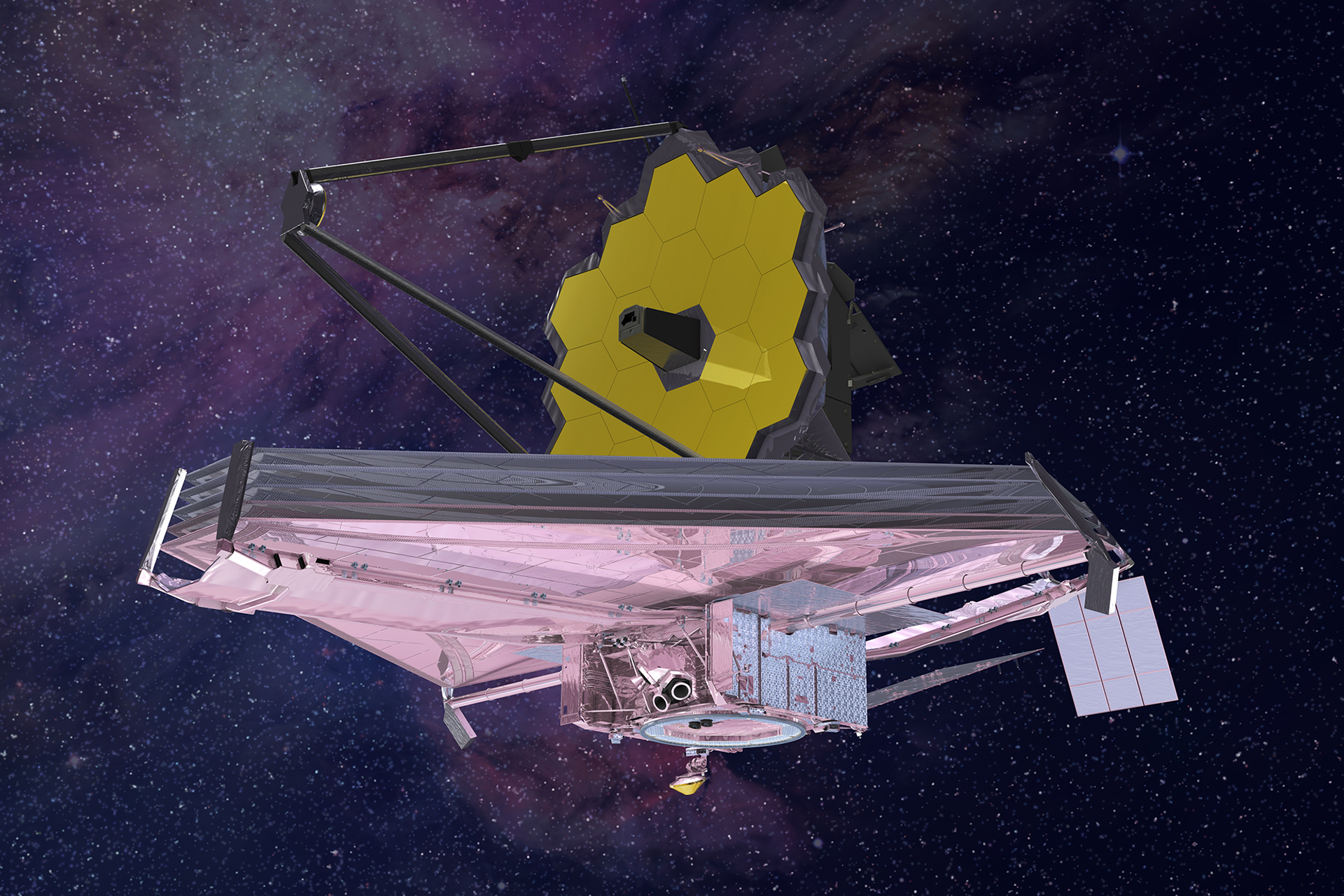
Photo credit: NASA, ESA, CSA, Northrop Grumman
In the vast realm of space, a revolutionary tool has been geared up to propel our exploration of the cosmos – the James Webb Space Telescope. Set up as a successor to the Hubble Space Telescope, Webb was launched in December 2021 with the aim of uncovering the formation of galaxies, stars, and planets [1]. As an extremely long duration is needed for the light from a very distant object to reach us, the observation we make today is actually reflecting their appearance in the past, providing us a peek into the early universe. Observing the conditions during the formation of the first galaxies enables scientists to trace the origins of our own galaxy, along with the planets and stars it encompasses.
Named after a prior administrator of NASA [2], Webb represents key advancements in the usage of space telescopes, and is the largest and most intricately designed observatories ever sent into space. The main component of the telescope, known as the primary mirror, functions to capture red and infrared light to facilitate the observation of far-off objects that are highly redshifted (footnote 1) [3, 4]. The mirror then reflects the light onto a smaller secondary mirror, where it is redirected to scientific instruments for interpretation.
A large primary mirror can reveal more details of a far-off object by collecting more light signals from it. Webb has a light collecting area 6.25 times greater than that of the Hubble Space Telescope [4], but one of the biggest challenges was the technical restriction of launching such a large mirror into space. To overcome this hurdle, the telescope was innovatively designed to be a folding telescope – much like origami – where the mirror would unfold once they had detached from the launch vehicle.
Webb is also an incredible feat of engineering that has the capability of adjusting its focus with very fine precision. The primary mirror is made up of 18 hexagonal segments of beryllium [3], whose position can be adjusted independently by the tiny mechanical motors called actuators behind each segment. Controlled by the team on the ground, adjustments as fine as about 1/10,000th of the width of a human hair can be made to produce focused, sharp images [5].
Designed to detect infrared light from distant sources, Webb itself requires extremely low temperatures in order not to interfere with those faint heat signals. To shield the telescope from heat and light from external sources such as the Sun, Earth, and Moon, scientists designed a five-layered sunshield as large as a tennis court to allow the telescope to work at extremely cool temperatures below -220°C by passively deflecting heat from between the sunshield layers [6].
Since its launch in 2021, Webb has not only provided us with an array of findings and breathtaking images, but also context to the images captured previously by Hubble. One such image was that of the Pillars of Creation, captured in the Eagle Nebula (Figure 1). While Hubble had captured the brown clouds of the structure, Webb was able to leverage its infrared imaging to capture also the individual new stars forming within it [7].
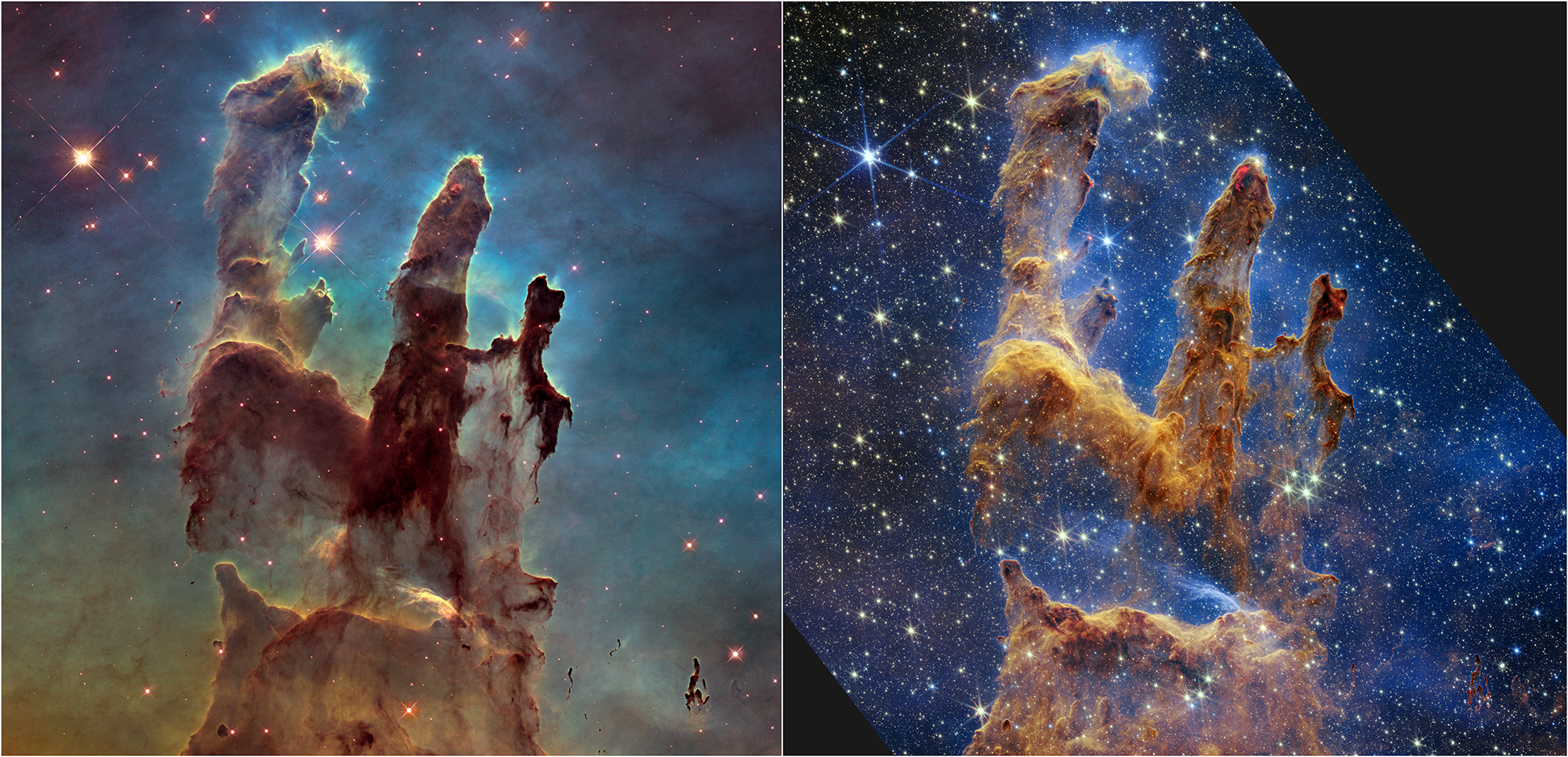
Figure 1 Hubble telescope (left) vs. James Webb Space Telescope (right) on the Pillars of Creation [7].
Photo credit: NASA, ESA, CSA, STScI; Joseph DePasquale (STScI), Anton M. Koekemoer (STScI), Alyssa Pagan (STScI)
In addition, Webb was able to capture images of the most distant galaxies known to scientists [8]. There were also data that shed light on the collision of galaxies (Figure 2) [9], and the atmospheres of planets inside and outside our solar system [10-12].
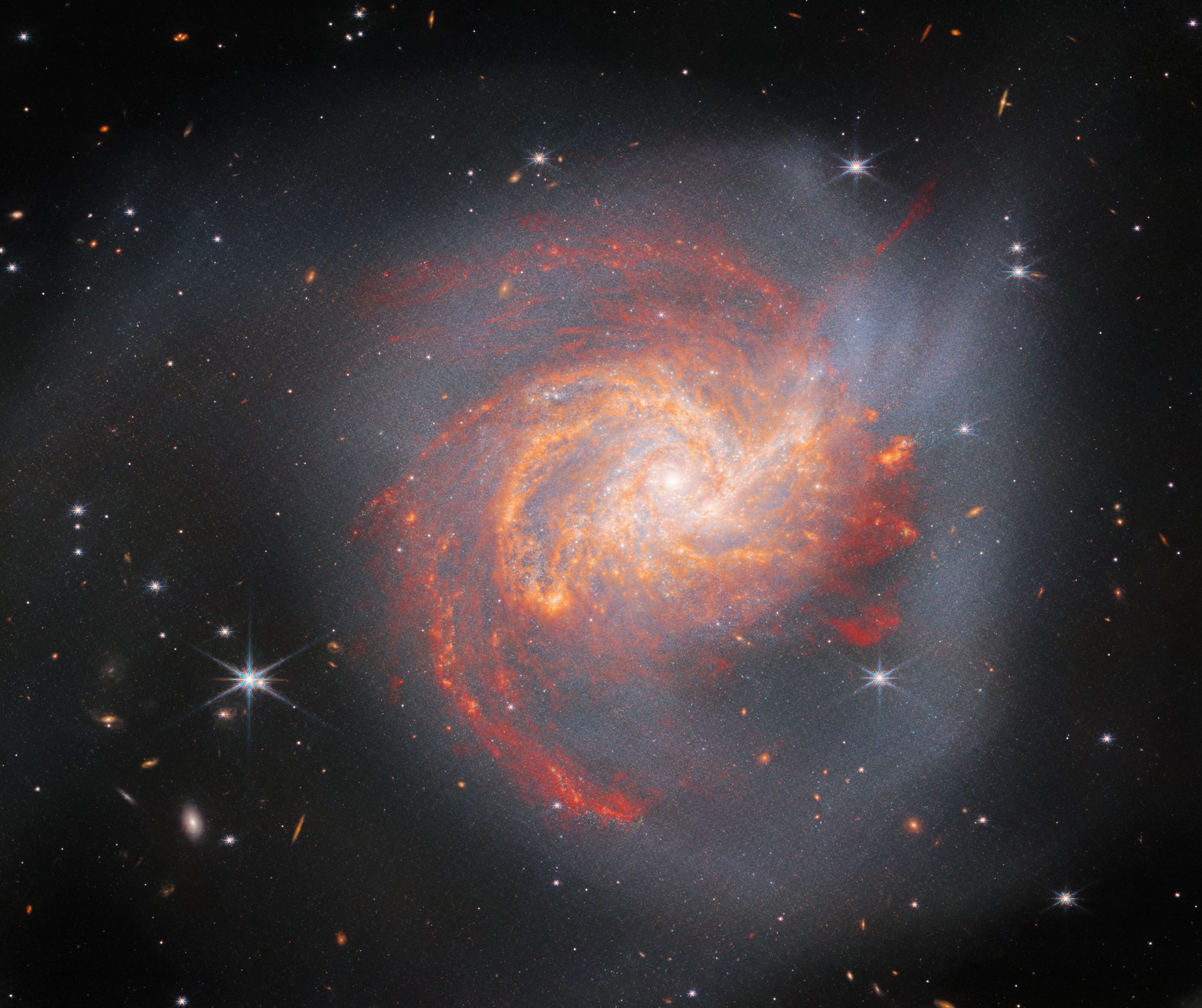
Figure 2 NGC 3526, the spiral galaxy shown in this image as the wreckage of a collision between two similarly massive galaxies occurred around 500 million years ago [13].
Photo credit: ESA/Webb, NASA & CSA, L. Armus, A. Evans
The James Webb Space Telescope marks a historic leap in humans’ quest to understand the universe. Its innovative design and cutting-edge technology make it an ideal tool to revolutionize our comprehension of the cosmos. Keep up with the latest discoveries by the James Webb Space Telescope – one of the greatest scientific feats of today’s day and age!
[Footnote]
1 Cosmological redshift: It was discovered in 1920s by the cosmologists Georges Lemaître and Edwin Hubble that the universe is expanding, meaning that every object is becoming further apart in the universe, so the incoming light waves from far objects have to travel an increasing distance before reaching us [14]. As a result, the wave is stretched in terms of wavelength and appears “redder” towards the infrared side of the spectrum.
Webb Gallery: A Collection of Stunning Images!
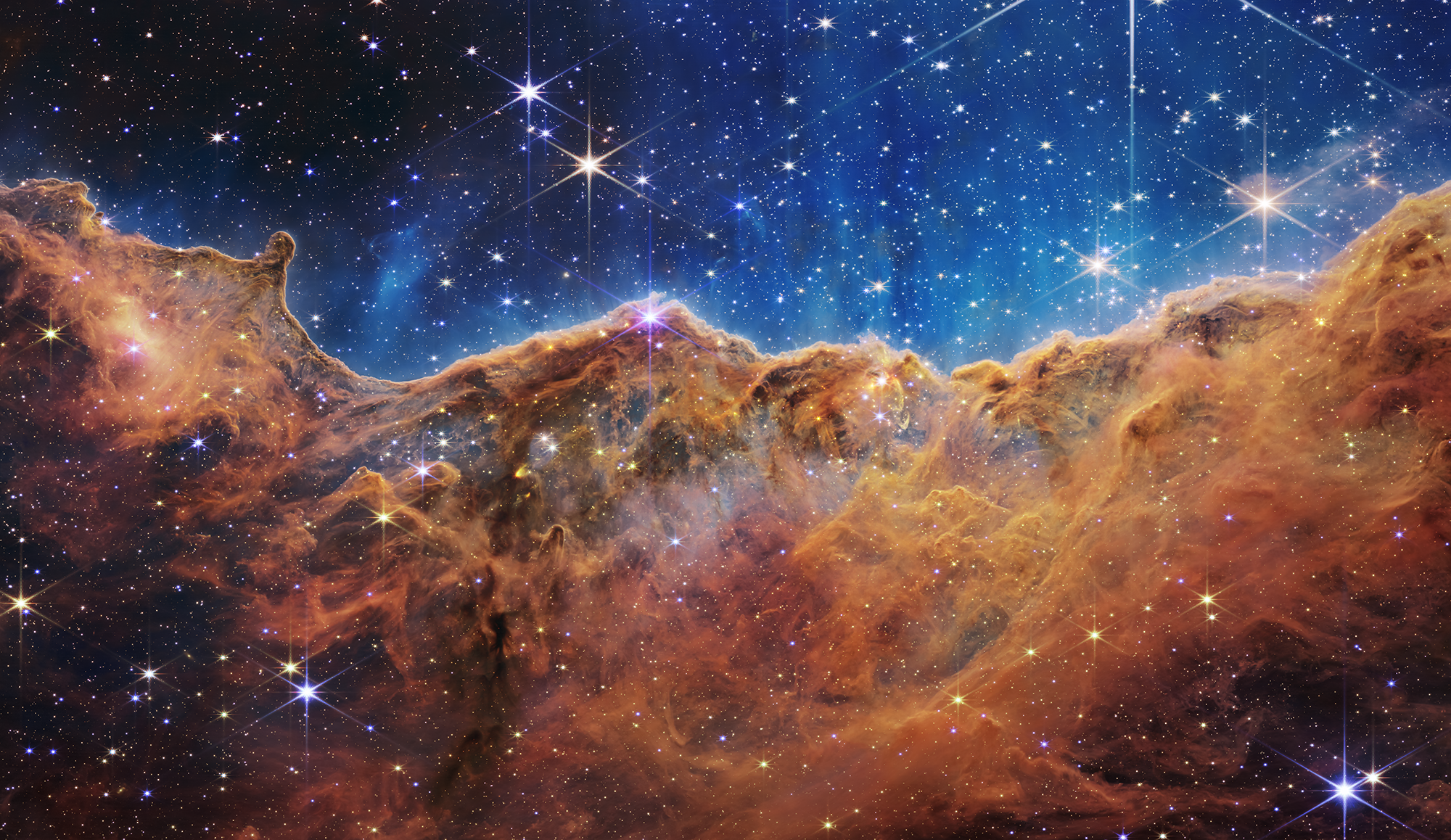
The Cosmic Cliffs. The image depicts the edge of a star-forming cavity within a cluster, called NGC 3324, located in the Carina Nebula. The ultraviolet radiation and intense winds from the young stars in the center of the cavity carve the area into what is called the “Cosmic Cliffs” [15, 16].
Photo credit: NASA, ESA, CSA, STScI

The Ring Nebula. A dying star which previously expelled its outer layers in concentric circles now ionizes and heats up its ejected gas to form this colorful ring-shaped planetary nebula. The bright ring is mainly composed of molecular hydrogen gas [17, 18].
Photo credit: ESA/Webb, NASA, CSA, M. Barlow (University College London), N. Cox (ACRI-ST), R. Wesson (Cardiff University)


Uranus and its moons. The larger image depicts the planet Uranus along with 14 of its 27 moons, and some distant background galaxies. The close-up shows Uranus and its rings in great detail, surrounded by nine of its moons [19, 20].
Photo credit: NASA, ESA, CSA, STScI
References 參考資料:
-
Kalirai, J. (2018). Scientific discovery with the James Webb Space Telescope. Contemporary Physics, 59(3), 251-290.
https://doi.org/10.1080/00107514.2018.1467648
https://www.tandfonline.com/action/showCitFormats?doi=10.1080/00107514.2018.1467648 - Witze, A. (2022, November 21). NASA really, really won’t rename Webb telescope despite community pushback. Nature. https://www.nature.com/articles/d41586-022-03787-1
- NASA. (n.d.). Webb’s Mirror. James Webb Space Telescope. https://webb.nasa.gov/content/observatory/ote/mirrors/index.html
- NASA. (n.d.). Webb vs Hubble Telescope. James Webb Space Telescope. https://webb.nasa.gov/content/about/comparisonWebbVsHubble.html
- Fisher, A. (2022, January 13). Mirror, Mirror…On Its Way! NASA Blogs. https://blogs.nasa.gov/webb/2022/01/13/mirror-mirroron-its-way/
- NASA. (n.d.). The Sunshield Webb. James Webb Space Telescope. https://webb.nasa.gov/content/observatory/sunshield.html
- NASA Webb Telescope Team. (2022, October 19). NASA’s Webb Takes Star-Filled Portrait of Pillars of Creation. NASA. https://www.nasa.gov/universe/nasas-webb-takes-star-filled-portrait-of-pillars-of-creation/
- Cooper, K. (2023, November 14). James Webb Space Telescope finds 2 of the most distant galaxies ever seen. Space.com. https://www.space.com/james-webb-space-telescope-distant-galaxies
- Lea, R. (2023, July 5). James Webb Space Telescope spots the wreckage of a cosmic clash of the Titans (image). Space.com. https://www.space.com/webb-telescope-galactic-collision-image
- Sanders, R. (2023, July 27). James Webb Space Telescope sees Jupiter moons in a new light. Berkeley News. https://news.berkeley.edu/2023/07/27/james-webb-space-telescope-sees-jupiter-moons-in-a-new-light
- Cable News Network. (2023, December 20). Uranus’ mysterious features on display in new Webb image. CBS News. https://www.cbsnews.com/baltimore/news/uranus-mysterious-features-on-display-in-new-webb-image/
- NASA. (n.d.). Other Worlds. James Webb Space Telescope. https://webb.nasa.gov/content/science/origins.html
- European Space Agency. (2023, July 3). Clash of the Titans. ESA/Webb. https://esawebb.org/images/potm2306a/
- Schilling, G. (2023, February 8). Why galaxies look redder the further away they are. BBC Sky at Night Magazine. https://www.skyatnightmagazine.com/space-science/galaxies-redshift
- NASA Webb Telescope Team. (2022, July 12). NASA’s Webb Reveals Cosmic Cliffs, Glittering Landscape of Star Birth. NASA. https://www.nasa.gov/image-article/nasas-webb-reveals-cosmic-cliffs-glittering-landscape-of-star-birth/
- Space Telescope Science Institute. (2022, July 12). “Cosmic Cliffs” in the Carina Nebula (NIRCam Image). Webb Space Telescope. https://webbtelescope.org/contents/media/images/2022/031/01G77PKB8NKR7S8Z6HBXMYATGJ
- Cesari, T. (2023, August 21). Webb Reveals Intricate Details in the Remains of a Dying Star. NASA Blogs. https://blogs.nasa.gov/webb/2023/08/21/webb-reveals-intricate-details-in-the-remains-of-a-dying-star/
- Space Telescope Science Institute. (2023, August 21). Ring Nebula (NIRCam Image). Webb Space Telescope. https://webbtelescope.org/contents/media/images/01H82G0PP38P6PBXQ11BEVSMY0
-
Space Telescope Science Institute. (2023, December 18).
- Space Telescope Science Institute. (2023, December 18). Uranus Close-up (NIRCam image). Webb Space Telescope. https://webbtelescope.org/contents/media/images/2023/150/01HHFNNWQTA69J6K680PVZN4A1?news=true
Authors:
Roshni Printer
December 2024