|
Category: Uncategorised
-

newsletter (Nov 2021 – Issue 12)
-
newsletter (Nov 2021 – Issue 12)

About the Hong Kong Laureate Forum
Welcome to the November 2021 issue of the newsletter of the Hong Kong Laureate Forum!
The past two months were exciting for us as we had successfully concluded the first two chapters of the “Prelude to the Inaugural Forum” series (Prelude Events) and took part in the InnoCarnival 2021 (23-31 October) at the Hong Kong Science Park.
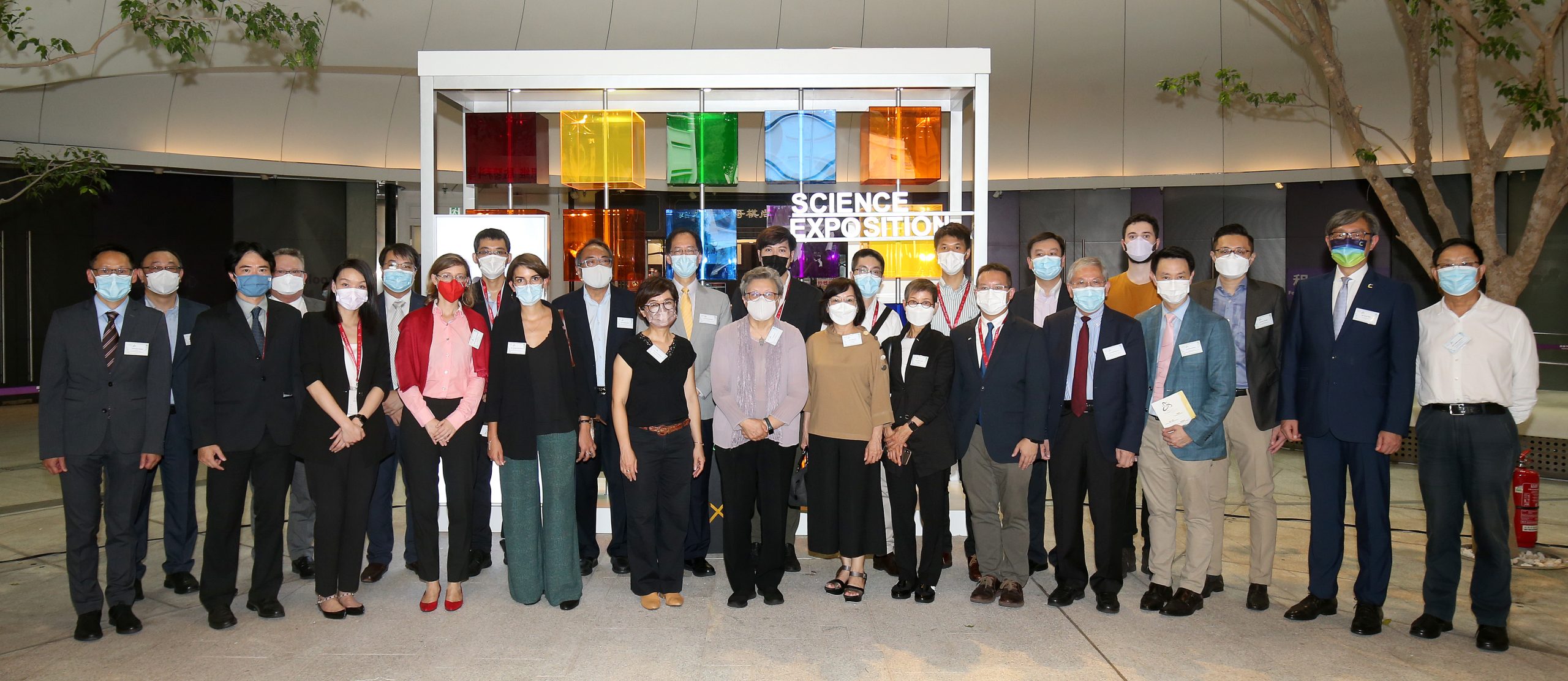
With the fresh memories of having Typhoon Kompasu roared past Hong Kong in mid-October, it was with much regret that the seminars in the second round of “Science Exposition” covering Astronomy and Mathematical Sciences were called off due to inclement weather. Yet, when the typhoon was gradually moving away from Hong Kong, we had resumed the exhibition at Xiqu Centre, West Kowloon Cultural District on 15-16 October to showcase the outstanding research achievements from teams of City University of Hong Kong, Hong Kong Baptist University, The Chinese University of Hong Kong, The Hong Kong Polytechnic University and The University of Hong Kong.
To keep up the good vibes of promoting understanding and interests of the public, particularly the young generation, in Hong Kong in various disciplines in science and technology, the HKLF partnered with the Consulate General of France in Hong Kong and Macau (CGF) to present the Hong Kong debut of the virtual reality (VR) artwork, “I Will Sleep When I’m Dead”, created by renowned French artist, Ms Jeanne SUSPLUGAS at the InnoCarnival 2021, organised by the Innovation and Technology Commission. This unique fun-filled yet thought-provoking VR experience, which invited participants to venture into a world of brain neurons and synapses and enable them to immerse themselves in the exploration of science and technology, had become a major attraction at the InnoCarnival and enjoyed by thousands of visitors.
Officiating guests of the InnoCarnival 2021’s opening ceremony, Mr Paul CHAN, GBM, GBS, MH, JP, Financial Secretary, and Mr Alfred SIT, JP, Secretary for Innovation and Technology, together with Mr Alexandre GIORGINI, Consul General of France in Hong Kong and Professor Timothy W TONG, BBS, JP, Chairman of the HKLF, marveled at how the crossover between science and art unleased new creativity during their tour of the HKLF booth. Besides the VR experience, the public also found fun games with awesome prizes at the HKLF booth.
The second chapter of the Prelude Events was the inspirational three-day “Masterminds, Masterclasses”. This chapter was presented in a hybrid format of online and offline engagement, comprising seminars and dialogue sessions hosted by renowned and award-winning scientists around the globe. Over 10 prominent scientists including Shaw Laureates, recipients of Breakthrough Prize, CNRS Gold Medal, Fields Medal and Royal Medal were gathered at the headquarters of The Hong Kong Federation of Youth Groups on 16-18 November as guest speakers for three disciplines of science, namely Life Science and Medicine, Astronomy and Mathematical Sciences.
Given the difficulty to have in-person participation of non-local speakers, we were excited to find an alternative to the usual online platforms – by beaming some of the speakers in innovative three-dimension holographic images from different parts of world to participate in the seminars. We believe it spiced up our event with an engaging and thrilling experience for our audience.
The HKLF would like to express our heartful appreciation for all our speakers, research teams, partners, attendees and friends for making the abovementioned events such a great success and helped us continue to pursue our missions to provide a platform for renowned scientists of different disciplines from the world over to come together to promote science; and to enlighten the younger generation in the scientific community.
A Century of Physics – A Public Lecture in Honour of Professor Yang Chen-Ning at One Hundred
Summary
Modern physics had its beginnings about a century ago with the birth of quantum mechanics. Over the past few decades, scientists have built on knowledge of electromagnetism to master the laws of the weak and strong interactions. They interactions all follow the gauge theory first proposed by Yang Chen-Ning and Mills. The weak interaction distinguishes left from right, exhibiting the non-conservation of parity first proposed by Yang together with Lee Tsung-Dao. This article is an excerpt from a public lecture, “100 Years of Physics: Celebration for CN Yang at One Hundred”. It sketches the main developments in physics over the past century, provides a brief history of Professor Yang’s life and his ground breaking works, and offers a look ahead to physics in the 21st century.
1. Introduction
Professor Yang Chen-Ning is one of the most important theoretical physicists of the contemporary era, and one of the first Chinese to receive the Nobel Prize. He has also been a friend of The Chinese University of Hong Kong (CUHK) for more than half a century. As he enters the hundredth year of a remarkable life, the Chinese Physical Society, Tsinghua University and CUHK have jointly organised the “Celebratory Conference for CN Yang at One Hundred”, held in Beijing on 22 and 23 September and attended online by friends and fellow physicists in Hong Kong. Unlike the conference targeting physicists, the seminar today aims to provide young Hong Kong students with some insight into the life and work of Professor Yang, and to look ahead to the future of physics in the next hundred years. Of course, ‘looking ahead to the future’ is a trite phrase often bandied about in many discussions, but the phrase is especially apt for today’s event, given that much of the progress in physics in the next one hundred years (mainly concerning elementary particles, but also extending to other fields) will inevitably be built upon on the non-commutative gauge theory pioneered by Professor Yang, just as all classical physics is built upon Newton’s laws. The pivotal position of gauge theories is not well appreciated by the general public, and it will be one purpose of the present talk to explain the unique contributions of Professor Yang.

Author:
Prof Kenneth YOUNG, Emeritus Professor, Department of Physics, The Chinese University of Hong Kong
November 2021
Soap Films, Minimal Surfaces and Beyond
Minimal surfaces are amongst the most important objects studied in differential geometry. Apart from its intrinsic mathematical beauty, they appear naturally in a wide range of physical phenomena, for example, in phase transitions and in the biophotonic nanostructures in butterfly wing scales. Minimal surfaces also make their presence in material science, engineering, and even in art and architecture. Frei OTTO used minimal surfaces in several of his architectural designs including the 1972 Summer Olympic Games Stadium in Munich, Germany.
Soap films and Plateau’s experiments
In fact, we do not need to be a scientist or an architect to understand what a minimal surface is. We all have early acquaintance with such surfaces in the form of soap films as well as their related cousin, soap bubbles. If you dip a piece of metal wire into soap solutions and take it out, you will see a thin layer of soap films bounded by the wire. For example, a flat disk will be formed for a round circular wire. If you take two parallel coaxial circles instead, then you will obtain a rotationally symmetric piece of soap film known as the catenoid. In the 19th century, the Belgian physicist and mathematician Joseph PLATEAU was the first to conduct extensive studies of soap films through experiments with different shapes of metal wire. Through his experimental observations, he formulated a set of laws – known as Plateau’s laws – that describe the shape and configuration of all possible soap films.
Author:
Prof Martin LI, Associate Professor, Department of Mathematics, The Chinese University of Hong Kong
November 2021
Astronomical Phenomena in November and December 2021
Partial Lunar Eclipse
On 19 November 2021, a partial lunar eclipse occurred over the sky of Hong Kong in the evening. In fact, this partial lunar eclipse started at about 2pm HKT when the “Moon enters penumbra” of Earth, that is, the instant of first external tangency of the Moon with Earth’s penumbra. After that, “Moon enters umbra”, that is the instant of first external tangency of the Moon with Earth’s umbra; then “the greatest eclipse” which is the moment when the centre of the Moon is the closest to the centre of Earth’s shadow. This was followed by “Moon leaves umbra”, that is the instant of the last external tangency of the Moon with Earth’s umbra; and “Moon leaves penumbra” at 8:06pm, that is the instant of the last external tangency of the Moon with Earth’s penumbra. It also marks the end of this lunar eclipse. The whole process lasted over six hours, which was the longest partial lunar eclipse since the 15th century. However, the moonrise on that day was at 5:38pm and “the greatest eclipse” took place at 5:03pm. Therefore, on that day, the process of “Moon enters penumbra”, “Moon enters umbra” and “the greatest eclipse” were not observable in Hong Kong. It was actually similar to the situation of total lunar eclipse in May this year where the eclipse observable was already in progress upon moonrise.
Why did this partial lunar eclipse last so long?
This is actually related to the distance between the Moon and Earth. We all know that the Moon’s orbit around Earth is elliptical, so the distance between the two is different at different times. When the Moon is the closest to Earth, the position is called “Perigee” and the full moon will be the largest in the year. When the Moon is furthest from Earth, the position is called “Apogee”. “The greatest eclipse” this time occurred when the moon was quite close to the apogee and the distance between the Moon and Earth was relatively far and therefore, it took more time for the Moon to leave the shadow of Earth. This is why the partial lunar eclipse lasted longer.
The next time a lunar eclipse can be observed in Hong Kong will be on 8 November 2022 and it will be a total lunar eclipse. You can try to find out interesting information about the different time and duration of the lunar eclipse.
Geminid Meteor Shower
Besides lunar eclipse in November, a Geminid meteor shower will occur on 13-14 December this year and we may be able to observe it in Hong Kong. As we had mentioned in previous issue of the newsletter, a meteor is a phenomenon in which cosmic debris called meteoroids entering Earth’s atmosphere at extremely high speed. A meteor shower is a celestial event in which many meteors appear in night sky when Earth encounters a large number of meteoroids. This time the Zenithal Hourly Rate is projected to be about 150. However, the Moon phase on that night will be “First Quarter” and the observation may be more affected by moonlight. If you are interested in observing this phenomenon, you can choose a spot in the suburbs with an unobstructed view and low light pollution. You may be able to observe the meteor shower, if weather permits.


If you want to unsubscribe our newsletter, please
reply this e-mail directly.如欲取消訂閱本論壇電子通訊,請直接回覆此電郵。

-
Masterminds, Masterclasses
The Science Exposition is the first chapter to kick-off the “prelude to the Inaugural Forum” series etc…
-
newsletter (Sep 2021 – Issue 11)

关于香港桂冠论坛
欢迎大家来到香港桂冠论坛2021年9月份通讯。
首届论坛前奏活动(前奏活动)的第一个主题活动「科学解密」已于9月14至18日在西九文化区戏曲中心顺利举行,我们十分荣幸得到各位嘉宾莅临出席开幕礼,为活动揭开序幕。在首日以生命科学与医学为主题的展览会中,来自香港本地多间大学和科研机构的研究团队在展览中为参观人士讲解他们最新的研究项目和分享经验。另外在同一时间举行的研讨会中,4位科学家在台上精彩的演讲和分享亦令台下的中学生、大学生及青年科学家等听得津津有味。我们相信各位参加者都能够在活动当中得到很多的启发。 「科学解密」另外两个主题 – 天文学和数学科学的活动将于10月13至16日在同一地点举行,更多精彩的内容等着大家。
论坛委员会在此特别感谢各研究团队,为我们提供了一个十分精彩的展览和研讨会。另外亦感谢各位出席开幕礼的嘉宾,在我们筹备今次活动和在2022年11月举办的首届论坛的过程中都给予了很大的支持。
而前奏活动第二个主题活动,亦是我们2021年的旗舰项目,「者智·智」讲青年将于11月16日至18日在香港协会举行,内容包括由世界知名和获奖科学家的研讨讨价还价会和对谈会。已经接受我们邀请的著名科学家包括2021年邵逸夫数学科学奖得奖者尚-米尔•比斯姆教授、1994年菲尔兹奖得奖者皮埃尔-•利翁教授及2021年科学科学奖–生命科学奖和2021年皇家奖章得奖者卢钰明教授。桂冠论坛在此特别恭喜卢钰明教授在今年8月成为2021年生物学科皇家奖章得奖,亦是200年新片创办者!有关本届华人得奖者!有关首届论坛前狂欢活动的网站安排同信息,请记得看我们的和社交媒体!
科学活动停不了!除了桂冠论坛举办的前奏活动之外,由创新科技署主办的创新科技嘉年华2021将于10月23至31日在香港科学园举行。会场将会有超过30个展览及游戏摊位,香港桂冠论坛亦将会参与其中。我们很高兴在今次的展览中和法国驻港澳总领事馆合作,展出由法国艺术家Jeanne Susplugas制作,名为“I Will Sleep When I’m Dead”的独特虚拟实境体验。参加者将会进入充满神经元和突触的头颅中,迷失在迷宫中,并穿越由象形图构成的「思想」。除了虚拟实境体验外,还有不同的小游戏和丰富奖品等着一众参观人士,请大家届时抽空出席!更多有关创新科技嘉年华2021的资讯,可浏览他们的网站。
香港子午线解密(二) – 寻找魔法石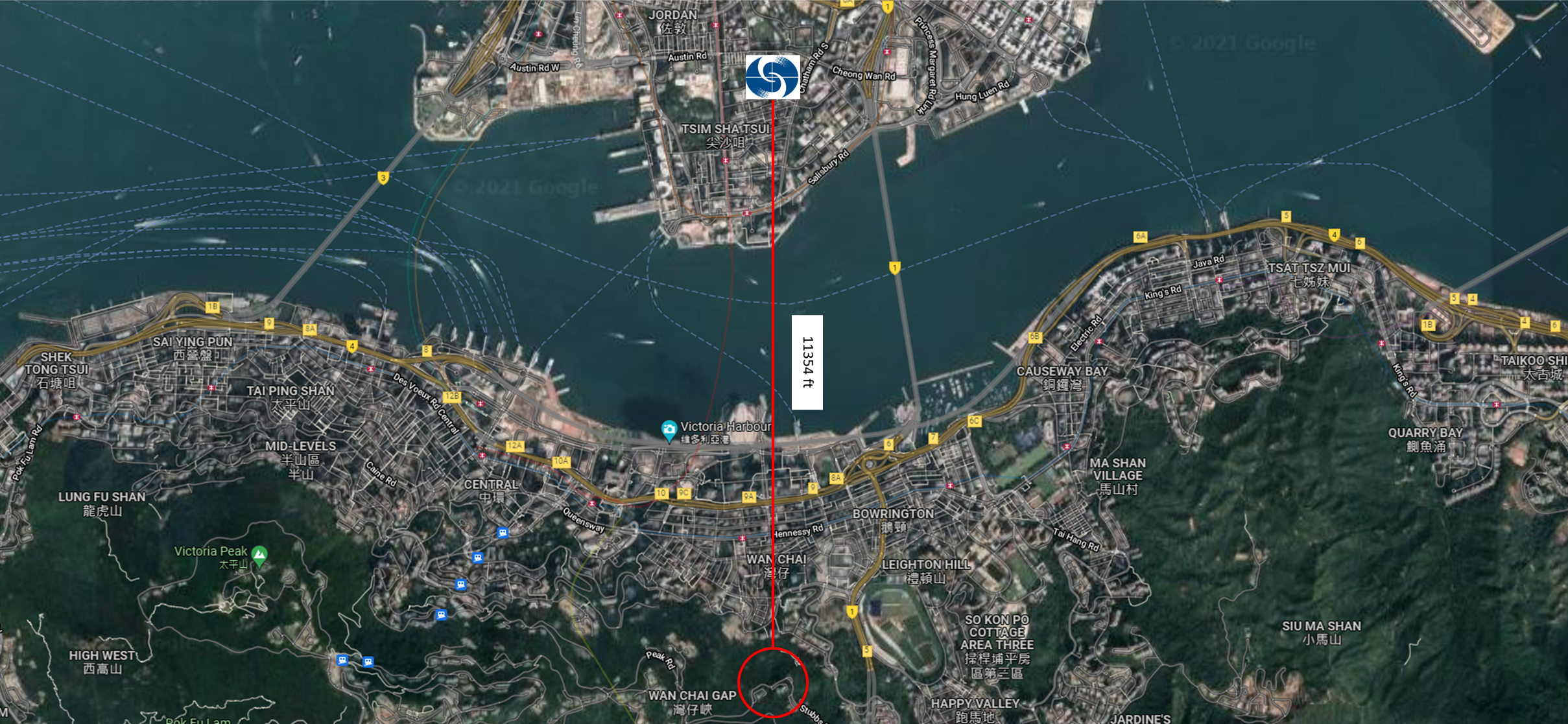
上回讲到,为满足远洋航行的需要,英国人发明了航海钟,帮助船长准确掌握船只的经度,确保航行安全。虽然航海钟已经非常准确,但亦需要定时作出校正。这就要依赖各大主要港口所提供的时间球服务。
天文台如何测定时间?
在香港肩负这个重要责任就是香港天文台,它于1883年成立时主要目的正是利用中星仪(transit instrument)作天文观测来测定「地方时」〔local time〕。简单来说,当太阳经过某地方的正南或正北时,就是当地正午,这是日晷的基本原理,所量度的时间称为「视太阳时」(apparent solar time)。不过,视太阳时欠缺均匀性。这是由于地球围绕太阳的轨道并非圆形,其运行速度会随着地球与太阳的距离改变而出现变化,再加上地球自转轴倾斜的影响,因此必须采用一种较有均匀性的「平太阳时」(mean solar time)。大家所熟识的「格林威治平均时间」(Greenwich Mean Time)就是皇家格林威治天文台艾里中星仪(Airy Transit Circle)经度(即上次提及的「本初子午线」的经度)的平太阳时。同样地,香港天文台开台初期所提供的时间服务是基于天文台中星仪经度的平太阳时,这个经度就是本文主角 ─ 香港子午线。

作者︰
香港天文台前台长岑智明先生
利用逆问题窥探内部世界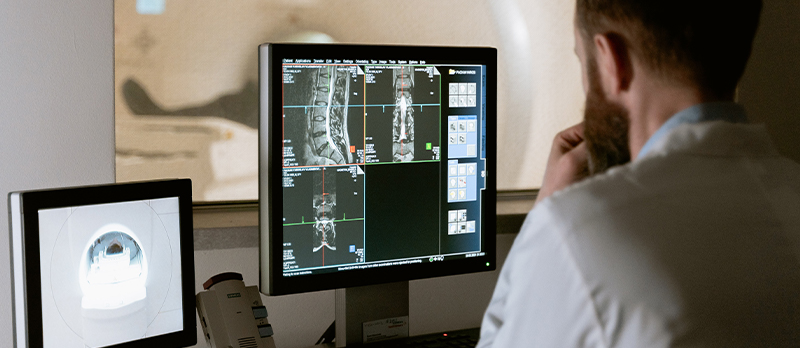
何谓逆问题?
对于科技界的许多问题,我们可以采集各种观测数据,进而推断出系统中的有用资讯,例如某些可以产生结果(或观测数据)的物理参数。我们称这种问题为「逆问题」,因为它是由结果推算出原因;而「正问题」则相反,是由原因推算出结果。逆问题能揭示出我们无法直接观察到的参数,在系统识别、光学、雷达、声纳学、讯号处理、医学造影、地球物理学、海洋学、天文学、遥距感应、非破坏测试等多个范畴均已获广泛应用。为更具体讲解逆问题,在下文我们将开始慢慢揭开一个特定逆问题的神秘面纱:X 光计算机断层成像。
X光摄影的由来
我们的旅程始于 1895 年,当时德国物理学家威廉.伦琴(Wilhelm Rontgen)正在用克鲁克斯管(Crookes tube)做实验。他发现,某些由克鲁克斯管发出的非可见光线,能穿透阻隔可见光线的黑色卡纸。他用「X」来命名这种射线,表示它是未知的射线类型。当他用感光板为妻子的手掌造影后,他很快就意识到能将射线用在医疗上。这张正是史上第一张人类身体部位的X光片。伦琴藉由这项发现获颁首届诺贝尔物理学奖。
时至今日,X光摄影(又名投影X光摄影或常规X光摄影)已普遍用于筛查肺炎、骨折、癌症、血管疾病;而在我们对抗新型冠状病毒病的努力中,亦有派上用场。其原理是,当X光穿过病人身体时,X光会因在体内散射及被吸收而衰减。因此,我们可以从透射的X光在底片萤光幕探测器上的读数推断出与体内有关的有用资讯。粗略的看,我们可以将投影X光片当作是X光照射之下半透明的三维身体所投射出来的二维阴影。
作者︰
香港科技大学数学系副教授张海教授
气凝胶 — 由空气构成的物质及其特性
在1931年,美国化学工程师Samuel Stephens Kistler博士与同事Charles Learned博士打赌,说他们可以把啫喱内的液体换成气体而不会使它塌陷。他们把这个概念称为「气凝胶」,并最终使用二氧化矽造出史上第一块气凝胶。此后,其他材料,譬如氧化铝、纤维素、卵白蛋白、橡胶和琼脂都被用于制作气凝胶。你知道气凝胶是怎样制造的吗?让我们探索一下气凝胶的科学和它一系列的应用,这全都要归功于它的密度和隔热特性。
如何制造气凝胶
要明白如何制造气凝胶,我们首先要了解果冻的结构 — 对,是香甜有弹性,大家都喜爱的果冻啊!想像你正在厨房准备果冻,你需要用上三种材料:果冻粉、水和糖。我们可以暂且忽略糖,因为它只为果冻提供甜味。制作出来的果冻含有95%水份和少量的多孔固体结构,这样的结构被定义为水凝胶(hydrogel)。要制作气凝胶,我们会希望把水凝胶当中的水转换成气体。
要把水凝胶中的水换走这个步骤听起来很简单,但其实非常复杂。如果你仅是把凝胶加热令当中的液体汽化,液体分子之间的吸引力会令凝胶的固体网状结构因毛细管作用塌陷,令整块凝胶收缩。试想像溶剂分子不断从凝胶汽化,剩下的液体分子借着分子间的吸引力不停把余下的分子拉在一起,以弥补分子流失所产生的空位以维持凝胶的密度。这会在纤巧的凝胶骨架产生一股向内收缩的压力,令网状结构塌陷并收缩。
作者︰
Randy Stefan TANUWIJAYA
《科言》学生编辑
香港科技大学
If you want to unsubscribe our newsletter, please
reply this e-mail directly.如欲取消訂閱本論壇電子通訊,請直接回覆此電郵。
-
newsletter (Sep 2021 – Issue 11)
關於香港桂冠論壇
歡迎大家來到香港桂冠論壇2021年9月份通訊。
首屆論壇前奏活動(前奏活動)的第一個主題活動「科學解密」已於9月14至18日在西九文化區戲曲中心順利舉行,我們十分榮幸得到各位嘉賓蒞臨出席開幕禮,為活動揭開序幕。在首日以生命科學與醫學為主題的展覽會中,來自香港本地多間大學和科研機構的研究團隊在展覽中為參觀人士講解他們最新的研究項目和分享經驗。另外在同一時間舉行的研討會中,4位科學家在台上精彩的演講和分享亦令台下的中學生、大學生及青年科學家等聽得津津有味。我們相信各位參加者都能夠在活動當中得到很多的啟發。「科學解密」另外兩個主題 – 天文學和數學科學的活動將於10月13至16日在同一地點舉行,更多精彩的內容等著大家。
論壇委員會在此特別感謝各研究團隊,為我們提供了一個十分精彩的展覽和研討會。另外亦感謝各位出席開幕禮的嘉賓,在我們籌備今次活動和在2022年11月舉辦的首屆論壇的過程中都給予了很大的支持。
而前奏活動第二個主題活動,亦是我們2021年的旗艦項目,「智者‧智講」將於11月16至18日在香港青年協會總部舉行,內容包括由世界知名和獲獎科學家主持的研討會和對談會。已經接受我們邀請的著名科學家包括2021年邵逸夫數學科學獎得獎者尚-米歇爾•比斯姆教授、1994年菲爾茲獎得獎者皮埃爾-路易•利翁教授及2021年科學突破獎–生命科學獎和2021年皇家獎章得獎者盧煜明教授。桂冠論壇在此特別恭喜盧煜明教授在今年8月成為2021年生物學科皇家獎章得獎者,亦是這個獎項成立近200年以來首位華人得獎者!有關首屆論壇前奏活動的安排同資訊,請記得留意我們的網站和社交媒體!
科學活動停不了!除了桂冠論壇舉辦的前奏活動之外,由創新科技署主辦的創新科技嘉年華2021將於10月23至31日在香港科學園舉行。會場將會有超過30個展覽及遊戲攤位,香港桂冠論壇亦將會參與其中。我們很高興在今次的展覽中和法國駐港澳總領事館合作,展出由法國藝術家Jeanne Susplugas製作,名為“I Will Sleep When I’m Dead”的獨特虛擬實境體驗。參加者將會進入充滿神經元和突觸的頭顱中,迷失在迷宮中,並穿越由象形圖構成的「思想」。除了虛擬實境體驗外,還有不同的小遊戲和豐富獎品等著一眾參觀人士,請大家屆時抽空出席!更多有關創新科技嘉年華2021的資訊,可瀏覽他們的網站。
香港子午線解密(二) – 尋找魔法石
上回講到,為滿足遠洋航行的需要,英國人發明了航海鐘,幫助船長準確掌握船隻的經度,確保航行安全。雖然航海鐘已經非常準確,但亦需要定時作出校正。這就要依賴各大主要港口所提供的時間球服務。
天文台如何測定時間?
在香港肩負這個重要責任就是香港天文台,它於1883年成立時主要目的正是利用中星儀(transit instrument)作天文觀測來測定「地方時」〔local time〕。簡單來說,當太陽經過某地方的正南或正北時,就是當地正午,這是日晷的基本原理,所量度的時間稱為「視太陽時」(apparent solar time)。不過,視太陽時欠缺均勻性。這是由於地球圍繞太陽的軌道並非圓形,其運行速度會隨著地球與太陽的距離改變而出現變化,再加上地球自轉軸傾斜的影響,因此必須採用一種較有均勻性的「平太陽時」(mean solar time)。大家所熟識的「格林威治平均時間」(Greenwich Mean Time)就是皇家格林威治天文台艾里中星儀(Airy Transit Circle)經度(即上次提及的「本初子午線」的經度)的平太陽時。同樣地,香港天文台開台初期所提供的時間服務是基於天文台中星儀經度的平太陽時,這個經度就是本文主角 ─ 香港子午線。
作者︰
香港天文台前台長岑智明先生
利用逆問題窺探內部世界
何謂逆問題?
對於科技界的許多問題,我們可以採集各種觀測數據,進而推斷出系統中的有用資訊,例如某些可以產生結果(或觀測數據)的物理參數。我們稱這種問題為「逆問題」,因為它是由結果推算出原因;而「正問題」則相反,是由原因推算出結果。逆問題能揭示出我們無法直接觀察到的參數,在系統識別、光學、雷達、聲納學、訊號處理、醫學造影、地球物理學、海洋學、天文學、遙距感應、非破壞測試等多個範疇均已獲廣泛應用。為更具體講解逆問題,在下文我們將開始慢慢揭開一個特定逆問題的神秘面紗:X 光計算機斷層成像。
X光攝影的由來
我們的旅程始於 1895 年,當時德國物理學家威廉.倫琴(Wilhelm Rontgen)正在用克鲁克斯管(Crookes tube)做實驗。他發現,某些由克魯克斯管發出的非可見光線,能穿透阻隔可見光線的黑色卡紙。他用「X」來命名這種射線,表示它是未知的射線類型。當他用感光板為妻子的手掌造影後,他很快就意識到能將射線用在醫療上。這張正是史上第一張人類身體部位的X光片。倫琴藉由這項發現獲頒首屆諾貝爾物理學獎。
時至今日,X光攝影(又名投影X光攝影或常規X光攝影)已普遍用於篩查肺炎、骨折、癌症、血管疾病;而在我們對抗新型冠狀病毒病的努力中,亦有派上用場。其原理是,當X光穿過病人身體時,X光會因在體內散射及被吸收而衰減。因此,我們可以從透射的X光在底片螢光幕探測器上的讀數推斷出與體內有關的有用資訊。粗略的看,我們可以將投影X光片當作是X光照射之下半透明的三維身體所投射出來的二維陰影。
作者︰
香港科技大學數學系副教授張海教授
氣凝膠 — 由空氣構成的物質及其特性
在1931年,美國化學工程師Samuel Stephens Kistler博士與同事Charles Learned博士打賭,說他們可以把啫喱內的液體換成氣體而不會使它塌陷。他們把這個概念稱為「氣凝膠」,並最終使用二氧化矽造出史上第一塊氣凝膠。此後,其他材料,譬如氧化鋁、纖維素、卵白蛋白、橡膠和瓊脂都被用於製作氣凝膠。你知道氣凝膠是怎樣製造的嗎?讓我們探索一下氣凝膠的科學和它一系列的應用,這全都要歸功於它的密度和隔熱特性。
如何製造氣凝膠
要明白如何製造氣凝膠,我們首先要了解果凍的結構 — 對,是香甜有彈性,大家都喜愛的果凍啊!想像你正在廚房準備果凍,你需要用上三種材料:果凍粉、水和糖。我們可以暫且忽略糖,因為它只為果凍提供甜味。製作出來的果凍含有95%水份和少量的多孔固體結構,這樣的結構被定義為水凝膠(hydrogel)。要製作氣凝膠,我們會希望把水凝膠當中的水轉換成氣體。
要把水凝膠中的水換走這個步驟聽起來很簡單,但其實非常複雜。如果你僅是把凝膠加熱令當中的液體汽化,液體分子之間的吸引力會令凝膠的固體網狀結構因毛細管作用塌陷,令整塊凝膠收縮。試想像溶劑分子不斷從凝膠汽化,剩下的液體分子藉著分子間的吸引力不停把餘下的分子拉在一起,以彌補分子流失所產生的空位以維持凝膠的密度。這會在纖巧的凝膠骨架產生一股向內收縮的壓力,令網狀結構塌陷並收縮。
作者︰
Randy Stefan TANUWIJAYA
《科言》學生編輯
香港科技大學
If you want to unsubscribe our newsletter, please
reply this e-mail directly.如欲取消訂閱本論壇電子通訊,請直接回覆此電郵。
-
newsletter (Sep 2021 – Issue 11)
About the Hong Kong Laureate Forum
Welcome to the September 2021 issue of the newsletter of the Hong Kong Laureate Forum!
The first chapter of the “Prelude to the Inaugural Forum” series (Prelude Events), SCIENCE EXPOSITION, was successfully held on 14-18 September at Xiqu Centre, West Kowloon Cultural District. We are honoured to have distinguished guests attended the opening ceremony to kick-off the event. On the first day of the Life Science and Medicine exhibition, research teams from local universities and science institutes explained their latest projects to and shared their experiences with participants at the exhibition. At the seminar held simultaneously with the exhibition, the outstanding presentations and sharing from four scientist speakers provided insight and knowledge to the audience which included students from secondary schools and universities as well as young scientists. We believe that the participants were inspired from the sharing. The exhibition on the other two scientific disciplines, Astronomy and Mathematical Sciences, will be held at the same venue on 13-16 October 2021. More exciting contents are awaiting you to explore!
The HKLF would like to thank all the research teams for providing such a sublime exhibition and the presentations. Also, we would like to express our gratitude to the guests attending the opening ceremony, who have been providing tremendous support for our preparation of this event as well as the inaugural Forum to be held in Nov 2022.
The second chapter of the series, also our 2021 flagship programme, MASTERMINDS, MASTERCLASSES, will be held on 16-18 November at The Hong Kong Federation of Youth Groups Headquarter. It includes seminars and dialogue sessions hosted by renowned and award-winning scientists around the globe. Prominent scientists who have already accepted our invitations include Prof Jean-Michel BISMUT, 2021 Shaw Laureate in Mathematical Sciences, Prof Pierre Louis LIONS, 1994 Fields Medalists and Prof Dennis Yuk Ming LO, winner of 2021 Breakthrough Prize in Life Sciences and 2021 Royal Medal. The HKLF would like to take this opportunity to congratulate Prof Dennis LO for being awarded the Royal Medal 2021 in biological sciences. Prof Lo is the first Chinese scientist ever to receive the Medal in the biological sciences category since the establishment of the award 200 years ago. Stay tuned to our website and social media for more information on the Prelude to the Inaugural Forum.
More scientific events are on the horizon! In addition to the Prelude Events organised by the HKLF, InnoCarnival 2021 organised by the Innovation and Technology Commission will be held on 23-31 October at Hong Kong Science Park. The HKLF will be one of the participating organisations among more than 30 exhibition and game booths. We are pleased to be collaborating with the Consulate General of France in Hong Kong and Macau in this event. A unique virtual reality (VR) experience coined “I Will Sleep When I’m Dead” produced by French artist, Ms Jeanne SUSPLUGAS, will be staged at our booth. In the VR experience, participants will dive into a headful of neurons and synapses, get lost in an infinite labyrinth and cross “thoughts” illustrated by drawings looking like pictograms. Besides the VR experience, more games and exciting prizes are awaiting participants at the HKLF booth! Visit InnoCarnival’s website to find out more and visit our booth at InnoCarnival 2021.
Hong Kong Meridian (II) – In Search of the Magic Stones
In the previous issue, we learned that to meet the needs of ocean navigation, the British invented the marine chronometer to help captains accurately ascertain the longitude of the ship to ensure safe navigation. In spite of the high accuracy of the marine chronometers, they needed to be calibrated regularly, and this came to depend on a time service provided by major ports.
How does the Observatory measure time?
The HKO shoulders this important responsibility in Hong Kong. At the time of its establishment in 1883, its main purpose was to determine “local time” through astronomical observations using a transit instrument. Simply put, the moment when the sun passes directly to the north or south of a location is local noon. This is the basic principle of the sundial, and the time measured is called “apparent solar time”. However, apparent solar time is not uniform because the Earth’s orbit is not circular and its revolution speed varies with its distance from the Sun. There is also an effect due to the tilt of the earth’s rotation axis. Therefore, a more uniform time called mean solar time was introduced. For example, “Greenwich Mean Time” that we are quite familiar with is the mean solar time of the longitude of the Airy Transit Circle (the longitude of the “Prime Meridian” mentioned in the previous issue) at the Royal Observatory at Greenwich. Similarly, the time service provided by the HKO during its early years was based on the mean solar time of the longitude of the Observatory’s transit instrument, i.e., what this article will focus on ─ the Hong Kong Meridian.
Authors:
Mr SHUN Chi-ming, Former Director of the Hong Kong Observatory
Seeing the Inside World through Inverse Problems
What is an inverse problem?
In many problems in science and technology, we are able to collect measurements and are interested in inferring useful information about the system, say certain physical parameters that can cause the effect (the measurements). Such a problem is termed an inverse problem because it starts with the effects and then calculates the causes. It is the inverse of a forward problem, which starts with the causes and then calculates the effects. Inverse problems can tell us about parameters that we cannot observe directly. They have many applications in system identification, optics, radar, acoustics, communication theory, signal processing, medical imaging, geophysics, oceanography, astronomy, remote sensing, non-destructive testing, and many other fields. To be more concrete, in what follows, we will embark on the road to demystify a particular inverse problem: The X-ray computerised tomography.
The story of X-ray radiography
Our journey begins in 1895 when German physicist Wilhelm Rontgen was experimenting with Crookes tubes. He discovered that some invisible rays coming from the tube were able to pass through black cardboard that visible light could not. He referred to the radiation as “X” to indicate that it was an unknown type of radiation. He immediately realised their potential use in medical application when he made a picture of his wife’s hand on a photographic plate. This was the first photograph of a human body part using X-rays. Rontgen received the first Nobel Prize in Physics for the discovery.
Nowadays X-rays radiographs (also called projection radiography, or conventional radiography) are routinely used to screen for pneumonia, bone fractures, cancer and vascular disease. It is also used in our fight against the COVID-19. The mechanism is that when the X-ray beam passes through the patient body, it is attenuated due to the scattering and absorption in the body. Therefore, one can infer valuable information about the body inside from their transmission, typically registered on a film-screen detector. In a naive way, we may think of a projection radiograph as a 2-D shadow cast by a semi-transparent 3-D body illuminated by X-rays.
Author:
Prof ZHANG Hai, Associate Professor, Department of Mathematics, The Hong Kong University of Science and Technology
Aerogel – An Air-Based Material and Its Exciting Properties
In 1931, an American chemical engineer, Dr Samuel Stephens KISTLER bet his colleague, Dr Charles LEARNED, that they could replace the liquid inside a jelly with gas without shrinking it. Dubbing this concept “aerogel”, they managed to make the first aerogel with silica. Afterwards, other materials, such as alumina, cellulose, egg albumin, rubber and agar, were also used to produce aerogels. Do you know how aerogel is made? Let’s discover more about the science of aerogel and its wide range of applications, thanks to its density and thermal insulating properties.
How to Make Aerogel
In order to understand how aerogel is produced, we first need to understand the structure of jelly – yes, the chewy, sweet jelly that everyone loves. Imagine cooking jelly in your kitchen, there are three main ingredients you need: jelly powder, water and sugar. In this case, sugar can be taken out of the equation because it provides only the sweet taste. The resulting jelly, which is 95% water with a small amount of porous solid support, is defined as one of the hydrogel structures. To make aerogel, you want to replace the water in hydrogel with air.
Swapping water for air in hydrogel sounds simple, but it’s actually very complex. If you simply vaporise the liquid by heating the jelly, it shrinks as its solid network collapses due to capillary action caused by the attractive forces between the liquid molecules. Imagine when solvent molecules constantly vaporise from the gel, the intermolecular forces between the remaining liquid molecules keep pulling the molecules together to fill the vacancy produced in order to maintain the density of the gel. This also induces an inward stress on the delicate network of the gel, causing the network to collapse and shrink.
Author:
Randy Stefan TANUWIJAYA
Student Editor, Science Focus
The Hong Kong University of Science and Technology
If you want to unsubscribe our newsletter, please
reply this e-mail directly.如欲取消訂閱本論壇電子通訊,請直接回覆此電郵。
-
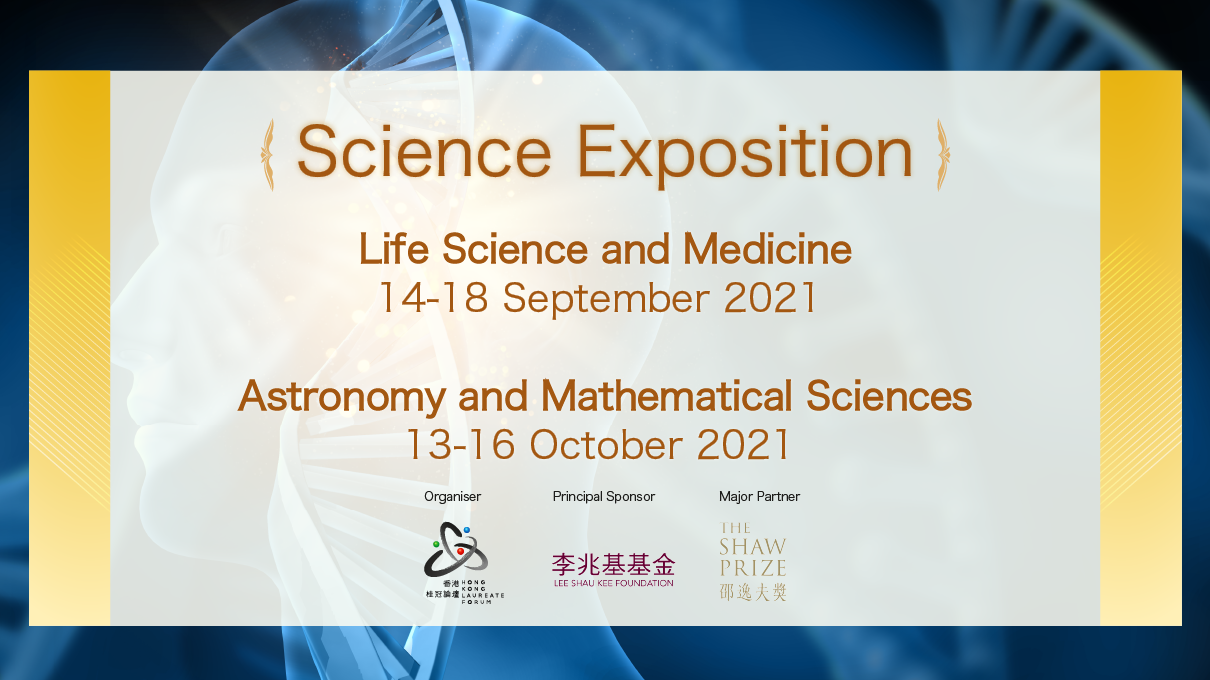
Science Exposition
The Science Exposition is the first chapter to kick-off the “prelude to the Inaugural Forum” series etc…
-
Science Exposition – Highlights , Interviews , Seminars
Highlights
Science Exposition: Event Highlights (14-18 September 2021)
Real Story Behind Research

Dr Bolton CHAU
Department of Rehabilitation Sciences, PolyU
Troubled by Too Many Options? Exploring the Brain Science of Decision Making
14 September 2021
Prof Tom CHEUNG
Division of Life Science, HKUST
The Life of a Stem Cell: from Young to Old 14 September 2021
14 September 2021
Dr Xin LI
Department of Chemistry, HKU
When Chemistry Meets Epigenetics: From Fundamental Discoveries to Molecular Medicines
14 September 2021
Dr Hong-Lok LUNG
Department of Chemistry, HKBU
Development of Theranostics Inhibitors for Epstein-Barr Virus (EBV) – Associated Malignancie
14 September 2021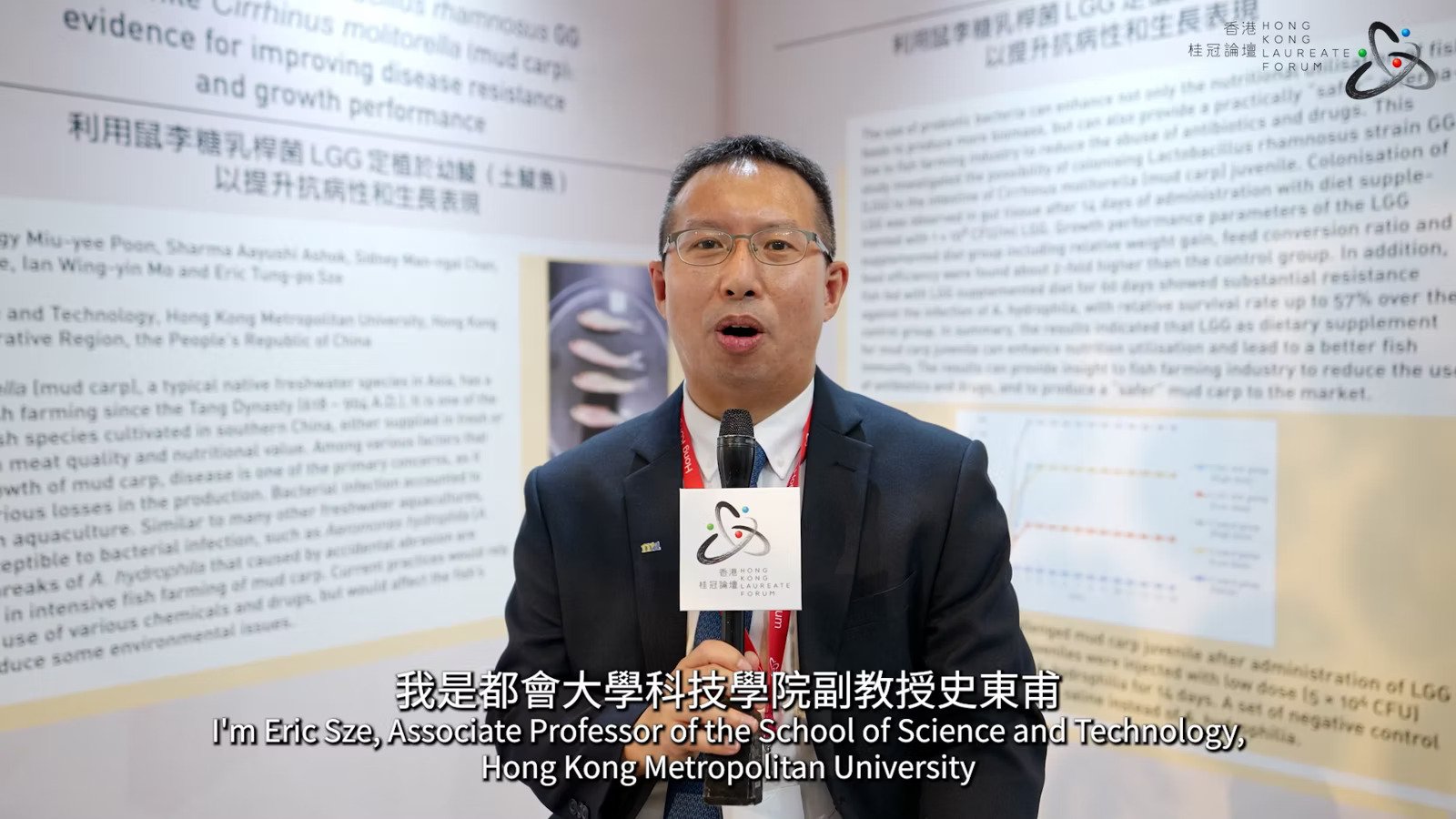
Dr Eric SZE
School of Science and Technology, HKMU
Colonisation of Lactobacillus Rhamnosus GG in Juvenile Cirrhinus Molitorella (Mud Carp): Evidence for Improving Disease Resistance and Growth Performance
14 September 2021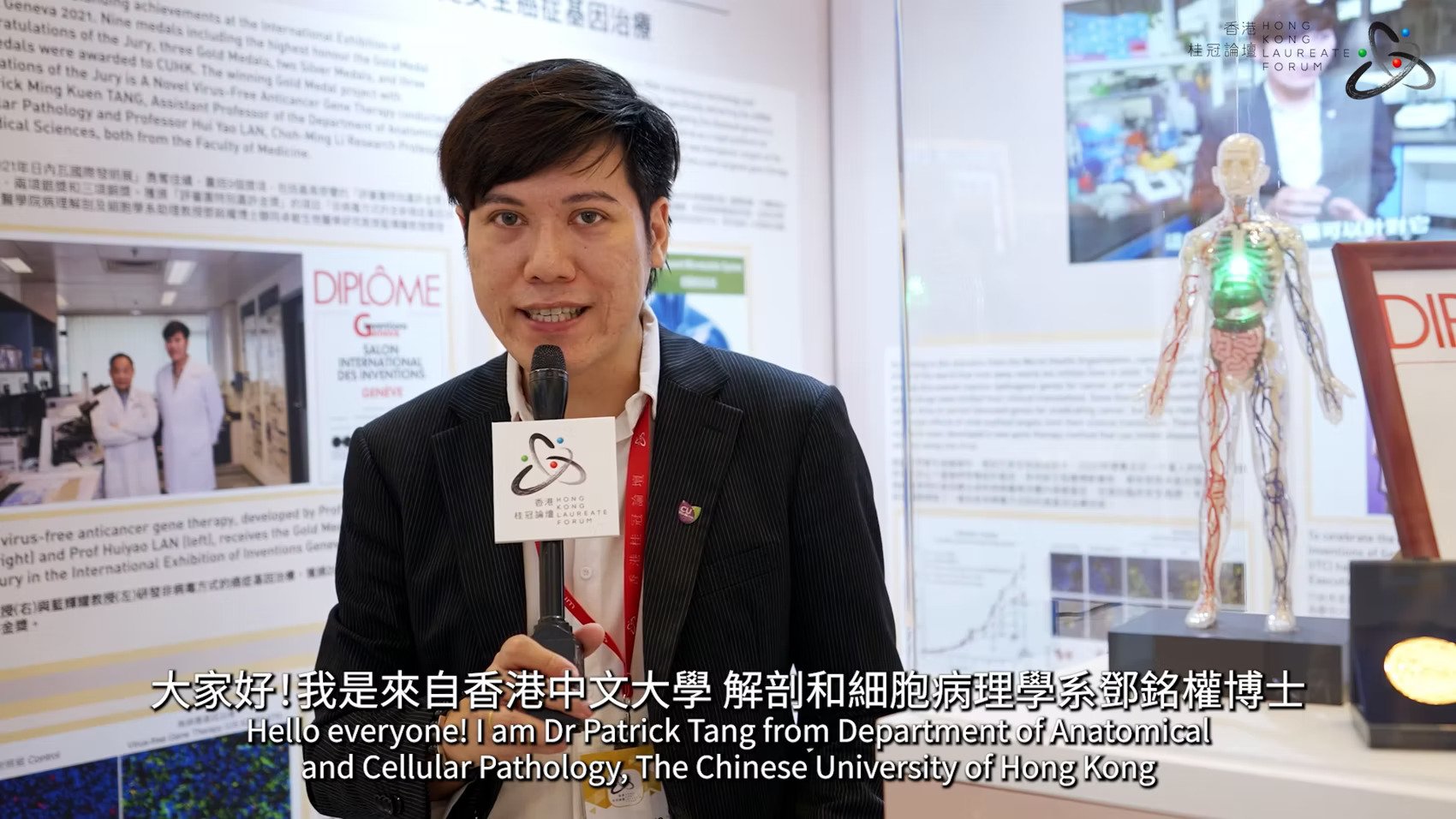
Dr Patrick TANG
Department of Anatomical and Cellular Pathology, CUHK
Virus-free Gene Therapy that Brings Safer Remedy for Cancer
14 September 2021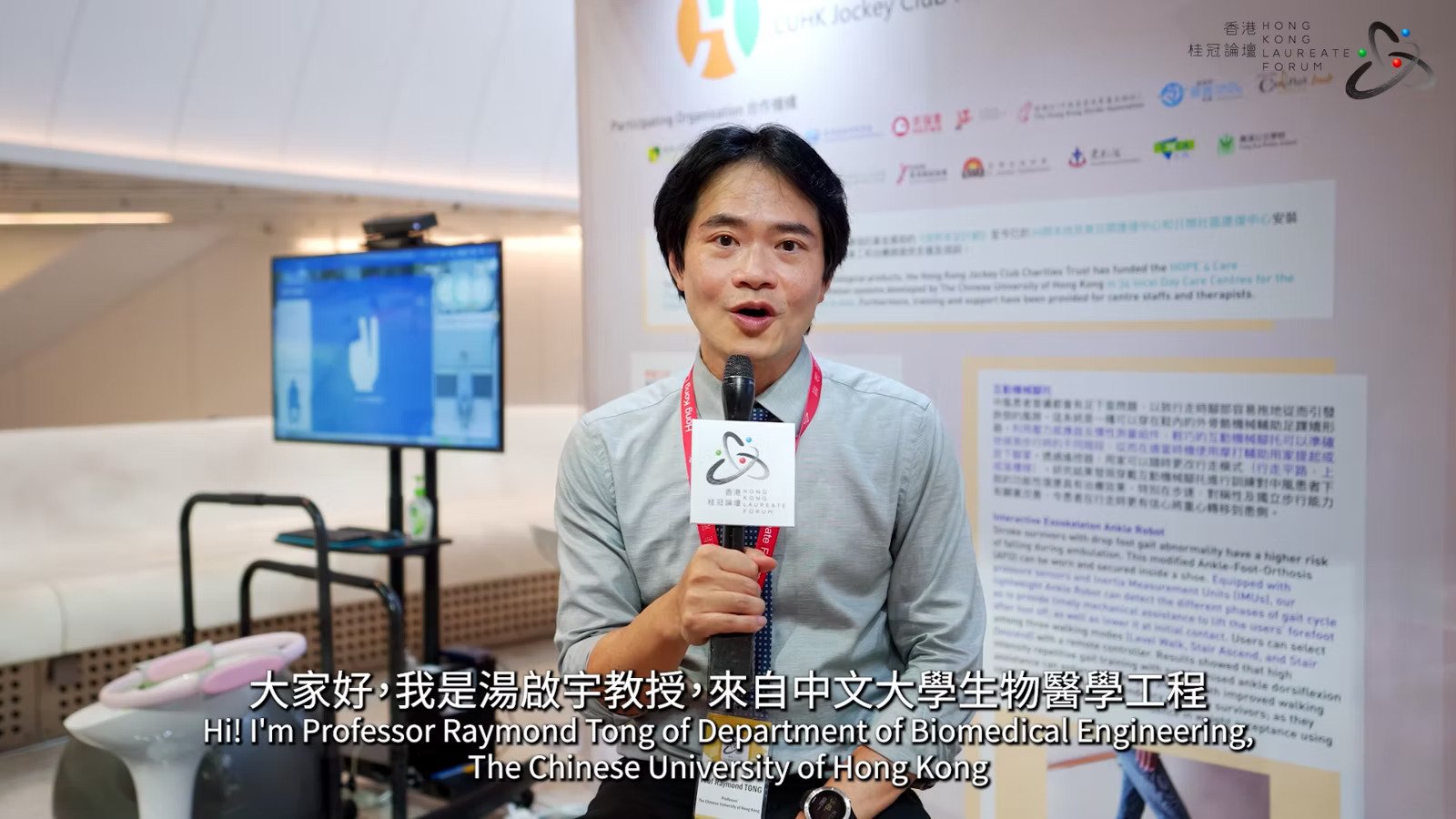
Prof Raymond TONG
Department of Biomedical Engineering, CUHK
CUHK Jockey Club HOPE 4 Care Programme
14 September 2021
Dr Carmen WONG
Department of Pathology, HKU
Understanding Tumor Microenvironment for Effective Immunotherapies
14 September 2021
Mr Shenghui XU
Department of Neuroscience, CityU
Cholecystokinin Receptor Antagonists for the Treatment of Epilepsy
14 September 2021
Prof Reynold CHENG
Department of Computer Science, HKU
HINCare: An Intelligent Timebanking System for Elderly Care
15 October 2021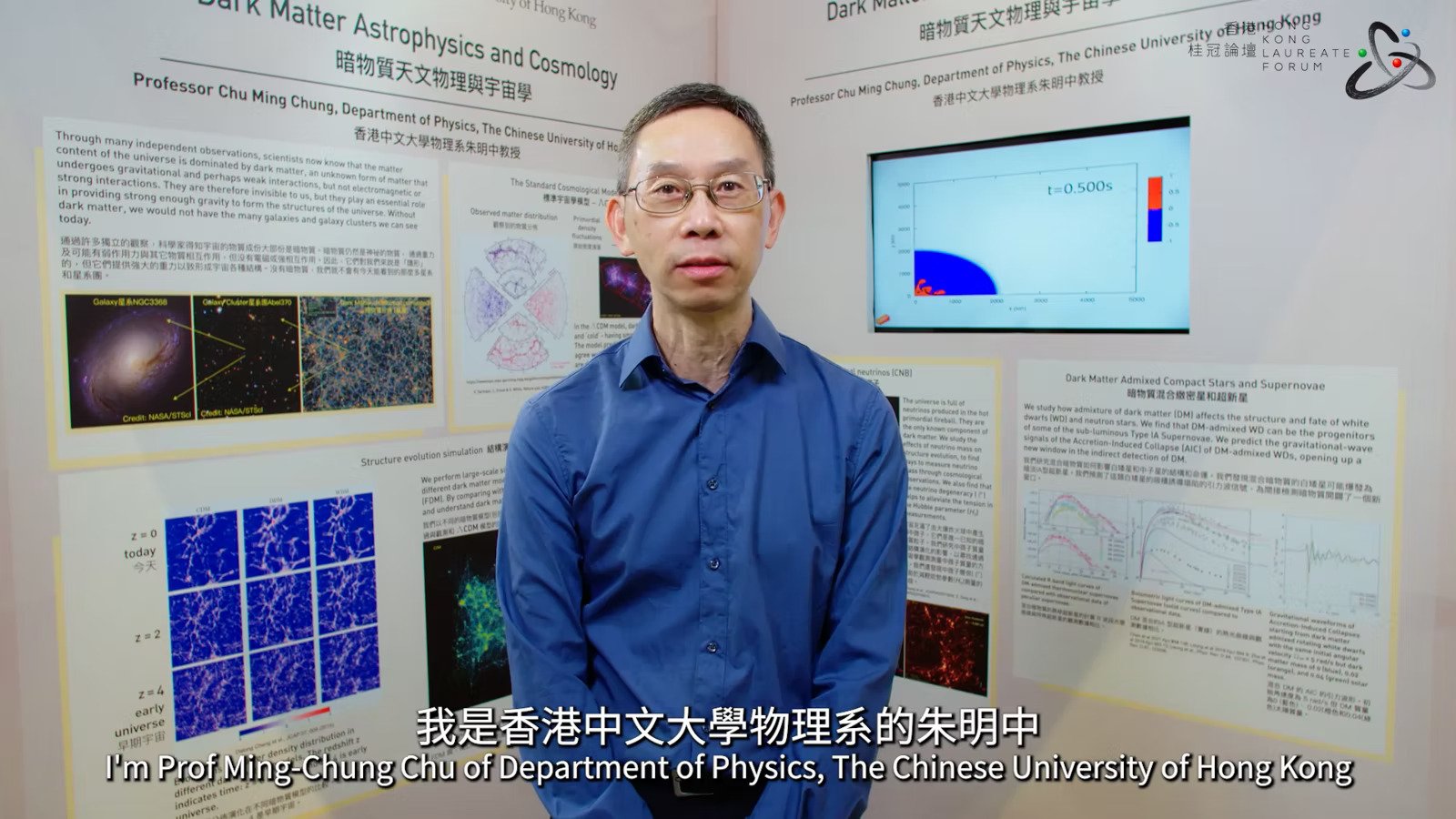
Prof Ming-chung CHU
Department of Physics, CUHK Dark Matter Astrophysics and Cosmology
15 October 2021
Dr Jane DAI
Department of Physics, HKU
Giant Black Holes Devouring Stars: Extreme Cosmic Events Illuminating Black Hole Spacetimes
15 October 2021
Dr Otto A HANNUKSELA
Department of Physics, CUHK
Gravitational Waves – A New Window onto the Universe
15 October 2021
Dr Sean HON
Department of Mathematics, HKBU
Asymptotic Eigenvalue Distribution of Symmetrised Toeplitz Matrices
15 October 2021
Prof Martin LI
Department of Mathematics, CUHK
The Infinite Existence of Soap Films in Geometry and Physics
15 October 2021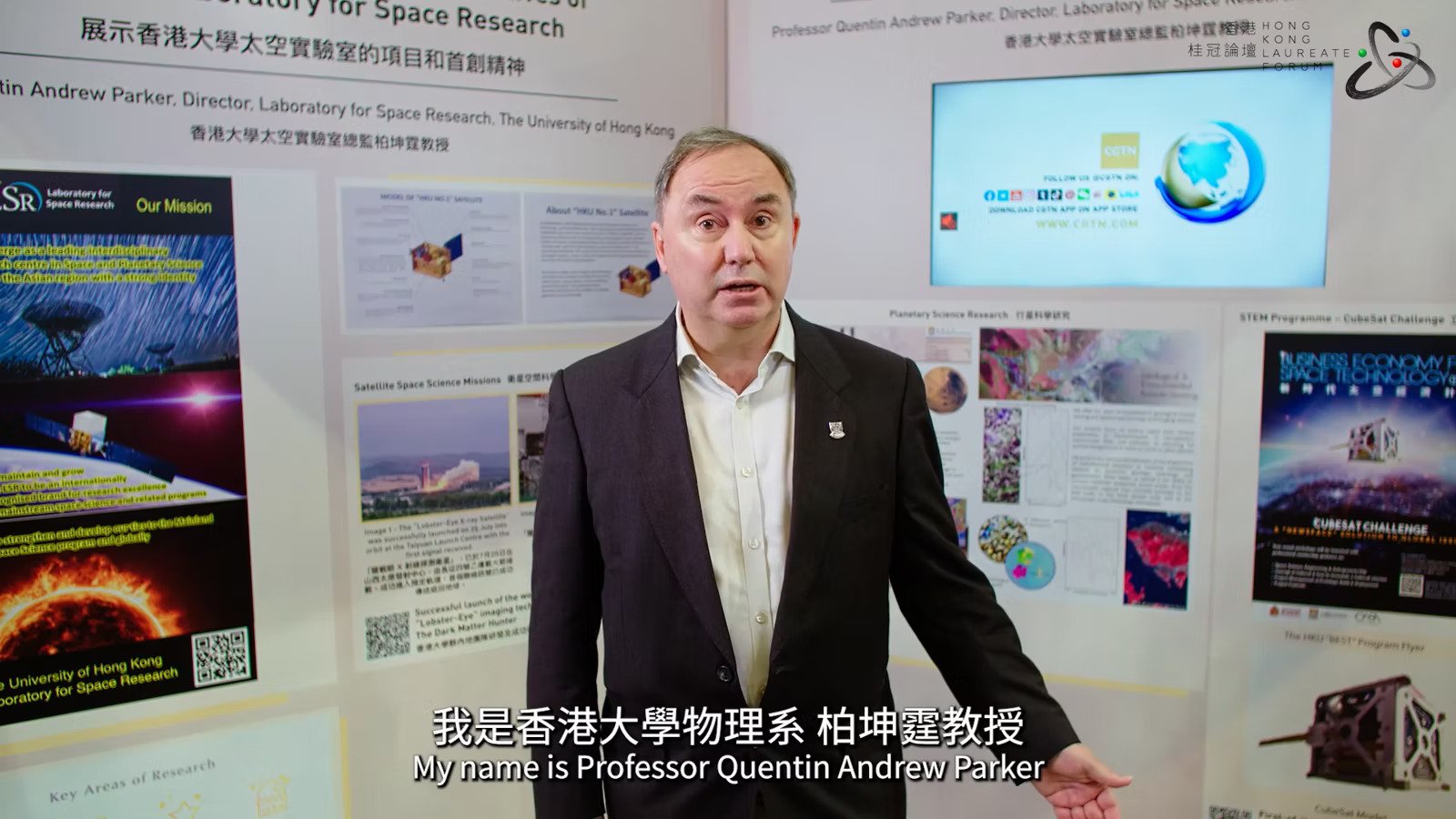
Prof Quentin Andrew PARKER
Department of Physics, HKU
A Showcase of the Projects and Initiatives of the HKU Laboratory for Space Research
15 October 2021
Prof Bo WU
Department of Land Surveying and Geo-informatics, PolyU
Planetary Remote Sensing Contributing to Space Exploration Missions
15 October 2021Seminars

Science Exposition: Life Science and Medicine Seminar (14 September 2021)
Life Science and Medicine seminar features local Hong Kong scientists elucidating the science theory behind. Dr Hong-lok LUNG, Assistant Professor, Department of Chemistry, Hong Kong Baptist University shared with us “How basic science can be translated to drug discovery?”. Dr Carmen WONG, Assistant Professor, Department of Pathology, The University of Hong Kong helped us understand “Tumour Microenvironment for Effective Immunotherapies”. Prof Tom CHEUNG, Associate Professor, Division of Life Science, The Hong Kong University of Science and Technology delivered an overview of “Life of a Stem Cell”. Dr Bolton CHAU, Associate Professor, Department of Rehabilitation Sciences, The Hong Kong Polytechnic University brought us to the world of our brain and explored “The brain science of decision making”. The seminar concluded after a panel discussion hosted by Prof Edwin CHAN, Professor, School of Life Sciences, The Chinese University of Hong Kong and they shared their unique and invaluable research experience with the audience.
×Science Exposition: Event Highlights (14-18 September 2021)×Dr Bolton CHAU, Department of Rehabilitation Sciences, PolyU
Troubled by Too Many Options? Exploring the Brain Science of Decision Making
14 September 2021×Prof Tom CHEUNG, Division of Life Science, HKUST
The Life of a Stem Cell: from Young to Old
14 September 2021דDr Xin LI, Department of Chemistry, HKU
When Chemistry Meets Epigenetics: From Fundamental Discoveries to Molecular Medicines
14 September 2021×Dr Hong-Lok LUNG, Department of Chemistry, HKBU
Development of Theranostics Inhibitors for Epstein-Barr Virus (EBV) – Associated Malignancie
14 September 2021×Dr Eric SZE, School of Science and Technology, HKMU
Colonisation of Lactobacillus Rhamnosus GG in Juvenile Cirrhinus Molitorella (Mud Carp): Evidence for Improving Disease Resistance and Growth Performance
14 September 2021×Dr Patrick TANG, Department of Anatomical and Cellular Pathology, CUHK
Virus-free Gene Therapy that Brings Safer Remedy for Cancer
14 September 2021×Prof Raymond TONG, Department of Biomedical Engineering, CUHK
CUHK Jockey Club HOPE 4 Care Programme
14 September 2021×Dr Carmen WONG
Department of Pathology, HKU
Understanding Tumor Microenvironment for Effective Immunotherapies
14 September 2021×Mr Shenghui XU, Department of Neuroscience, CityU
Cholecystokinin Receptor Antagonists for the Treatment of Epilepsy
14 September 2021×Dr Jane DAI, Department of Physics, HKU
Giant Black Holes Devouring Stars: Extreme Cosmic Events Illuminating Black Hole Spacetimes
15 October 2021×Dr Otto A HANNUKSELA, Department of Physics, CUHK
Gravitational Waves – A New Window onto the Universe
15 October 2021×Prof Martin LI, Department of Mathematics, CUHK
The Infinite Existence of Soap Films in Geometry and Physics
15 October 2021דProf Quentin Andrew PARKER, Department of Physics, HKU
A Showcase of the Projects and Initiatives of the HKU Laboratory for Space Research
15 October 2021×Prof Bo WU, Department of Land Surveying and Geo-informatics, PolyU
Planetary Remote Sensing Contributing to Space Exploration Missions
15 October 2021×Prof Reynold CHENG, Department of Computer Science, HKU
HINCare: An Intelligent Timebanking System for Elderly Care
15 October 2021×Dr Sean HON, Department of Mathematics, HKBU
Asymptotic Eigenvalue Distribution of Symmetrised Toeplitz Matrices
15 October 2021×Prof Ming-chung CHU, Department of Physics, CUHK
Dark Matter Astrophysics and Cosmology
15 October 2021×Science Exposition: Life Science and Medicine Seminar (14 September 2021)