Author: superadmin02
-

Health and the Community
Community health is the intersection of health care, economics and social interaction. It is a growing discipline of public health that focuses on the physical and mental well-being of the people in a specific geographic region…
-
Health and the Community
Community health is the intersection of health care, economics and social interaction. It is a growing discipline of public health that focuses on the physical and mental well-being of the people in a specific geographic region…
-
newsletter (Mar 2020 – Issue 2)

About the Hong Kong Laureate Forum

Welcome to the March issue of the newsletter of the Hong Kong Laureate Forum. Whilst we are developing the week-long programme of the inaugural Forum, we are delighted to unveil some forum contents that may whet your appetite.
As the Forum aims to provide ample opportunities for idea exchanges between Shaw Laureates, globally renowned scientists and young scientists, apart from plenary lectures, panel discussions and parallel group sessions conducted by Shaw Laureates and distinguished scientists, there will be a number of dialogue events and opportunities in a close and direct manner, as well as young scientist presentation sessions for them to present their latest research ideas and spark everyone’s interest.
Three Scientific Review Committees on Mathematical Sciences, Life Science and Medicine, and Astronomy, to be chaired by our Council Chairman Prof Timothy TONG, Council members Prof the Hon TSUI Lap-chee and Prof Kenneth YOUNG respectively, will be formed to review young scientists’ applications.
Open application is scheduled to start in September 2020. We welcome undergraduates, postgraduates and PhD graduates who are aged 35 or below and studying or conducting research in Mathematical Sciences, Life Science and Medicine, and Astronomy or other closely related subjects to apply.
New look of our website has just been launched. A section on Science in the Community has been created to promote understanding and interests of the young generation in Hong Kong in various disciplines in science and technology.
To learn more about our programme, selection process and other information of our Forum, please stay tuned to our new website and social media!
Health and the Community

Health is important and essential to every living organism. It is a state of complete physical, mental and social well-being and not merely the absence of disease or infirmity. Health is determined by biological, social and lifestyle factors. A healthful lifestyle provides the means to lead a full life, which is continuously affected by the community and its environment. Community health, a growing discipline of public health, is the intersection of health care, economics and social interaction. In addition to health promotion and disease prevention, preparedness for disasters and curbing the spread of infectious diseases in the community are also top priority of community health programmes. Rigorous applied research provides the foundation to achieve the shared goal of attainment of healthier communities and quality of life for members. Community health workers, local government, volunteers, private sector and residents work in collaboration to improve and maintain the well-being of the community. In particular, community health practitioners also serve as home visitors and the first points of contact for health care. Primary care, including family and community medicine as well as traditional Chinese medicine, is starting to take shape with the launching of the Kwai Tsing District Health Centre Project in 2019. Hong Kong has learned from the experience of the 2003 SARS and is doing a good job in the preparedness and responses in the current COVID-19 pandemic. More can be done in better organised media strategy and public hand-washing provision. Thus, appropriate community health care should always be in the mind of the government, the academia and all stakeholders of the community. Ideally, community health programmes and local community networks should be integral parts of public health policy.
Hong Kong College of Community Health Practitioners


Author: Dr FONG, Yuk-fai Ben
MBBS(SYD), MPH(SYD), DOM(CUHK), DFM(CUHK), FHKCCM, FHKAM(Community Medicine)Dr Ben FONG is a Family Doctor and a Specialist in Community Medicine, currently a Senior Lecturer and the Associate Division Head of the Division of Science, Engineering and Health Studies, the Discipline Team Leader of the Academic Discipline of Health and Life Sciences, the Award Leader of the BSc (Hons) in Applied Sciences (Health Studies) and the Diploma in Active Ageing, and the Scheme Leader of Applied Sciences. He is also the Director of the Centre for Ageing and Healthcare Management Research.
Dr FONG received his medical training at the Royal Prince Alfred Hospital of The University of Sydney, Australia, where he was also awarded the Master of Public Health degree in 1989. He has also achieved post-graduate qualifications in Medical Administration, Community Medicine, Family Medicine and Occupational Medicine. He is currently the President of Hong Kong College of Community Health Practitioners.
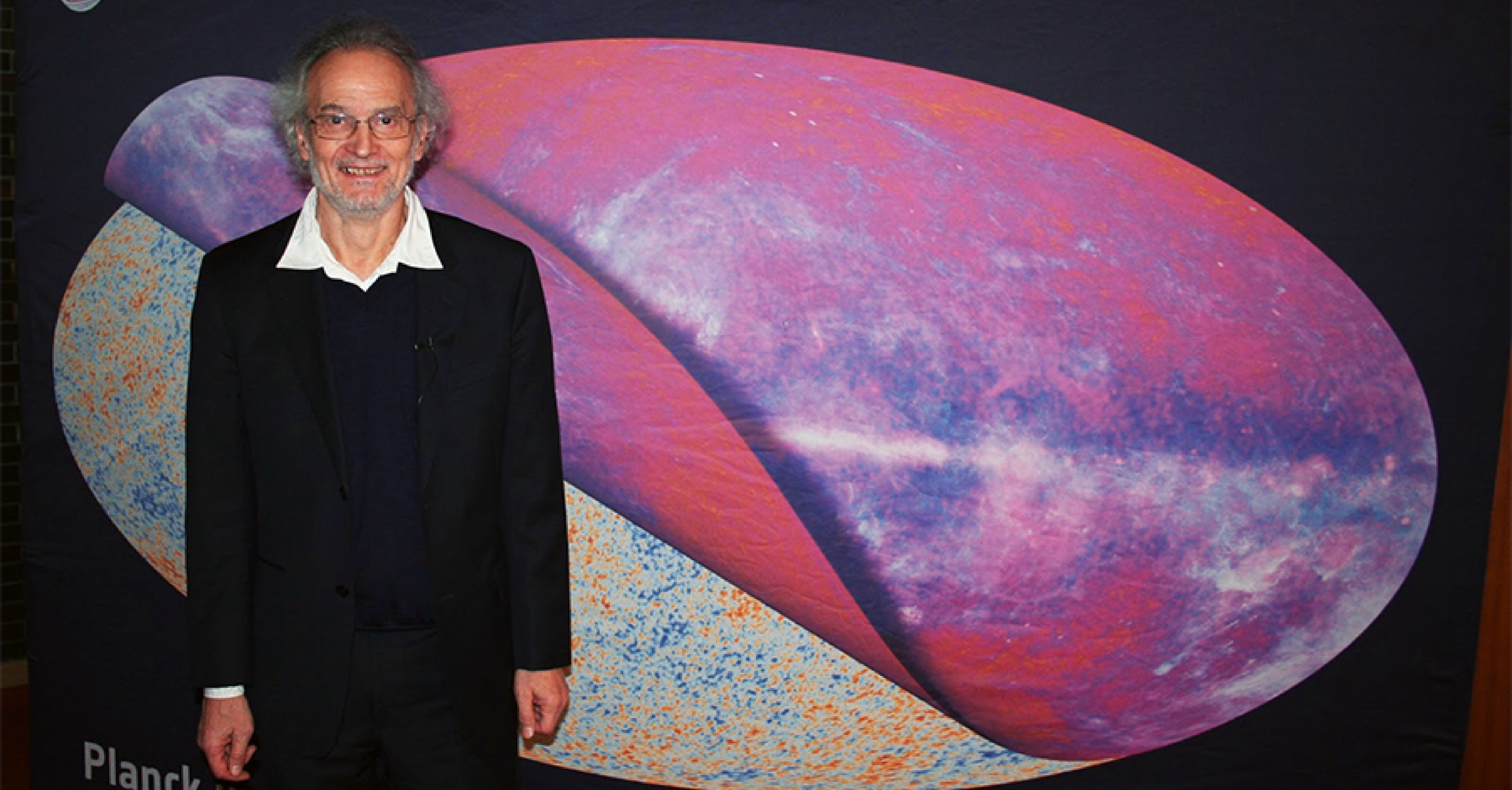
Interview with 2018 Shaw Laureate – Prof Jean-Loup Puget

The Shaw Prize in Astronomy 2018 was awarded to Prof Jean-Loup Puget for his contributions to astronomy in the infrared to submillimetre spectral range. He detected the cosmic far-infrared background from past star-forming galaxies, and proposed aromatic hydrocarbon molecules as a constituent of interstellar matter. With the Planck space mission, he has dramatically advanced our knowledge of cosmology in the presence of interstellar matter foregrounds.
An interview with Prof Puget was conducted by the Theoretical Astronomy Group of the
Hong Kong Astronomical Society (HKAS) in September 2018 and it was published at HKAS’s newsletter on 4th issue in 2018.
We are delighted to share the interview highlights provided by the HKAS.Scripts prepared by Dr Leung Chun Sing, Mr Fung Po Kei and Mr Eddie Ng
A History of π
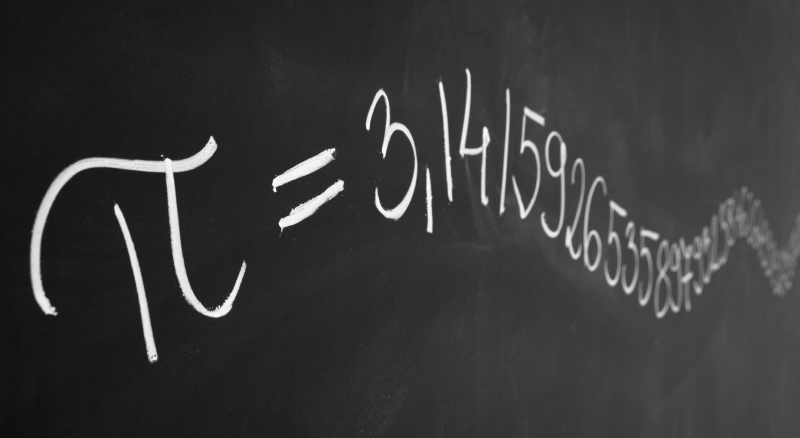
To most people, 14th March is nothing but an ordinary day in a year. Yet to mathematics enthusiasts, it is Pi day, 3.14 is also the approximate value of π, Pi.
π doesn’t sound alien to most of us. The formula for finding the circumference (2πr) and area of a circle (πr2) are taught in the compulsory Mathematics subject in secondary school. π probably is one of the most well-known Mathematical constants but how many people know its origin and meanings?
π is defined as the ratio of a circle’s circumference to its diameter. If you can measure a circle’s circumference accurately and then divide its value by the diameter, the value of 3.141592654… will be displayed on the calculator. However, it is absolutely not the final answer, as π is an irrational number, which means it is a real number which cannot be expressed by a simple fraction. The reason it is rounded off to 3.141592654 is the display limitation of a calculator, with maximum 10 decimal places. Thus, many mathematics enthusiasts devote themselves into exploring the endless decimal places of π.
Ancient Babylonians calculated π to be about 3.125 by using ties and knots while ancient Egyptians calculated it to be roughly 3.16. In fact, Chinese mathematicians also made tremendous contribution in exploring π. During the Northern and Southern dynasties, mathematician Zu Chongzhi (429-500 AD) obtained the value of π which is precise to seven decimal places. According to “Record of Sui Almanac”, Zu deduced the value of π to be 3.1415927 which was held as the most accurate approximation of π for 1,000 years. This record was beaten by an Arabian mathematician Al-kashi whose value of π is precise to 16 decimal places in the 15th century. There is no book record of Zu’s calculation methods. It is commonly known that Zu cut the circle into a n-sided polygon and “n” is the side number of the polygon. When the number of “n” is larger, the polygon is closer to be a circle. It is said that Zu obtained the result by approximating a circle with a 24,576 sided polygon.
Thanks to the advances in technology, mathematicians nowadays can calculate π via advanced and efficient methods. 31 trillion digits are computed while more digits are being discovered. The study of π is the hard work of mathematicians brought into fruition over time and across many countries. Let’s see when we would have the next record for π!


If you want to unsubscribe our newsletter, please reply this e-mail directly.

-
newsletter (Mar 2020 – Issue 2)
關於香港桂冠論壇
歡迎大家來到香港桂冠論壇三月份通訊。
當我們在擬訂首屆論壇的一周精彩節目同時,我們很高興藉這份通訊分享一些令人充滿期待的論壇最新資訊!
論壇其中一個目的是讓青年科學家與邵逸夫獎得獎者和來自世界各地的著名科學家有充分的交流機會。所以,除了由邵逸夫獎得獎者和著名科學家主持的專題演講、專題討論和分科小組討論外,還有一連串對談活動和直接交流的機會,以及青年科學家的研究簡報,讓青年科學家介紹他們最新的研究項目並激發大家的興趣。
論壇將會成立三個分別為數學科學、生命科學與醫學和天文學的科學評審委員會,以評核有意申請參加論壇的青年科學家。這三個評審委員會將分別由我們論壇委員會主席唐偉章教授、論壇委員會委員徐立之教授和楊綱凱教授帶領。
公開申請預計會由2020年9月開始,我們歡迎35歲或以下並且就讀或研究數學科學、生命科學與醫學、天文學或其他相關專業的本科生、研究生及博士畢業生申請。
此外,我們全新的網站已經推出,當中新設「大眾與科學」部分以提升香港年輕一代對不同科技領域的認識和興趣。
了解更多有關我們論壇的節目,甄選程序和其他資訊,請大家密切留意我們全新的網站和社交媒體!
健康與社區
健康對任何生物都是重要和基本的,健康不僅是沒有疾病,而是體格、精神與社會呈現整體健康狀態。健康受到生理、社會及生活模式等因素的影響。健康的生活模式極為需要的,並會帶來完美生活,但卻持續地受社區及環境因素影響。社區健康是一項發展中的公共衛生學科,它是醫護、經濟及社會互動的交接。除了推廣健康和預防疾病之外,為社區做好預防災難的準備和控制傳染病的散播是社區健康計劃最優先的任務。嚴格的應用研究,為實現更健康社區和提高成員生活質素的共同目標提供基礎。社區衛生工作者、地方政府、志願者、私營機構和居民之間共同合作去改善社區健康,而社區健康師亦作為家庭訪客,以及衛生保健的第一聯絡點。在2019年成立葵青地區康健中心時,基層醫護和健康(包括家庭和社區醫學及中醫藥)開始成形。香港從2003年的SARS經驗中吸取了教訓,在應對現今大流行的新型冠狀病毒 (COVID-19) 的防護準備和抗疫工作都做得很好;而在組織更佳的媒體策略和公共洗手方面,可以多做些工作。因此,合適的社區保健應常在政府、學術界和社區所有持分者的心中,最理想是把社區健康計劃方案和社區網路放進公共衛生政策的組成部分。

作者︰方玉輝醫生
澳洲悉尼大學內外全科醫學士、澳洲悉尼大學公共衞生科碩士、香港中文大學職業醫學文憑、香港中文大學家庭醫學文憑、香港社會醫學學院院士、香港醫學專科學院院士(社會醫學)方玉輝醫生是一位家庭醫生和社會醫學專科醫生,他目前是科技、工程及健康學部的副主任、高級講師、健康及生命科學學科統籌、應用科學(榮譽)理學士(健康學)課程統籌、活齡文憑課程統籌,以及應用科學學士組合課程統籌。他還是「老齡化和醫療管理研究中心」總監。
方醫生在澳洲悉尼大學Royal Prince Alfred Hospital接受醫生培訓,並於1989年獲得公共衛生科碩士學位。他還獲得醫學管理、社區醫學、家庭醫學和職業醫學的深造資歷。現為香港社區健康學院院長。
2018邵逸夫獎得獎者訪問 – 尚-盧 • 普吉教授
2018年度邵逸夫天文學獎頒予尚−盧 • 普吉 (Jean-Loup Puget)以表彰他對紅外到亞毫米光譜範圍天文學的貢獻。他探測了在過去恆星形成過程中的星系所放出的宇宙遠紅外背景,並提出星際物質含有芳香族碳氫分子。通過普朗克太空計劃,他處理了星際物質前景的影響,因而顯著地提升了我們對宇宙學的認識。
2018年9 月,香港天文學會理論天文組與尚−盧•普吉教授進行了一次訪問,這次訪問亦於香港天文學會2018年第四期會訊刊登 (只刊登英文版)。我們很高興得到香港天文學會的提供並與大家分享訪問內容。
文: 梁振聲博士,馮寶基老師,吳國偉先生
π之歷史
3月14日,可能只是一年中平平無奇的一天。但對熱愛數學的人來說,是與圓周率(π, Pi) 近似值3.14相同的一天,被稱為Pi day。
大家對π這個符號一定不會陌生:求圓周公式2πr、求圓面積公式πr2等等,都是中學數學必修內容,更可能是最多人認識的數學常數之一,但大家又知不知 π 的起源及意義?
π 是圓周(圓的周界)與直徑的比例。假如你能準確地量度一個圓形的圓周,再將該數值除以直徑,計算機將顯示3.141592654…的數值。然而,這絕不是最終答案。π 是一個無理數(irrational number),即是一個非循環的小數,只因為一般計算機只能顯示10個位,才會在3.141592654停下來。亦正因如此,發掘 π 無窮盡的小數位成為很多數學人的志業。
古巴比倫人用繩結計算出π的約數為3.125;古埃及人更將近似值準確至3.16。其實中國數學家對 π 也有重大貢獻,南北朝時期數學家祖沖之(429年 – 500年)將 π 的近似值準確至小數點後7位數字。按《隋書.律曆志》記載,祖沖之計算出 π 的值為約3.1415927,這個紀錄直至15世紀,即1000年後才被阿拉伯數學家阿爾.卡西以小數點後16位數字打破。由於古籍缺欠,祖沖之計算 π 的方法沒有準確的說法,普遍認為他是將圓切割為一個N邊等邊形,N是多邊形的邊的數目。當N越大,該多邊形就與圓形越相似。據說,祖沖之將圓形分割到24576形。
隨着科技進步,數學家計算 π 的方法已十分先進及有效率,今天對 π 的研究已去到31萬億個位,同時紀錄亦不斷被打破。π 的研究是古今中外數學家努力的成果,讓我們一起期待下一次 π 被打破的時候吧!
如欲取消訂閱本論壇電子通訊,請直接回覆此電郵。
-
newsletter (Mar 2020 – Issue 2)
关于香港桂冠论坛
欢迎大家来到香港桂冠论坛三月份通讯。
当我们在拟订首届论坛的一周精彩节目同时,我们很高兴藉这份通讯分享一些令人充满期待的论坛最新资讯!
论坛其中一个目的是让青年科学家与邵逸夫奖得奖者和来自世界各地的著名科学家有充分的交流机会。所以,除了由邵逸夫奖得奖者和著名科学家主持的专题演讲、专题讨论和分科小组讨论外,还有一连串对谈活动和直接交流的机会,以及青年科学家的研究简报,让青年科学家介绍他们最新的研究项目并激发大家的兴趣。
论坛将会成立三个分别为数学科学、生命科学与医学和天文学的科学评审委员会,以评核有意申请参加论坛的青年科学家。这三个评审委员会将分别由我们论坛委员会主席唐伟章教授、论坛委员会委员徐立之教授和杨纲凯教授带领。
公开申请预计会由2020年9月开始,我们欢迎35岁或以下并且就读或研究数学科学、生命科学与医学、天文学或其他相关专业的本科生、研究生及博士毕业生申请。
此外,我们全新的网站已经推出,当中新设「大众与科学」部分以提升香港年轻一代对不同科技领域的认识和兴趣。
了解更多有关我们论坛的节目,甄选程序和其他资讯,请大家密切留意我们全新的网站和社交媒体!
健康与社区
健康对任何生物都是重要和基本的,健康不仅是没有疾病,而是体格、精神与社会呈现整体健康状态。健康受到生理、社会及生活模式等因素的影响。健康的生活模式极为需要的,并会带来完美生活,但却持续地受社区及环境因素影响。社区健康是一项发展中的公共卫生学科,它是医护、经济及社会互动的交接。除了推广健康和预防疾病之外,为社区做好预防灾难的准备和控制传染病的散播是社区健康计划最优先的任务。严格的应用研究,为实现更健康社区和提高成员生活质素的共同目标提供基础。社区卫生工作者、地方政府、志愿者、私营机构和居民之间共同合作去改善社区健康,而社区健康师亦作为家庭访客,以及卫生保健的第一联络点。在2019年成立葵青地区康健中心时,基层医护和健康(包括家庭和社区医学及中医药)开始成形。香港从2003年的SARS经验中吸取了教训,在应对现今大流行的新型冠状病毒 (COVID-19) 的防护准备和抗疫工作都做得很好;而在组织更佳的媒体策略和公共洗手方面,可以多做些工作。因此,合适的社区保健应常在政府、学术界和社区所有持分者的心中,最理想是把社区健康计划方案和社区网路放进公共卫生政策的组成部分。
作者︰方玉辉医生
澳洲悉尼大学内外全科医学士、澳洲悉尼大学公共卫生科硕士、香港中文大学职业医学文凭、香港中文大学家庭医学文凭、香港社会医学学院院士、香港医学专科学院院士(社会医学)方玉辉医生是一位家庭医生和社会医学专科医生,他目前是科技、工程及健康学部的副主任、高级讲师、健康及生命科学学科统筹、应用科学(荣誉)理学士(健康学)课程统筹、活龄文凭课程统筹,以及应用科学学士组合课程统筹。他还是「老龄化和医疗管理研究中心」总监。
方医生在澳洲悉尼大学Royal Prince Alfred Hospital接受医生培训,并于1989年获得公共卫生科硕士学位。他还获得医学管理、社区医学、家庭医学和职业医学的深造资历。现为香港社区健康学院院长。
2018邵逸夫奖得奖者访问 – 尚-卢 • 普吉教授
2018年度邵逸夫天文学奖颁予尚−卢 • 普吉 (Jean-Loup Puget)以表彰他对红外到亚毫米光谱范围天文学的贡献。他探测了在过去恒星形成过程中的星系所放出的宇宙远红外背景,并提出星际物质含有芳香族碳氢分子。通过普朗克太空计划,他处理了星际物质前景的影响,因而显著地提升了我们对宇宙学的认识。
2018年9 月,香港天文学会理论天文组与尚−卢•普吉教授进行了一次访问,这次访问亦于香港天文学会2018年第四期会讯刊登 (只刊登英文版)。我们很高兴得到香港天文学会的提供并与大家分享访问内容。
文: 梁振声博士,冯宝基老师,吴国伟先生
π之历史
3月14日,可能只是一年中平平无奇的一天。但对热爱数学的人来说,是与圆周率(π, Pi) 近似值3.14相同的一天,被称为Pi day。
大家对π这个符号一定不会陌生:求圆周公式2πr、求圆面积公式πr2等等,都是中学数学必修内容,更可能是最多人认识的数学常数之一,但大家又知不知 π 的起源及意义?
π 是圆周(圆的周界)与直径的比例。假如你能准确地量度一个圆形的圆周,再将该数值除以直径,计算机将显示3.141592654…的数值。然而,这绝不是最终答案。π 是一个无理数(irrational number),即是一个非循环的小数,只因为一般计算机只能显示10个位,才会在3.141592654停下来。亦正因如此,发掘 π 无穷尽的小数位成为很多数学人的志业。
古巴比伦人用绳结计算出π的约数为3.125;古埃及人更将近似值准确至3.16。其实中国数学家对 π 也有重大贡献,南北朝时期数学家祖冲之(429年 – 500年)将 π 的近似值准确至小数点后7位数字。按《隋书.律历志》记载,祖冲之计算出 π 的值为约3.1415927,这个纪录直至15世纪,即1000年后才被阿拉伯数学家阿尔.卡西以小数点后16位数字打破。由于古籍缺欠,祖冲之计算 π 的方法没有准确的说法,普遍认为他是将圆切割为一个N边等边形,N是多边形的边的数目。当N越大,该多边形就与圆形越相似。据说,祖冲之将圆形分割到24576形。
随着科技进步,数学家计算 π 的方法已十分先进及有效率,今天对 π 的研究已去到31万亿个位,同时纪录亦不断被打破。π 的研究是古今中外数学家努力的成果,让我们一起期待下一次 π 被打破的时候吧!
如欲取消订阅本论坛电子通讯,请直接回复此电邮。