About the Hong Kong Laureate Forum
Welcome to the May issue of the newsletter of the Hong Kong Laureate Forum!
First of all, happy anniversary to the Council of the Hong Kong Laureate Forum! 14 May 2020 marks the 1st anniversary of the HKLF. Looking back, we have made connections with organisations and people from relevant sectors to promote the Forum and established partnership. We are pleased to have received tremendous support from organisations and people in academic, scientific and educational sectors etc. We will continue our work diligently in organising the inaugural Forum and collaborating with all sectors of the community in promoting education and exchanges in various disciplines in science and technology.
We are delighted to share with you below the tentative one-week Forum programme overview:
More information on application to join the Forum could be found in our website. Check out here to learn more!
2020 Shaw Prize
Shaw Laureates for this year have just been announced on 21 May 2020 at a press conference held by The Shaw Prize Foundation.
The Shaw Prize in Astronomy is awarded to Prof Roger David Blandford of Stanford University
for his foundational contributions to theoretical astrophysics, especially concerning the fundamental understanding of active galactic nuclei, the formation and collimation of relativistic jets, the energy extraction mechanism from black holes, and the acceleration of particles in shocks and their relevant radiation mechanisms.
The Shaw Prize in Life Science and Medicine is awarded in equal shares to Prof Gero Miesenböck of University of Oxford, Prof Peter Hegemann of Humboldt-Universität zu Berlin and Prof Georg Nagel of Universität Würzburg
for the development of optogenetics, a technology that has revolutionized neuroscience.
The Shaw Prize in Mathematical Sciences is awarded in equal shares to Prof Alexander Beilinson of The University of Chicago and Prof David Kazhdan of The Hebrew University of Jerusalem
for their huge influence on and profound contributions to representation theory, as well as many other areas of mathematics.
Congratulations to the six Shaw Laureates 2020. Special congratulations also go to Israel, Prof David Kazhdan is the first Shaw Laureate whose research work is based in Israel at the time of award.
Do you know? There is a total of 88 Shaw Laureates since the inauguration of Shaw Prize in 2004. In terms of geographical locations of research-base at the time of the award, United States has the most Shaw Laureates in the globe with 52 recipients. Which other countries also have Shaw Laureates?
We are very glad to see that scientists from around the world, through their lifelong devotion, are making outstanding contributions in academic and scientific research.
The International Mathematical Modeling Challenge
The International Mathematical Modeling Challenge (IMMC or styled as IM2C) is an innovative contest in mathematical modeling for secondary school students all over the world. It was co-founded and co-sponsored by the Consortium for Mathematics and Its Applications (COMAP), US, and NeoUnion ESC Organisation (NeoUnion), Hong Kong in 2014 in Boston. In the first IM2C in 2015, there were 10 countries/areas participating in the International Competition and 60 teams from Mainland, Hong Kong, Macau and Taiwan took part in the Regional Competition in Greater China.
The aim of IM2C is to promote mathematical modeling education and enhance students’ core competencies in mathematics and innovation, encouraging participants to explore the application of mathematical modeling in real life situations to solve problems of importance. IM2C in Greater China is an inclusive and sharing platform both for secondary school students to practice mathematical modeling, and for schools to demonstrate and exchange their educational accomplishments in mathematics and STEM. Through the competition, extended teaching and learning activities, joint school activities, and Advanced Innovation Program (AIP) platform, IM2C facilitates students to learn about the relevance of mathematical modeling to their current and future studies, career development, and innovative entrepreneurship.
During the past six years, most of the IM2C awardees selected fields of STEM such as mathematics, computer science, physics, medicine, chemistry, life science, etc for academic pursuit, for further studies. Thanks to over 40% of female participation, IM2C is proud in involving great many female students in STEM and showcasing their talents.
With the implementation of Outline Development Plan for the Guangdong-Hong Kong-Macau Greater Bay Area, Hong Kong will play an active role as the international hub of science and innovation within the Area, which will provide more opportunities for IM2C students and teachers. Hong Kong’s advantages in higher education, financial infrastructure, legal system, economic freedom and home to international talents will inspire more and more IM2C students to be engaged in international exchange in science and innovation.
Acknowledgement:
International Mathematical Modeling Challenge Committee (Zhonghua) and NeoUnion ESC Organisation
Do you want to see more mathematical modeling in real life practice? Check out the next article.
Epidemiological Study on Coronavirus 2019 at The Hong Kong Polytechnic University
Coronavirus 2019-20 (COVID-19) pandemic has already caused tremendous impact on global public health, world economy and socioeconomic landscape. A research team from The Hong Kong Polytechnic University, formed at the onset of the outbreak, has been involved in the forefront of the epidemiological study of COVID-19. The team includes Dr HE Daihai and Dr LOU Yijun from the Department of Applied Mathematics and Dr YANG Lin from the School of Nursing at The Hong Kong Polytechnic University. Since the start of the epidemic, which later became a pandemic, the team has worked tirelessly on data analyses and modeling analyses of the COVID-19 with the aim to inform policymakers and the public with updated accurate information.
In summary, the team is one of the most active epidemiological research teams on COVID-19 and has made some insightful findings which helped inform the public and policymakers. The publication prepared by the team on the preliminary estimation of the basic reproduction number of COVID-19 in Wuhan, Hubei, China in the early phase of the outbreak has been cited 418 times on Google Scholar, which is an indicator of the importance of the work.
Here is a short extract of its work.
Key Findings on Research Conducted by The Hong Kong Polytechnic University
Accurate estimate of the key epidemiological parameters of COVID-19 is crucial in mitigation of the outbreak. We, the team from The Hong Kong Polytechnic University, are among the first few teams to reach the conclusion on 23 January 2020 that the transmissibility (the basic reproductive number) of the COVID-19, i.e., on average one primary case may cause 2-3 secondary cases. We relied on publicly available data. It is worth mentioning that that we are the first team to point out the impact of ascertainment rate (reporting rate, reporting effort) on the estimate of basic reproductive number. Part of the sudden increase in daily new cases is due to improved testing capacity. In a later work, we quantified the under-reported cases in middle January in Wuhan due to low awareness and inadequate testing capacity. These tasks are very important for understanding the scale of the epidemic.
Exploration of Mars
24 April is the official Space Day of China as it marks the anniversary of the successful launch of China’s first space satellite Dong Fang Hong 1 (DFH-1, “The East is Red 1”), on this day in 1970. The launch of DFH-1 turned a new page in the history of the Chinese Space Program. On 24 April this year, China National Space Administration announced the launch of Mission of Planetary Exploration “Tianwen”. Meanwhile, the mission to Mars “Tianwen-1” will be launched in July 2020.
In recent years, exploration of Mars has aroused great interest in many countries. It is not only because Mars is the closest planet to Earth except Venus, but also due to the fact that it is one of the astronomical objects in the solar system that is most similar to Earth. The National Aeronautics and Space Administration (NASA) of the United States has in the past gathered evidence of flowing liquid brines on Mars. NASA is also planning to launch space probe “Mars 2020 Perseverance Rover” together with the Mars helicopter “Ingenuity”, which was named by an Alabama high school student, in July 2020. They are scheduled to land on Mars in March 2021 and will conduct surface mission for at least one Mars year (about two years on Earth) with the task of seeking signs of ancient life on Mars. Moreover, an underground lake had also been found by a team of Italian researchers on Mars in recent years. Scientists wanted to prove the existence of life on Mars by searching for water on it and also to explore the possibility of finding a place for human to live in space.
Exploration of Mars comes with numerous challenges. The first one is the gravitational force between the Earth and the Sun. To get rid of the gravity, a spaceship will need to use very powerful rocket. The second challenge is the great distance of about 400 million km between the Earth and Mars. The mission control team on Earth has to deal with a communication latency of about 44 minutes when a spaceship is landing on the planet. Some researchers revealed that landing a spaceship on Mars is like swinging a golf club in Paris while aiming at a hole in Tokyo and that is a huge challenge.
As for “Tianwen-1”, it has five space missions, namely to take photos, measure Martian elements, monitor the environment and study its geological structure and weather. According to the existing plan, “Tianwen-1” will be launched in mid-2020 with a Long March 5 heavy lift rocket. After flying in space for about 7 months, “Tianwen-1” will land on Mars and start its space missions.
Photo Credit:
The National Aeronautics and Space Administration (NASA)
Astronomical Phenomena in May and June 2020
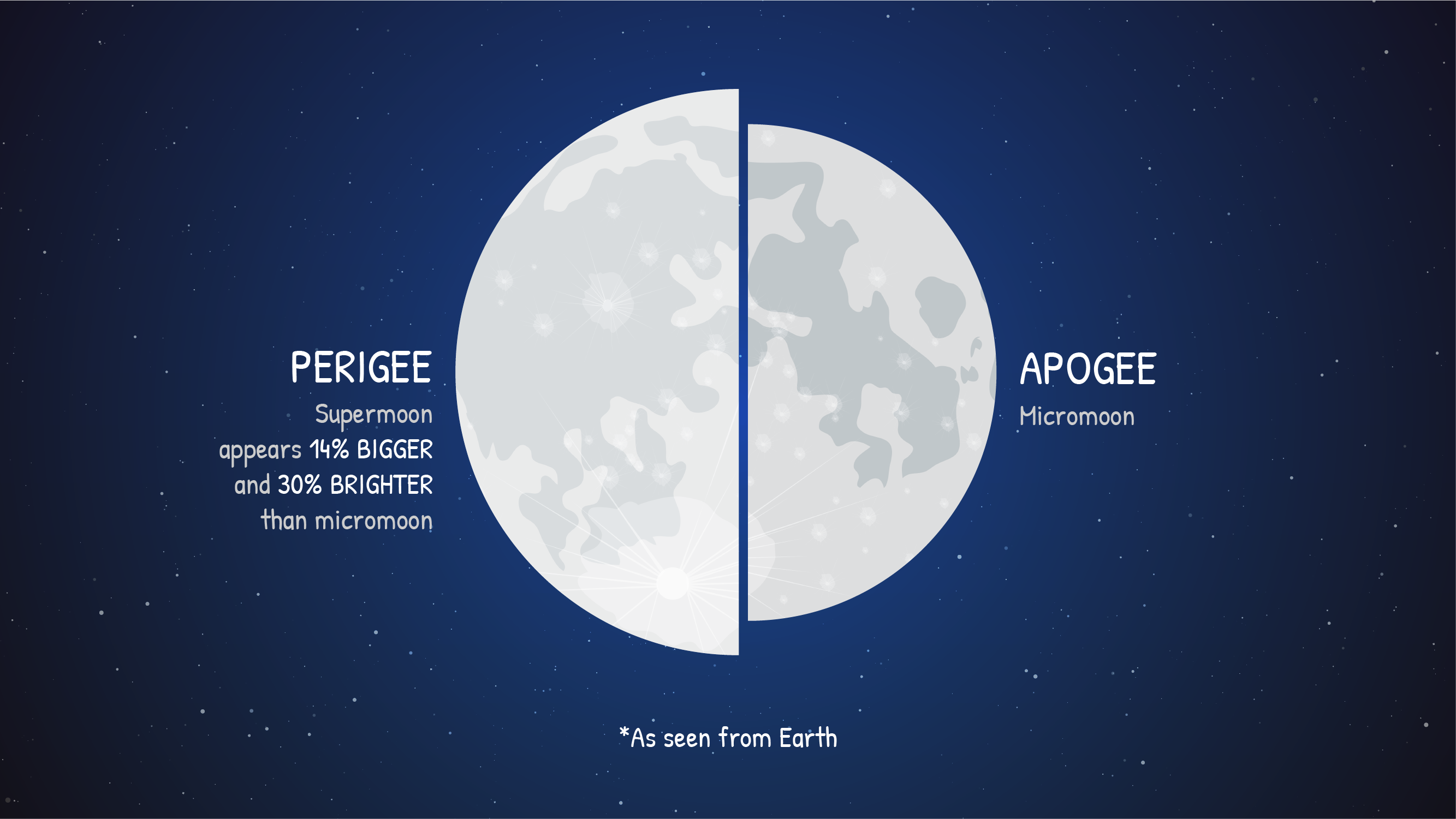
Every year, there are many astronomical phenomena of different scale. The last supermoon in 2020 happened on 7 May. A supermoon occurs when the Moon comes to the closest point to the Earth at the time of a full moon. The Moon will appear as much as 30 percent brighter and about 14 percent larger than usual. Although the supermoon in May caught the eyes of many astrophotographers, it was not the closest full supermoon. On 14 November 2016, the closest full supermoon since 1948 occurred and it will not be surpassed until 25 November 2034. There will be two supermoon phenomena on 26-27 April and 26 May 2021. Let’s see how big the moon will be on these dates.
In June 2020, there are at least two phenomena that will catch the attention of the astrophotographers in Hong Kong. A penumbral lunar eclipse will occur on 5-6 June and then another one on 4-5 July 2020. However, only the one on 6 June will be visible in Hong Kong. Penumbral lunar eclipse occurs more often compared to total and partial lunar eclipse. You may find out more on the formation of penumbral lunar eclipse here.
An annular solar eclipse will also be visible on 21 June 2020 in South/East Europe, North Australia, much of Asia and Africa, the Pacific Ocean as well as the Indian Ocean. However, people in Hong Kong can only see a partial eclipse. The same also happened on 26 December 2019. Find out more about the cause of solar eclipse and the proper way to observe this phenomenon here.
A solar eclipse never comes alone! It always occurs about two weeks before or after a lunar eclipse. Usually, there are two eclipses in a row, one solar and one lunar, but there may occasionally be three, lunar, solar, then another lunar eclipse or solar, lunar, then another solar eclipse during the same eclipse season.
Don’t miss the chance to observe these astronomical phenomena!
Acknowledgement:
Ho Koon Nature Education cum Astronomical Centre (Sponsored by Sik Sik Yuen)
Photo credit:
Jet Propulsion Laboratory – California Institute of technology